Got contracts to review? While you're here for policies, let Cobrief make contract review effortless—start your free review now.
Customize this template for free
Employee referral policy (Indiana): Free template
The employee referral policy helps Indiana businesses establish a formal process for encouraging employees to refer qualified candidates for job openings. This policy outlines how referrals will be handled, the rewards or incentives available to employees for successful hires, and the guidelines for submitting referrals. By using this template, businesses can tap into their employees' networks to attract top talent, improve recruitment efforts, and build a more engaged workforce.
By implementing this policy, Indiana businesses can leverage the knowledge and connections of their existing employees to find qualified candidates more efficiently, enhancing recruitment outcomes while promoting employee involvement.
How to use this employee referral policy (Indiana)
- Define referral process: Clearly explain the process employees should follow to refer candidates for open positions. This includes how and where referrals should be submitted, whether through an internal system, email, or a designated HR contact.
- Set eligibility criteria: Specify the criteria for employee referrals, such as the qualifications and experience required for candidates to be considered. The policy should clarify whether employees can refer candidates for any position or only certain roles.
- Outline incentives and rewards: Describe the rewards or incentives employees will receive if their referral is hired. This could include monetary bonuses, gift cards, extra paid time off, or other forms of recognition. The policy should specify how and when rewards will be paid or issued (e.g., after a probationary period or upon successful completion of the new hire's first 90 days).
- Establish conditions for successful referrals: Define what constitutes a successful referral, such as the referred candidate accepting the job offer and remaining employed for a specified period (e.g., 90 days). The policy should also address how multiple referrals are handled and if there are limits to the number of referrals an employee can make.
- Address conflicts of interest: The policy should specify that referrals cannot be made for close relatives, such as immediate family members, to avoid conflicts of interest. This helps ensure fairness and transparency in the hiring process.
- Maintain confidentiality: Emphasize that the referral process should be confidential and respectful. Employees should be encouraged to maintain privacy regarding the referral and not to disclose sensitive information about candidates unless explicitly instructed by HR.
- Provide equal opportunity: The policy should stress that referrals will be reviewed based on the candidate's qualifications and suitability for the position. The process should remain fair and unbiased, ensuring equal opportunities for all candidates, regardless of whether they were referred by an employee.
- Review and update the policy regularly: Periodically review the employee referral policy to ensure that it remains relevant, competitive, and aligned with business goals and legal requirements.
Benefits of using this employee referral policy (Indiana)
Implementing this policy provides several key benefits for Indiana businesses:
- Taps into existing networks: Employees can help the business identify qualified candidates through their personal and professional networks, resulting in faster and more efficient recruitment.
- Increases employee engagement: The policy encourages employees to take an active role in the hiring process, fostering a sense of ownership and involvement in the company’s growth.
- Improves candidate quality: Referrals often lead to better-quality hires, as employees are likely to recommend individuals they believe would be a good fit for the role and the company culture.
- Reduces recruitment costs: By leveraging internal resources, businesses can reduce reliance on external recruitment agencies, cutting down on hiring costs.
- Enhances company culture: Employee referrals can help bring in candidates who align with the company’s values and culture, leading to better workplace integration and employee retention.
- Speeds up the hiring process: Referrals can reduce the time spent on sourcing and screening candidates, leading to faster placements and minimized disruptions in business operations.
Tips for using this employee referral policy (Indiana)
- Communicate the policy clearly: Ensure that all employees understand the employee referral policy by including it in the employee handbook, during onboarding, and through internal communications. Keep employees informed about the rewards, the process, and eligibility.
- Promote the program: Actively encourage employee referrals through regular reminders, emails, or internal communications. Consider highlighting successful referrals in company meetings or newsletters to motivate employees.
- Track referrals effectively: Implement a tracking system for managing employee referrals, ensuring that each referral is documented, and progress is tracked. This helps streamline the process and ensures timely reward distribution.
- Maintain fairness and transparency: Ensure that the referral process is fair and unbiased, with all referrals being reviewed based on the qualifications and suitability of the candidate. Employees should understand that the final decision is based on merit and business needs.
- Review and refine the program: Regularly review the referral program to assess its effectiveness, make any necessary adjustments to the reward structure, and ensure that it continues to align with business objectives and recruitment needs.
Frequently asked questions (FAQs)
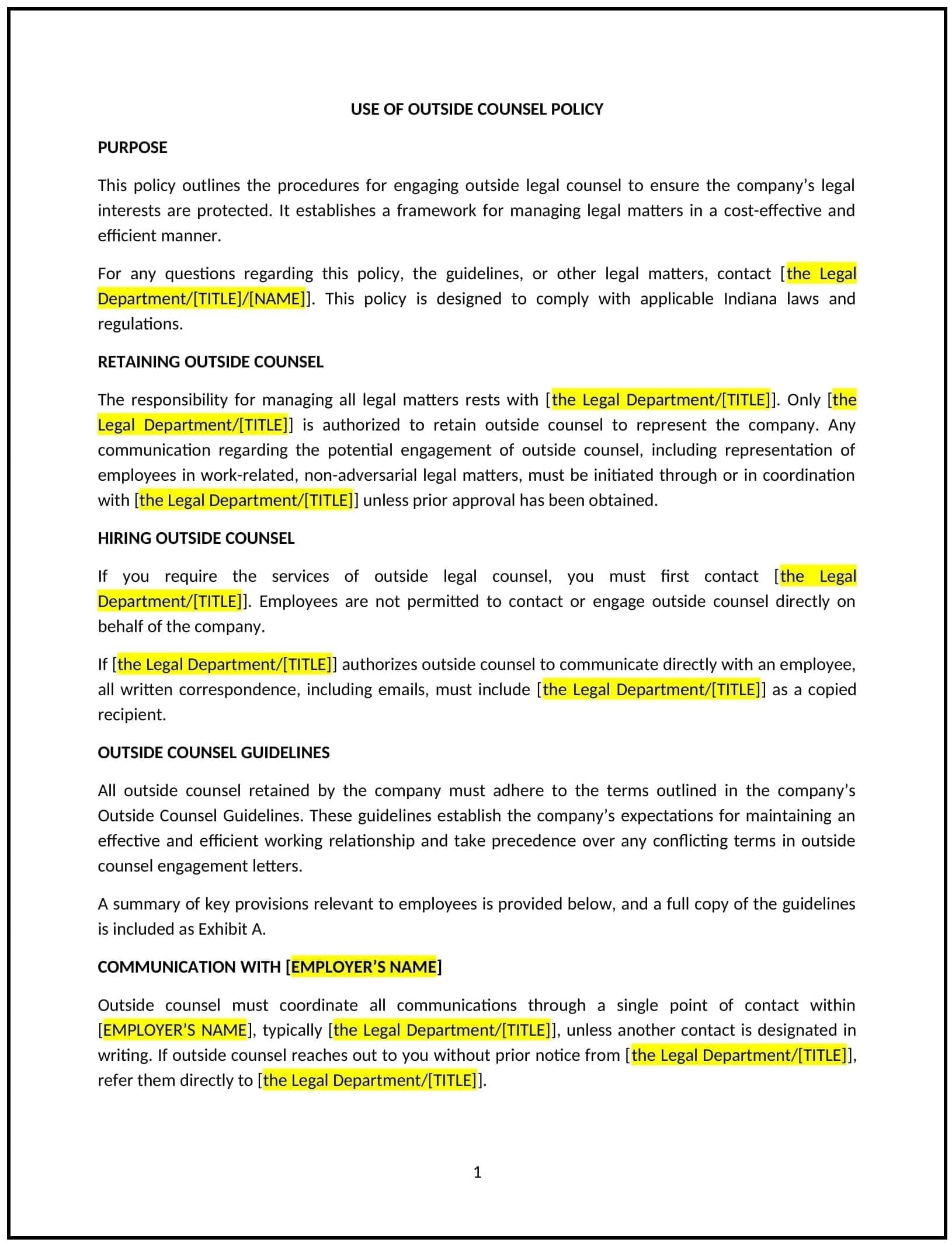
Outlines when Indiana companies should hire external legal support and how to manage approvals, billing, and oversight.
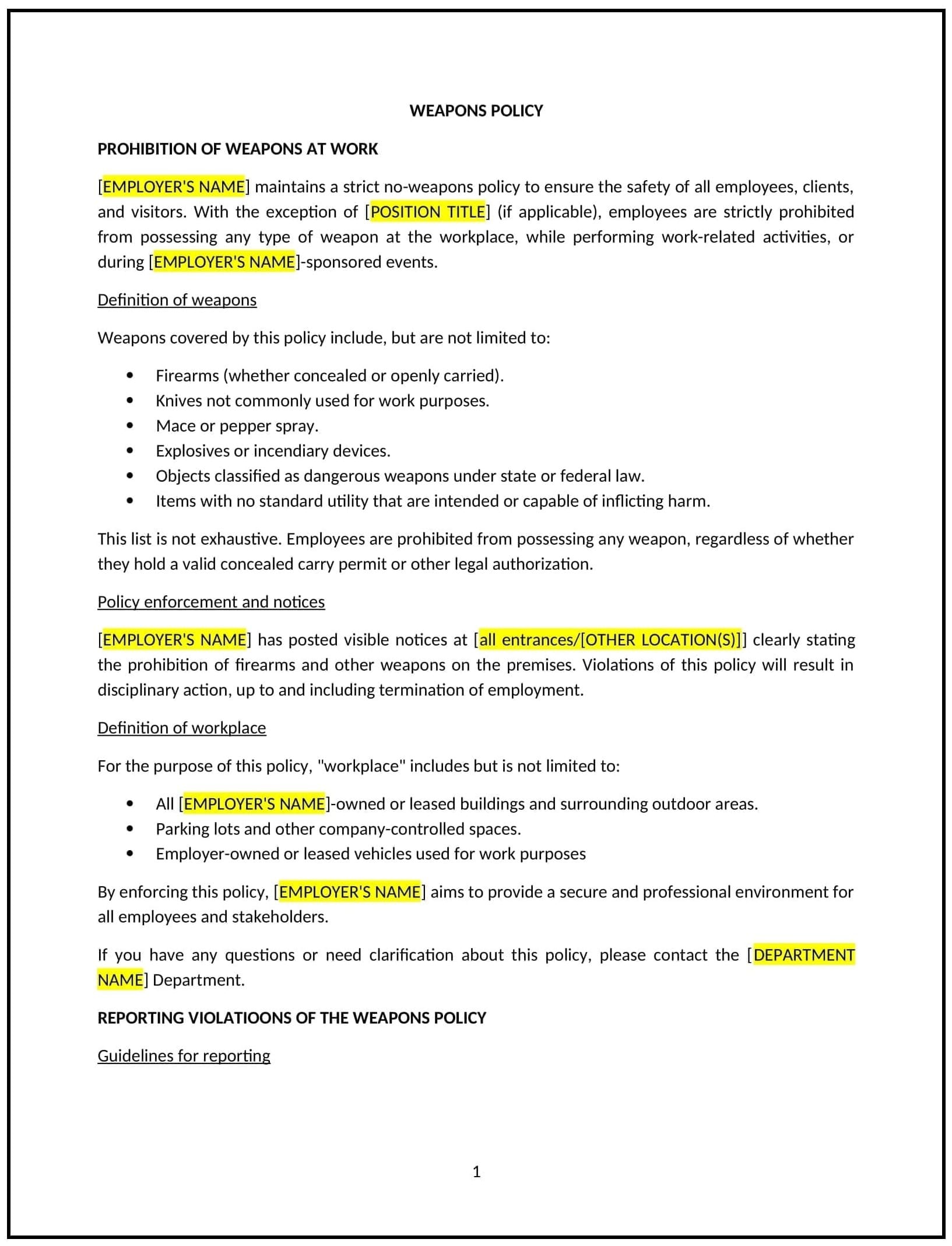
Restricts the possession of firearms and other weapons on Indiana company premises, with exceptions only as required by law.
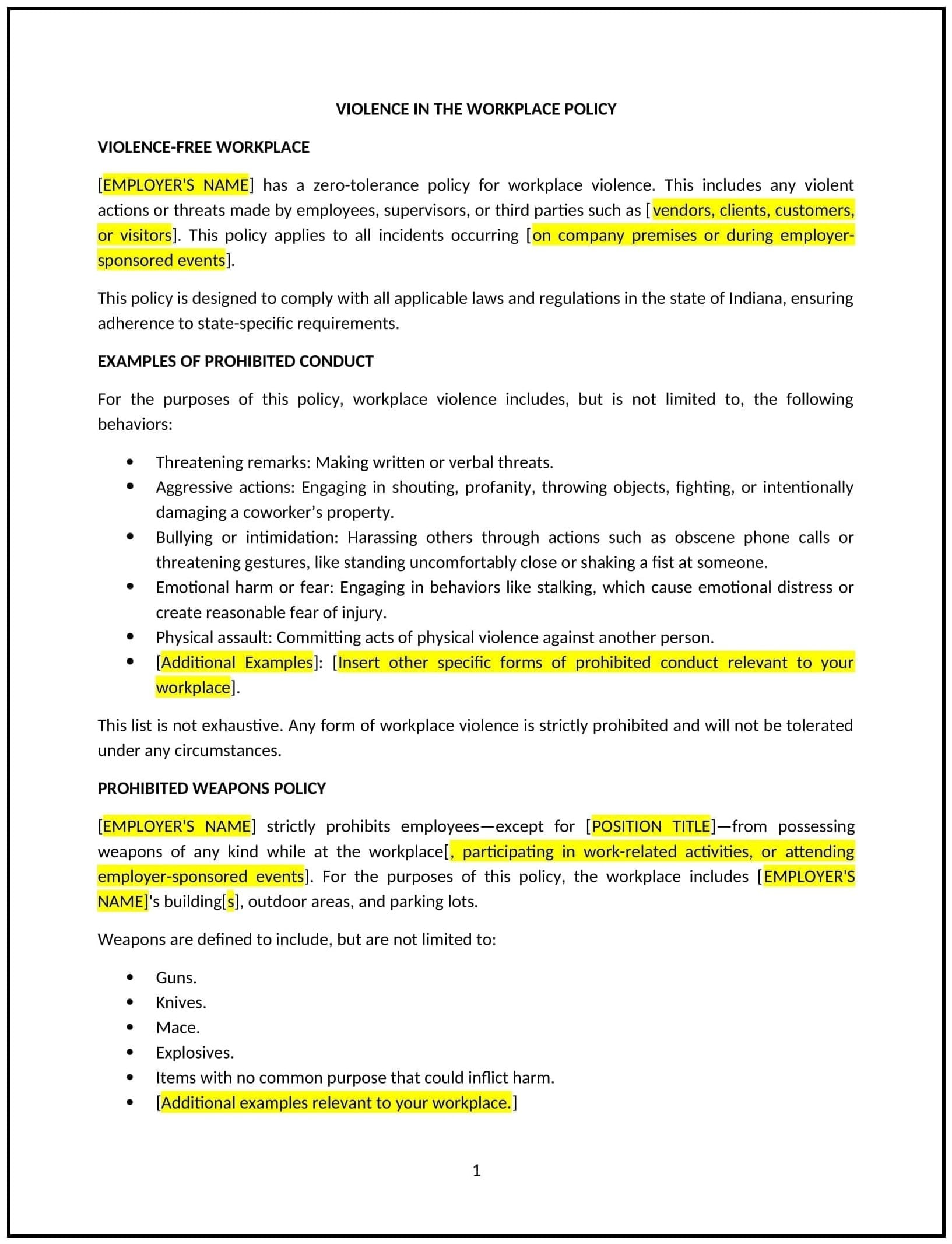
Prohibits threats, harassment, and physical violence in Indiana workplaces, with clear reporting and response procedures.