Got contracts to review? While you're here for policies, let Cobrief make contract review effortless—start your free review now.
Customize this template for free
Employee referral policy (Kansas)
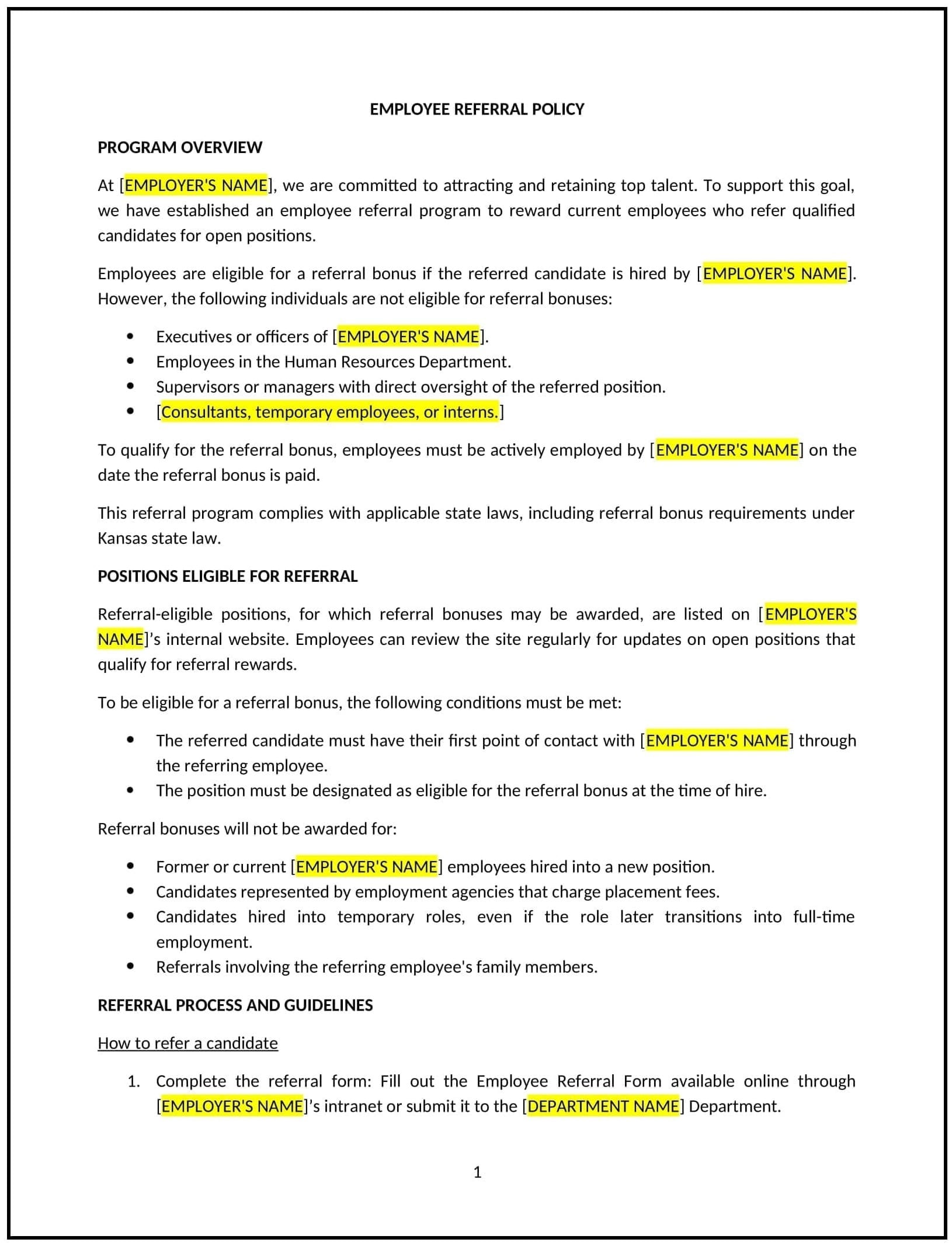
An employee referral policy helps Kansas businesses encourage current employees to refer qualified candidates for open positions within the organization. This policy outlines the incentives, guidelines, and procedures for referring candidates, creating a streamlined and rewarding process for employee participation in the hiring process.
By implementing this policy, businesses can leverage their employees' networks to attract high-quality talent, enhance recruitment efforts, and improve employee engagement.
How to use this employee referral policy (Kansas)
- Define eligibility criteria: Businesses should specify who can participate in the referral program, whether all employees are eligible or only those in specific departments.
- Set referral incentives: Businesses should establish clear rewards or bonuses for successful referrals, such as monetary bonuses, gift cards, or other recognition for the referring employee.
- Outline the referral process: Businesses should explain how employees can submit referrals, whether through an online form, email, or direct submission to HR.
- Define candidate qualifications: Businesses should clarify the qualifications needed for referred candidates to be considered for positions, including skills, experience, and any role-specific requirements.
- Set guidelines for referred candidates: Businesses should determine whether referred candidates will go through the same hiring process as other applicants or if they receive priority consideration.
- Address the timing of rewards: Businesses should specify when the referral reward will be given, such as after the candidate’s probationary period or upon successful hiring.
- Review and update regularly: Businesses should periodically assess the program to ensure it remains effective, attractive, and aligned with current hiring needs.
Benefits of using an employee referral policy (Kansas)
- Attracts quality candidates: Leverages employees' networks to find qualified candidates who are more likely to be a good cultural and skill fit.
- Reduces hiring costs: Referrals often reduce recruiting expenses by decreasing reliance on external recruiting firms or job postings.
- Improves employee engagement: Employees are more likely to feel engaged and valued when their input in the hiring process is incentivized and recognized.
- Speeds up the hiring process: Referred candidates often move through the hiring process more quickly since they come with a personal recommendation.
- Enhances retention rates: Employees referred by current staff tend to stay longer because they have a better understanding of the company culture and values.
- Builds a positive workplace culture: Encourages employees to bring in like-minded, skilled candidates, fostering a collaborative and strong team environment.
Tips for using this employee referral policy (Kansas)
- Communicate the program clearly: Businesses should ensure employees understand the referral process, eligibility, and the rewards they can receive for successful referrals.
- Make it easy to refer candidates: Businesses should streamline the referral process, making it simple for employees to submit referrals through an easy-to-use system or form.
- Offer attractive incentives: Businesses should provide meaningful rewards that motivate employees to participate, whether through cash bonuses, recognition, or other incentives.
- Track and measure success: Businesses should monitor the effectiveness of the referral program by tracking how many referred candidates are hired and how successful the program is in terms of meeting hiring goals.
- Encourage ongoing participation: Regularly remind employees about the referral program, and share success stories of hired employees to maintain interest and participation.
- Ensure fairness and transparency: Businesses should apply the program consistently and ensure that rewards are given fairly and transparently.