Employee referral policy (Mississippi): Free template
Got contracts to review? While you're here for policies, let Cobrief make contract review effortless—start your free review now.
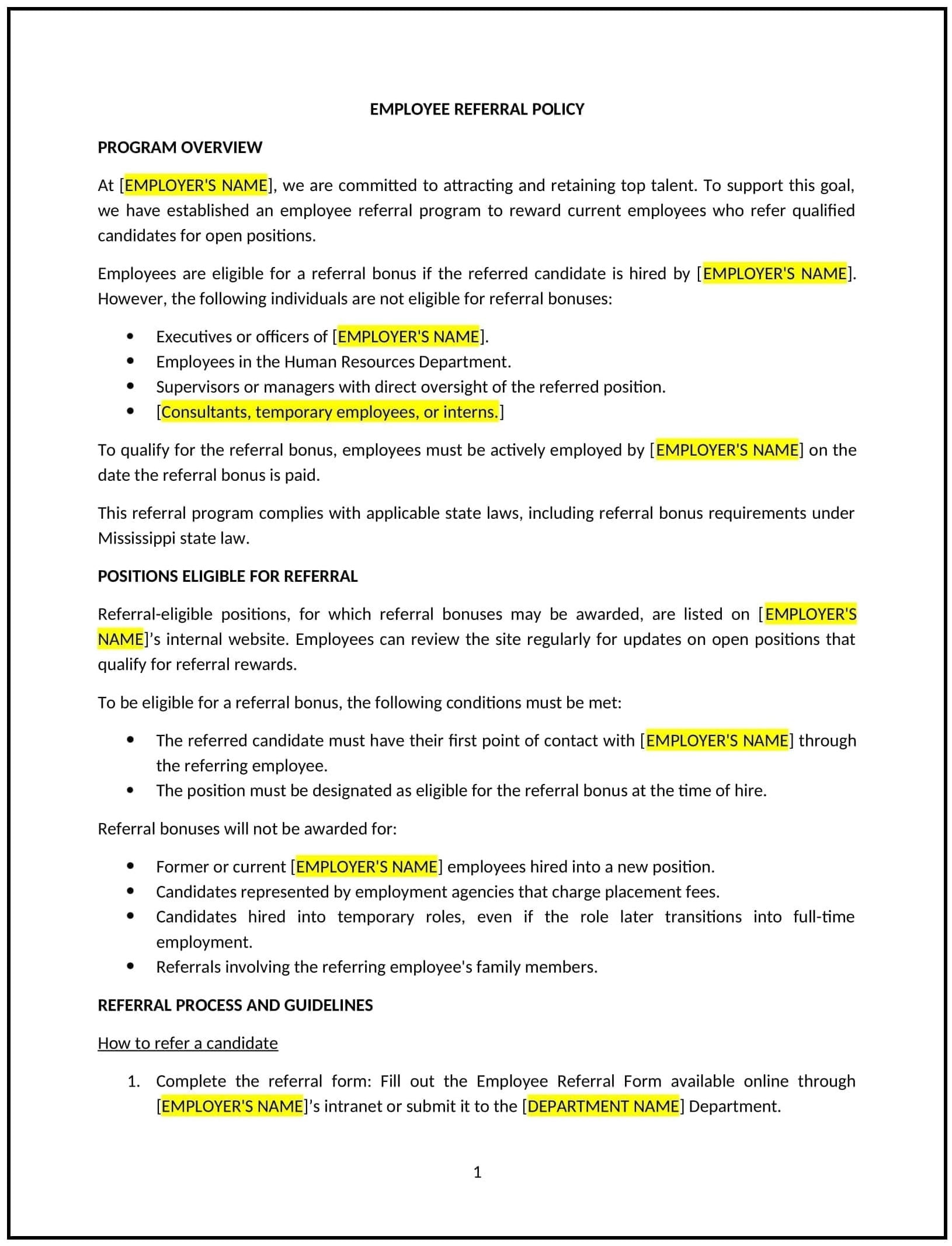
Customize this template for free
Employee referral policy (Mississippi)
An employee referral policy helps Mississippi businesses encourage current employees to refer qualified candidates for open positions. This policy offers incentives to employees for successful hires, improving the recruitment process by leveraging the existing workforce's networks. Employee referrals can help businesses find reliable candidates, reduce recruitment costs, and foster a positive workplace culture.
By implementing this policy, businesses can streamline the hiring process, tap into a broader talent pool, and increase employee engagement and retention.
How to use this employee referral policy (Mississippi)
- Define eligible employees: Specify who is eligible to participate in the referral program, whether it includes all employees or only specific departments or roles.
- Offer incentives: Outline the rewards or incentives that will be given to employees who successfully refer candidates. This could include cash bonuses, gift cards, or additional time off.
- Set criteria for successful referrals: Define what constitutes a “successful referral,” such as the candidate being hired and staying with the company for a specified period.
- Ensure transparency: Clearly explain the process for submitting referrals, how long it takes for the referral to be processed, and when the employee will receive their incentive.
- Provide guidelines for referral submissions: Describe how employees can submit referrals (e.g., via an online portal or email), and the information required for each referral, such as resumes or contact details.
- Address eligibility restrictions: Include any exceptions to the referral program, such as limitations on referring family members or restrictions for certain job categories.
- Protect confidentiality: Ensure that employee referral information is kept confidential, and referrals are handled with respect and integrity.
- Review and monitor the program: Regularly evaluate the effectiveness of the referral program to determine if it’s meeting hiring goals and if the rewards are motivating employees to participate.
Benefits of using this employee referral policy (Mississippi)
This policy provides several benefits for Mississippi businesses:
- Reduces hiring costs: By utilizing internal networks, businesses can lower the costs associated with advertising job openings and hiring external recruitment agencies.
- Increases quality of hires: Referrals often lead to better hires because employees tend to refer individuals who fit the company culture and possess the necessary skills.
- Enhances employee engagement: Employee referral programs foster a sense of ownership and involvement in the company’s growth, improving job satisfaction and morale.
- Boosts retention rates: Referred employees tend to stay longer in the company because they have a pre-established connection with their colleagues, leading to higher retention rates.
- Expands talent pool: By tapping into employees' networks, businesses can access a broader pool of candidates, including those who may not have been actively seeking jobs but are recommended by trusted employees.
Tips for using this employee referral policy (Mississippi)
- Communicate the program clearly: Ensure that all employees understand how the referral program works, the rewards they can earn, and the types of candidates they should refer. This can be communicated through emails, posters, and meetings.
- Offer attractive incentives: Ensure that the incentives offered for successful referrals are appealing and meaningful to employees. Consider offering different levels of rewards for different roles or seniority levels.
- Recognize successful referrers: In addition to the monetary incentives, publicly acknowledge employees who consistently provide successful referrals, which can encourage participation from others.
- Track referrals efficiently: Use an efficient system to track referrals, monitor the status of candidates, and ensure employees are paid their incentives in a timely manner.
- Be transparent about program updates: Regularly update employees on any changes to the program or new positions available for referral. Keeping the program dynamic ensures continued participation.