Equal employment opportunity policy (Connecticut): Free template
Got contracts to review? While you're here for policies, let Cobrief make contract review effortless—start your free review now.
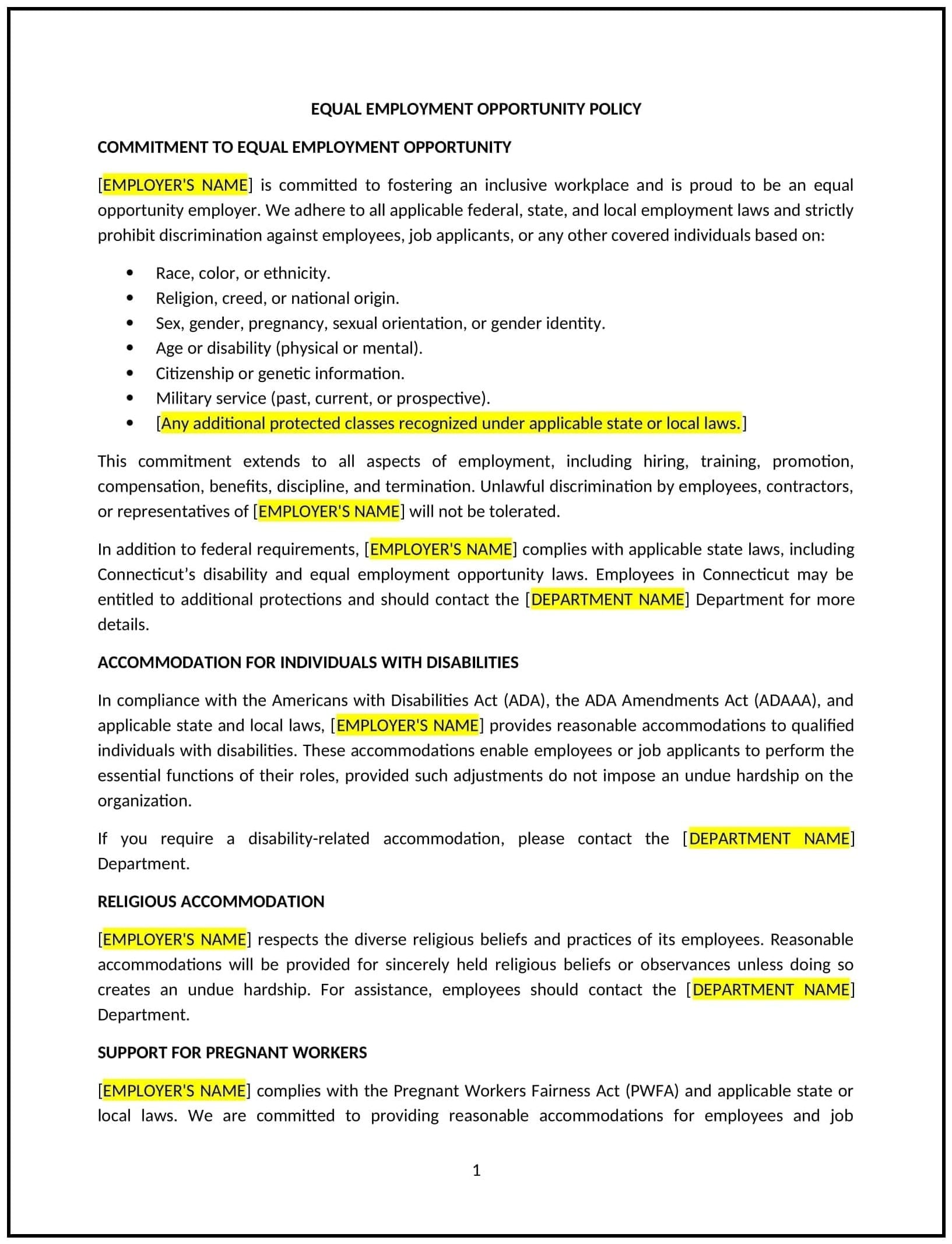
Customize this template for free
Equal opportunity employment policy (Connecticut)
An equal opportunity employment (EOE) policy helps Connecticut businesses ensure that all employment decisions are based on merit and qualifications, without discrimination based on race, color, religion, sex, gender identity, sexual orientation, national origin, age, disability, or any other protected characteristic under state and federal laws. This policy affirms the company’s commitment to providing equal opportunity in recruitment, hiring, training, promotion, compensation, and benefits.
By implementing this policy, businesses can create a fair, inclusive workplace, foster diversity, and comply with both state and federal anti-discrimination laws.
How to use this equal opportunity employment policy (Connecticut)
- Define equal opportunity: Clearly state that the business is committed to providing equal opportunity to all applicants and employees and that no one will face discrimination in any aspect of employment.
- Address recruitment and hiring practices: Outline how recruitment and hiring will be conducted based on qualifications, experience, and job performance, without regard to any protected characteristic.
- Promote diversity and inclusion: Encourage the hiring and advancement of diverse candidates and emphasize the company’s commitment to diversity and inclusion in the workplace.
- Implement anti-discrimination practices: Specify that employees and applicants will not be discriminated against or harassed based on their protected characteristics and that the company will provide a work environment free from discrimination or harassment.
- Provide accommodation for disabilities: Include a statement that the company will provide reasonable accommodations to employees with disabilities, as required under the Americans with Disabilities Act (ADA) and Connecticut’s state laws.
- Set reporting procedures: Establish procedures for employees to report any discrimination or harassment they may experience, ensuring that complaints are handled promptly and fairly.
Benefits of using this equal opportunity employment policy (Connecticut)
This policy offers several benefits for Connecticut businesses:
- Promotes fairness and inclusion: Creates a work environment where all employees are treated fairly and have equal opportunities for advancement, regardless of their background or identity.
- Improves company reputation: Demonstrates the company’s commitment to diversity, equity, and inclusion, which can enhance its reputation among employees, clients, and the community.
- Reduces legal risks: Helps ensure compliance with state and federal anti-discrimination laws, reducing the risk of lawsuits or legal action related to discriminatory practices.
- Enhances employee satisfaction: Fosters an environment where employees feel valued and respected, which can improve morale, job satisfaction, and retention.
- Attracts diverse talent: Helps the company attract top talent from diverse backgrounds, improving innovation, creativity, and overall business performance.
Tips for using this equal opportunity employment policy (Connecticut)
- Communicate the policy clearly: Ensure all employees are aware of the policy and understand the company’s commitment to equal opportunity and non-discrimination.
- Train managers: Provide training to all managers and supervisors on how to apply the policy in the workplace and handle discrimination or harassment complaints appropriately.
- Monitor recruitment practices: Regularly review recruitment and hiring practices to ensure they align with the principles of equal opportunity and that discrimination does not occur at any stage.
- Encourage diversity initiatives: Actively promote diversity and inclusion programs, mentorship opportunities, and resource groups to support underrepresented employees.
- Review periodically: Update the policy as necessary to reflect changes in Connecticut laws, federal regulations, or company practices to ensure continued compliance and effectiveness.