Equal employment opportunity policy (Minnesota): Free template
Got contracts to review? While you're here for policies, let Cobrief make contract review effortless—start your free review now.
Customize this template for free
Equal employment opportunity (EEO) policy (Minnesota)
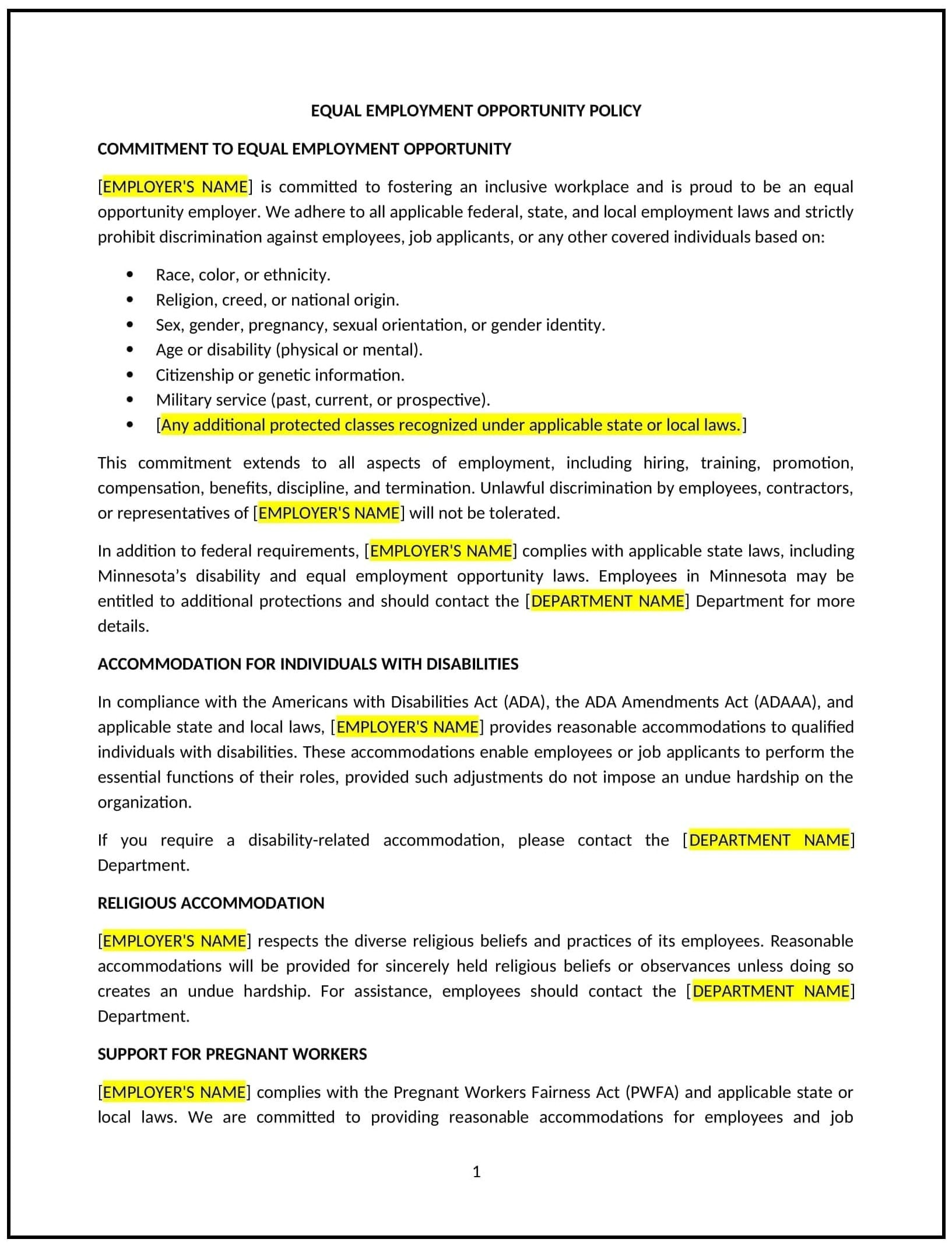
This equal employment opportunity (EEO) policy is designed to help Minnesota businesses foster a workplace that values diversity, fairness, and inclusion. It outlines the company’s commitment to providing equal opportunities in hiring, promotions, training, compensation, and other employment practices, without discrimination based on race, color, national origin, sex, age, disability, religion, or other protected characteristics.
By implementing this policy, businesses can ensure they are creating an inclusive environment where all employees have equal access to opportunities and are treated with respect.
How to use this EEO policy (Minnesota)
- Define protected characteristics: Clearly identify the characteristics protected under this policy, including race, color, national origin, gender, age, disability, religion, and any other categories defined by federal, state, and local laws.
- Establish non-discrimination principles: Ensure that all employment decisions, including hiring, training, promotions, and terminations, are based solely on qualifications, skills, and performance, without regard to the protected characteristics.
- Outline grievance procedures: Provide employees with a clear process for reporting complaints of discrimination or harassment, including how to file a complaint and how it will be addressed.
- Include affirmative action plans (if applicable): If the company is subject to federal or state affirmative action requirements, outline the steps the company will take to achieve diversity and equality in its workforce.
- Communicate commitment to diversity and inclusion: Reinforce the company’s dedication to creating a diverse and inclusive workplace by incorporating DEI goals into the hiring process, training programs, and corporate culture.
- Educate employees: Regularly provide training and educational resources to help employees understand the importance of equal employment opportunities and the responsibilities of both employers and employees.
Benefits of using an EEO policy (Minnesota)
Implementing this policy provides several advantages for Minnesota businesses:
- Promotes a fair and inclusive workplace: Creates a culture where all employees are given the same opportunities to succeed, regardless of background or personal characteristics.
- Reduces legal risks: Helps businesses minimize the risk of discrimination lawsuits or penalties by adhering to federal, state, and local EEO laws.
- Increases employee engagement: Employees who feel valued and respected are more likely to be engaged, productive, and committed to the organization.
- Improves company reputation: Demonstrating a commitment to equal opportunity can enhance the company’s reputation with employees, customers, and the community.
- Reflects Minnesota’s values: Tailors the policy to Minnesota-specific laws and workplace practices, including state laws regarding employment discrimination and diversity.
Tips for using this EEO policy (Minnesota)
- Communicate clearly: Ensure that all employees are aware of the policy, its purpose, and their rights under the policy, and that they understand how to report concerns or file complaints.
- Provide training: Offer regular EEO and diversity training to all employees, especially those involved in hiring or making employment decisions, to help prevent discrimination and ensure compliance with the policy.
- Review hiring practices: Regularly assess recruitment and hiring practices to ensure they are aligned with the principles of equal opportunity and are actively seeking to diversify the workforce.
- Monitor progress: Track the success of the policy, such as through employee feedback, demographic analyses of the workforce, or diversity audits, and make adjustments to improve outcomes.
- Address complaints promptly: Implement clear procedures for investigating and resolving discrimination complaints to demonstrate a commitment to fairness and resolve issues quickly.