Ethics and conflict of interest policy (Alabama): Free template
Got contracts to review? While you're here for policies, let Cobrief make contract review effortless—start your free review now.
Customize this template for free
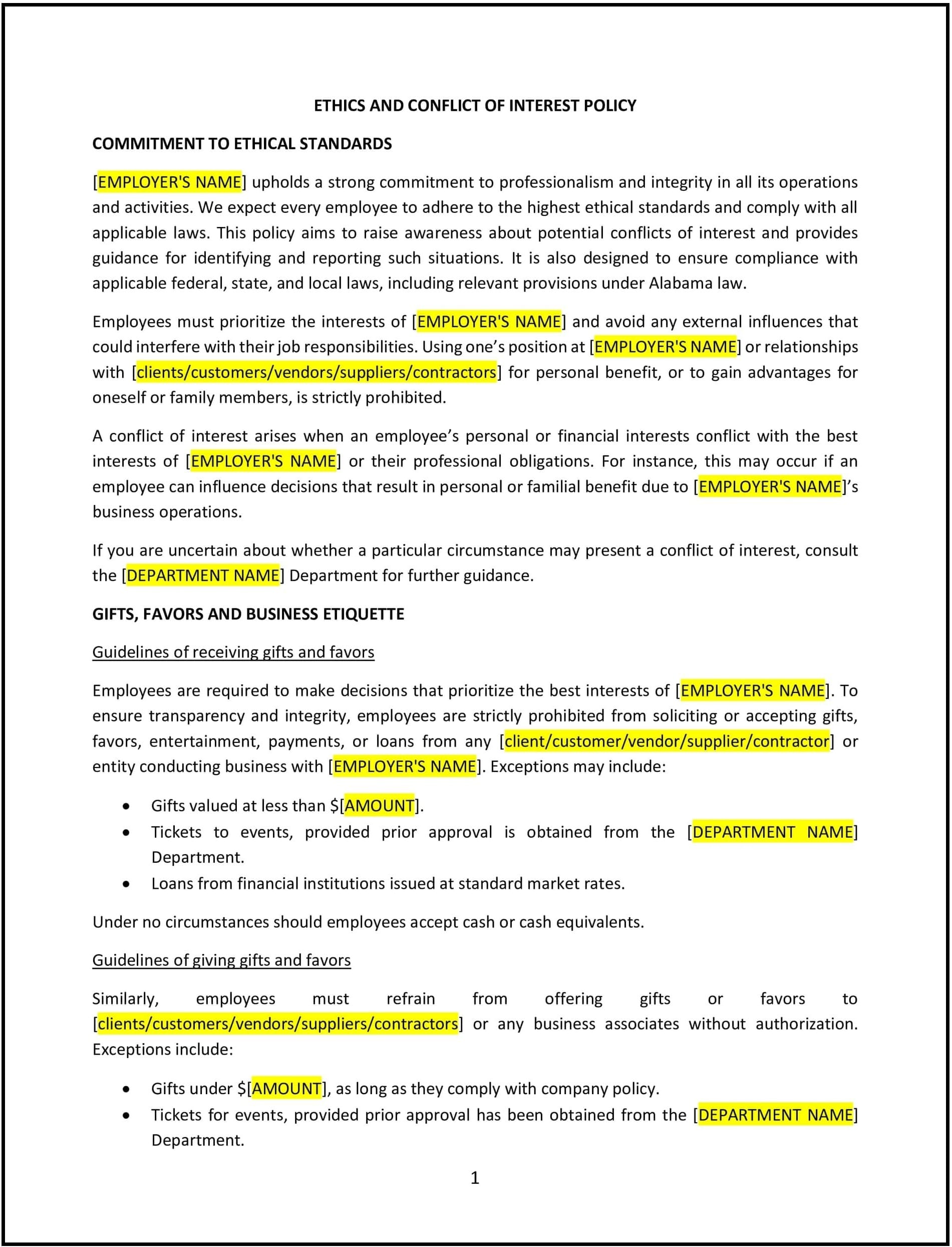
Ethics and conflict of interest policy (Alabama)
An ethics and conflict of interest policy outlines the principles and guidelines employees should follow to maintain integrity and professionalism in the workplace. For SMBs in Alabama, this policy supports transparency and accountability by addressing potential conflicts between personal interests and organizational responsibilities.
By clearly defining ethical standards and providing procedures for addressing conflicts, this policy helps foster a culture of trust and fairness while safeguarding the company’s reputation and operational integrity.
How to use this ethics and conflict of interest policy (Alabama)
- Define ethical standards: Establish clear expectations for ethical behavior, such as honesty, fairness, and respect in business dealings.
- Identify potential conflicts: Provide examples of conflicts of interest, such as personal relationships with vendors, financial investments in competing businesses, or accepting gifts that could influence decisions.
- Require disclosure: Outline procedures for employees to disclose actual or potential conflicts of interest, including how and to whom disclosures should be made.
- Set resolution processes: Explain how conflicts will be assessed and resolved, ensuring fair and transparent decision-making.
- Emphasize accountability: Clarify that violations of the policy may result in disciplinary actions and encourage employees to report concerns in good faith.
Benefits of using an ethics and conflict of interest policy (Alabama)
A robust ethics and conflict of interest policy strengthens your organization’s integrity and operational effectiveness. Here’s how it helps:
- Builds trust: Demonstrates the company’s commitment to fairness, fostering confidence among employees, customers, and partners.
- Protects the company’s reputation: Reduces risks associated with unethical behavior or perceived conflicts of interest.
- Promotes transparency: Encourages open communication about potential conflicts, supporting a culture of honesty and accountability.
- Ensures consistent decision-making: Provides a structured approach to resolving conflicts, reducing ambiguity in sensitive situations.
- Enhances employee morale: Reinforces the importance of ethical conduct, contributing to a positive and principled workplace culture.
Tips for implementing an ethics and conflict of interest policy (Alabama)
- Provide clear examples: Include specific examples of potential conflicts relevant to your industry to help employees identify and disclose issues.
- Offer training: Conduct regular training sessions on ethical decision-making and conflict resolution to ensure employees understand the policy.
- Make disclosure easy: Create a straightforward process for employees to report conflicts, such as an online form or direct communication with HR.
- Encourage a speak-up culture: Foster an environment where employees feel comfortable raising concerns without fear of retaliation.
- Review and update regularly: Periodically reassess the policy to reflect changes in legal standards, business operations, or industry practices.