Ethics and conflict of interest policy (Arizona): Free template
Got contracts to review? While you're here for policies, let Cobrief make contract review effortless—start your free review now.
Customize this template for free
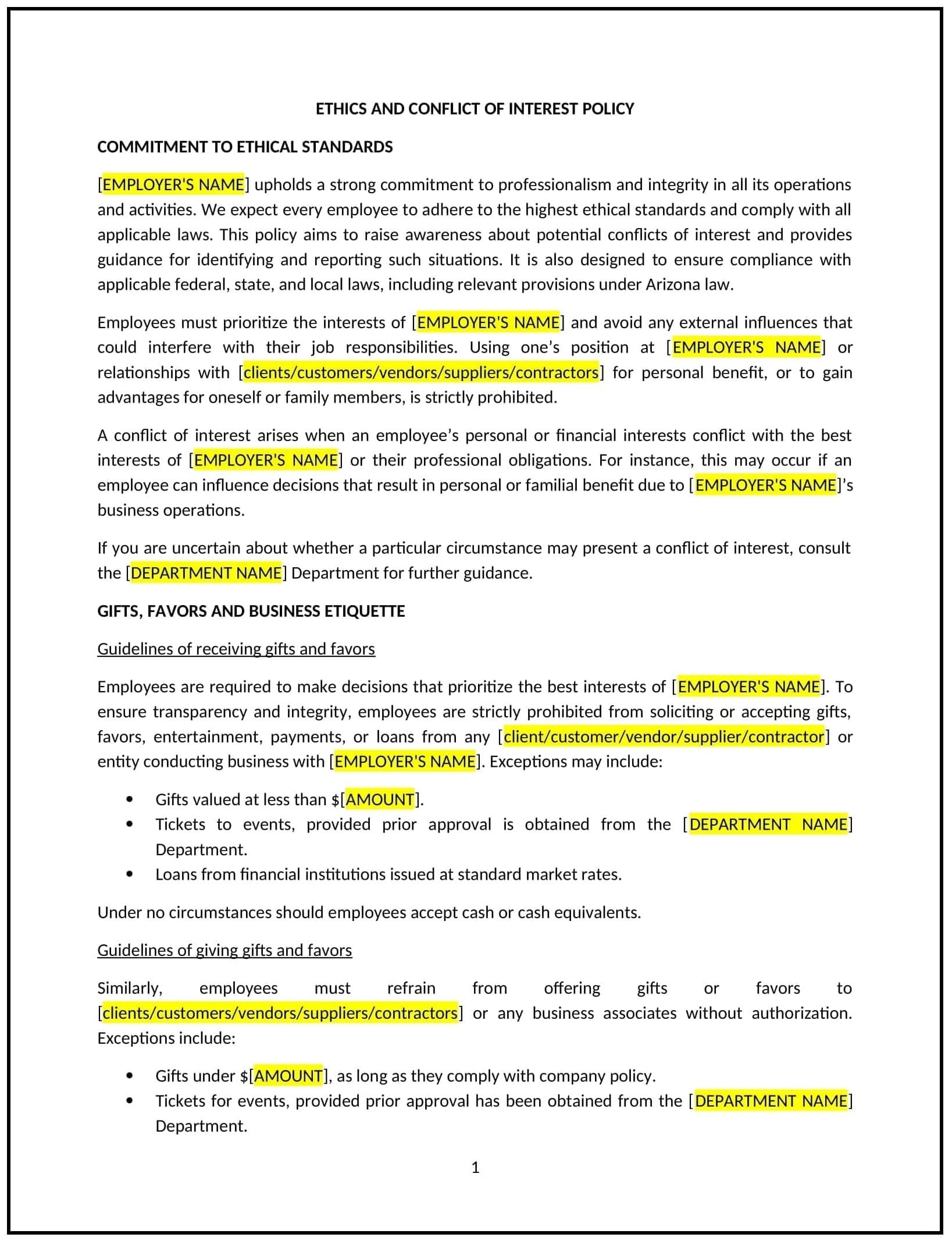
Ethics and conflict of interest policy (Arizona)
In Arizona, an ethics and conflict of interest policy provides businesses with guidelines to uphold integrity, transparency, and accountability in the workplace. This policy helps employees identify and address potential conflicts of interest while promoting ethical behavior in all business activities.
This policy outlines acceptable conduct, defines conflicts of interest, and establishes procedures for disclosure and resolution. By implementing this policy, Arizona businesses can foster a culture of trust and compliance while protecting their reputation.
How to use this ethics and conflict of interest policy (Arizona)
- Define ethical standards: Clearly articulate the organization’s commitment to ethical behavior and the values guiding employee conduct.
- Identify conflicts of interest: Provide examples, such as personal relationships affecting business decisions or financial interests in competitors or vendors.
- Include disclosure procedures: Outline how employees should report potential or actual conflicts of interest, including documentation requirements.
- Set resolution guidelines: Detail how the organization will address conflicts of interest to ensure fairness and transparency.
- Provide enforcement measures: Explain the consequences of violating the policy, such as disciplinary actions or termination.
Benefits of using an ethics and conflict of interest policy (Arizona)
This policy offers significant advantages for Arizona businesses:
- Promotes integrity: Encourages employees to act ethically, protecting the company’s reputation.
- Supports compliance: Aligns with Arizona and federal regulations governing ethical behavior and conflicts of interest.
- Reduces risks: Minimizes legal and financial exposure by addressing conflicts proactively.
- Builds trust: Demonstrates a commitment to transparency and fairness, fostering confidence among employees, clients, and stakeholders.
- Improves decision-making: Ensures business decisions are made without undue influence or personal bias.
Tips for using an ethics and conflict of interest policy (Arizona)
- Address Arizona-specific considerations: Reflect state laws and industry-specific regulations, particularly in sectors like healthcare or public procurement.
- Train employees: Provide regular training on ethical behavior and how to identify and report conflicts of interest.
- Use anonymous reporting: Offer confidential or anonymous channels for employees to disclose concerns without fear of retaliation.
- Monitor compliance: Conduct periodic reviews of employee disclosures and business practices to identify potential risks.
- Update regularly: Revise the policy to reflect changes in laws, business operations, or industry standards.