Ethics and conflict of interest policy (Delaware): Free template
Got contracts to review? While you're here for policies, let Cobrief make contract review effortless—start your free review now.
Customize this template for free
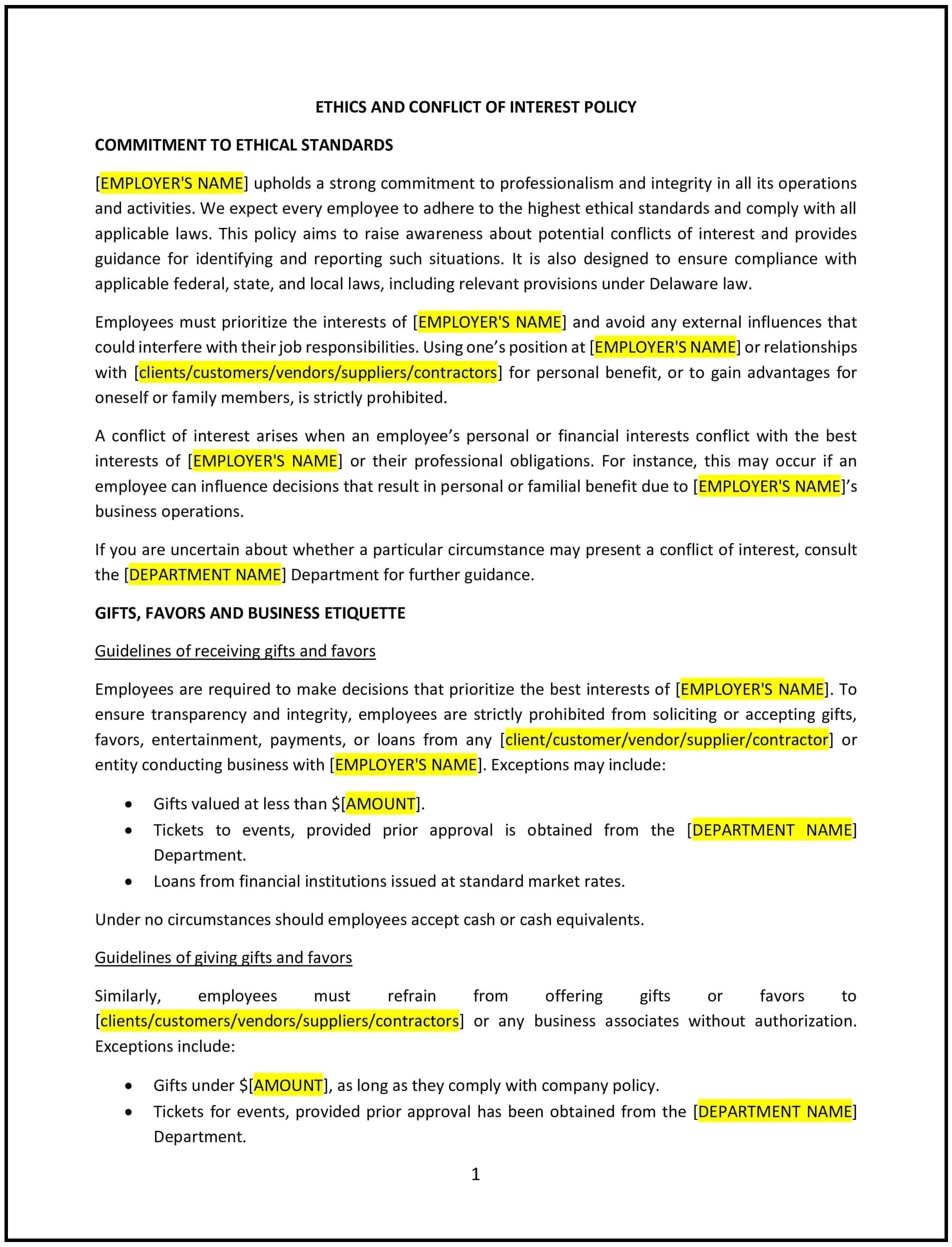
Ethics and conflict of interest policy (Delaware)
An ethics and conflict of interest policy helps Delaware businesses promote integrity and transparency by setting clear expectations for ethical behavior and identifying potential conflicts of interest. This policy outlines guidelines for ethical decision-making, reporting conflicts, and addressing violations to protect the company’s reputation and legal compliance.
By implementing this policy, businesses can foster a culture of accountability, enhance trust, and reduce risks associated with unethical behavior.
How to use this ethics and conflict of interest policy (Delaware)
- Define ethical standards: Clearly outline the principles employees are expected to follow, such as honesty, fairness, and compliance with laws.
- Identify conflicts of interest: Provide examples of potential conflicts, such as personal relationships, financial interests, or outside employment that could influence business decisions.
- Establish reporting procedures: Include clear instructions for employees to disclose potential conflicts or report unethical behavior confidentially.
- Address gift and hospitality rules: Set limits on accepting or offering gifts, entertainment, or other benefits that could be perceived as influencing decisions.
- Enforce consistently: Specify the consequences for policy violations, including disciplinary actions or termination if necessary.
- Monitor and review: Regularly assess the policy and its implementation to ensure ongoing effectiveness and alignment with Delaware laws.
Benefits of using this ethics and conflict of interest policy (Delaware)
This policy offers several benefits for Delaware businesses:
- Promotes accountability: Encourages employees to act responsibly and align with the company’s values and mission.
- Reduces legal risks: Helps businesses comply with Delaware and federal regulations, minimizing the risk of fines or penalties.
- Protects reputation: Demonstrates the company’s commitment to ethical practices, building trust with stakeholders.
- Enhances decision-making: Reduces bias and ensures decisions are made in the best interest of the company.
- Creates a transparent culture: Fosters openness and trust by addressing conflicts and ethical issues proactively.
Tips for using this ethics and conflict of interest policy (Delaware)
- Communicate the policy effectively: Ensure all employees understand the ethical standards and conflict reporting procedures.
- Provide training: Offer regular training sessions to help employees recognize and address ethical dilemmas and conflicts of interest.
- Encourage disclosures: Foster a supportive environment where employees feel comfortable reporting potential conflicts or ethical concerns.
- Lead by example: Ensure leaders model ethical behavior and promote a culture of integrity.
- Review and update regularly: Periodically review the policy to reflect changes in Delaware laws, industry standards, or organizational needs.