Ethics and conflict of interest policy (Idaho): Free template
Got contracts to review? While you're here for policies, let Cobrief make contract review effortless—start your free review now.
Customize this template for free
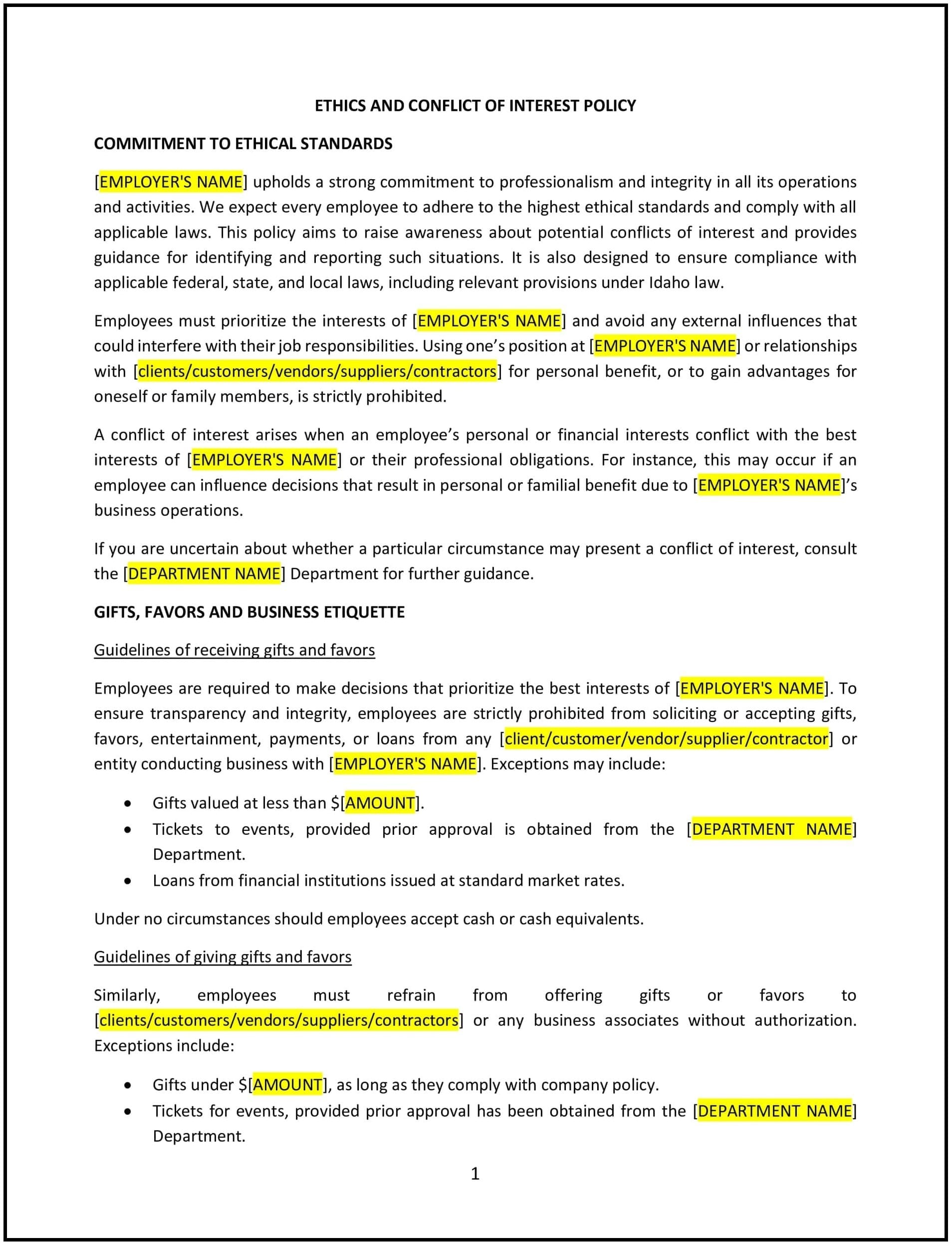
Ethics and conflict of interest policy (Idaho)
An ethics and conflict of interest policy helps Idaho businesses establish guidelines for maintaining integrity, transparency, and accountability in all business operations. This policy outlines the standards of ethical behavior expected from employees and leadership, as well as procedures for identifying, disclosing, and managing conflicts of interest. It reflects the business’s commitment to ethical practices and fostering trust with stakeholders.
By implementing this policy, businesses can promote a culture of honesty, reduce risks, and ensure decisions are made in the best interest of the organization.
How to use this ethics and conflict of interest policy (Idaho)
- Define ethical standards: Clearly articulate the business’s expectations for ethical behavior, including honesty, integrity, and respect in all interactions.
- Identify conflicts of interest: Provide examples of situations that may constitute a conflict of interest, such as personal relationships, financial interests, or outside employment.
- Establish disclosure procedures: Outline the steps employees should take to disclose potential conflicts of interest, including whom to notify and the required documentation.
- Address management of conflicts: Describe how conflicts of interest will be managed, such as recusal from decision-making or restructuring roles to avoid bias.
- Communicate consequences: Clearly state the disciplinary actions for violating the policy, including failure to disclose conflicts or engage in unethical behavior.
- Train employees: Conduct regular training sessions to educate employees on ethical standards, conflict of interest scenarios, and the importance of transparency.
- Review and update: Regularly review the policy to ensure it remains aligned with business needs, ethical standards, and Idaho laws.
Benefits of using this ethics and conflict of interest policy (Idaho)
This policy provides numerous benefits for Idaho businesses:
- Promotes integrity: The policy establishes clear expectations for ethical behavior, fostering a culture of honesty and trust.
- Reduces risks: By identifying and managing conflicts of interest, businesses can minimize the risk of biased decisions or reputational damage.
- Enhances transparency: The policy encourages open communication and disclosure, ensuring decisions are made in the best interest of the organization.
- Builds stakeholder trust: Demonstrating a commitment to ethical practices can enhance trust with employees, customers, partners, and investors.
- Provides clarity: A well-defined policy ensures consistent handling of ethical issues and conflicts of interest, reducing potential misunderstandings.
- Encourages accountability: The policy holds employees and leadership accountable for maintaining ethical standards and avoiding conflicts.
- Aligns with best practices: The policy reflects modern business standards and can enhance the business’s reputation among stakeholders.
Tips for using this ethics and conflict of interest policy (Idaho)
- Communicate the policy effectively: Share the policy with employees during onboarding, training sessions, and through internal communications to ensure awareness.
- Train employees: Provide training on ethical standards, conflict of interest scenarios, and the importance of transparency and disclosure.
- Encourage disclosure: Foster a culture where employees feel comfortable disclosing potential conflicts of interest without fear of retaliation.
- Monitor compliance: Regularly review employee disclosures and address any conflicts of interest promptly and fairly.
- Document disclosures: Maintain records of disclosed conflicts and the steps taken to manage them, ensuring transparency and accountability.
- Review the policy regularly: Update the policy as needed to reflect changes in business needs, ethical standards, or Idaho laws.
- Lead by example: Encourage leadership to model ethical behavior and demonstrate a commitment to the policy’s principles.