Ethics and conflict of interest policy (Indiana): Free template
Got contracts to review? While you're here for policies, let Cobrief make contract review effortless—start your free review now.
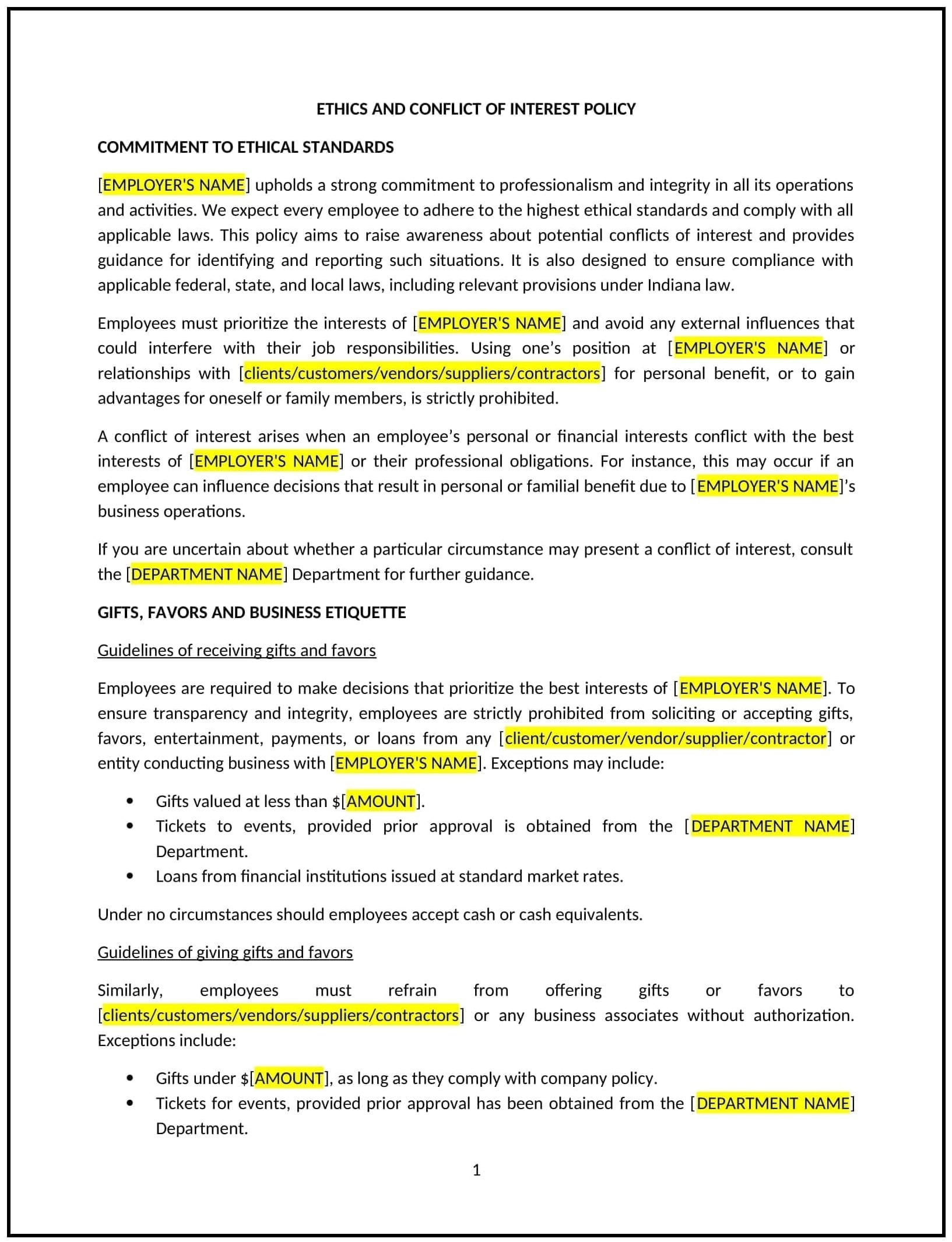
Customize this template for free
Ethics and conflict of interest policy (Indiana): Free template
The ethics and conflict of interest policy helps Indiana businesses establish clear guidelines for ethical behavior and managing potential conflicts of interest. This policy outlines expectations for employees and management to act with integrity, honesty, and transparency while maintaining the company’s reputation. It includes the process for identifying, disclosing, and addressing conflicts of interest that may arise in business dealings, relationships, and decision-making. By using this template, businesses can ensure that their employees understand their ethical obligations and handle conflicts in a manner that protects the organization’s interests.
By implementing this policy, Indiana businesses can foster a culture of trust, accountability, and fairness while minimizing the risk of unethical conduct or legal issues arising from conflicts of interest.
How to use this ethics and conflict of interest policy (Indiana)
- Define ethics expectations: Clearly explain the company’s commitment to ethical conduct and the standards employees must adhere to, including honesty, integrity, transparency, and fairness in all business activities.
- Identify conflicts of interest: Define what constitutes a conflict of interest, including situations where personal interests or relationships could influence, or appear to influence, an employee’s decision-making or actions in their role.
- Provide disclosure guidelines: Establish a clear process for employees to disclose potential conflicts of interest. The policy should specify when and how employees should report any situations where their personal interests may conflict with the company’s interests, such as during hiring, promotions, or procurement processes.
- Address family and personal relationships: Specify how personal relationships, such as those between family members or close friends, should be handled in business dealings. The policy should clarify that employees must disclose any relationships that could lead to perceived or actual conflicts of interest.
- Set guidelines for handling conflicts: Outline how the company will address and manage conflicts of interest when they arise. This may include actions like reassigning responsibilities, requiring employees to recuse themselves from decision-making, or even terminating relationships or business dealings if necessary.
- Define prohibited conduct: The policy should clearly outline any actions or behaviors that are considered unethical or unacceptable, such as bribery, kickbacks, or accepting gifts that could influence business decisions.
- Establish consequences for non-compliance: Specify the disciplinary actions that may result from failing to comply with the ethics and conflict of interest policy. This can range from corrective actions and additional training to termination for severe violations.
- Review and update the policy regularly: The policy should be periodically reviewed to ensure it remains aligned with legal requirements, industry standards, and evolving business practices. Regular updates help ensure the policy stays relevant and effective.
Benefits of using this ethics and conflict of interest policy (Indiana)
Implementing this policy provides several key benefits for Indiana businesses:
- Protects the company’s reputation: A strong ethics and conflict of interest policy helps protect the company’s reputation by ensuring that employees act with integrity and avoid situations that could lead to unethical behavior or conflicts with the company’s values.
- Reduces legal risks: By addressing conflicts of interest and unethical conduct proactively, the policy helps businesses minimize the risk of legal issues or lawsuits related to improper business practices.
- Promotes transparency and accountability: The policy fosters an environment of transparency and accountability, where employees understand their ethical obligations and are held responsible for their actions.
- Enhances employee trust and morale: When employees know that the company values ethics and integrity, it enhances trust and morale within the organization, creating a more positive and productive workplace culture.
- Encourages fair decision-making: The policy ensures that business decisions are made fairly and impartially, reducing the likelihood of favoritism or bias, and helping the company make objective decisions based on merit and business needs.
- Improves compliance with regulations: The policy helps the company comply with federal, state, and local regulations regarding ethical behavior, conflicts of interest, and corporate governance standards.
Tips for using this ethics and conflict of interest policy (Indiana)
- Communicate the policy effectively: Ensure that all employees are aware of the ethics and conflict of interest policy by including it in the employee handbook, onboarding materials, and through regular communications. Make sure employees understand their ethical obligations and how to disclose potential conflicts.
- Train employees regularly: Provide regular training on the policy to ensure that employees understand how to identify and address conflicts of interest. Training should also cover the importance of maintaining ethical standards and the potential consequences of violating the policy.
- Encourage transparency: Foster a culture where employees feel comfortable disclosing potential conflicts of interest without fear of retaliation. Create an open environment where ethical issues can be discussed and resolved constructively.
- Review potential conflicts proactively: Encourage managers and HR to regularly assess potential conflicts of interest in business activities, such as hiring, procurement, and partnerships, to prevent situations where personal interests could interfere with the company’s objectives.
- Establish a clear process for addressing conflicts: Ensure that there is a clear, documented process for addressing conflicts of interest when they arise. The policy should specify how conflicts will be resolved and who is responsible for handling these situations.
- Regularly review and update the policy: The ethics and conflict of interest policy should be reviewed at least annually to ensure it remains current with legal requirements and reflects any changes in the company’s operations or values.
Frequently asked questions (FAQs)
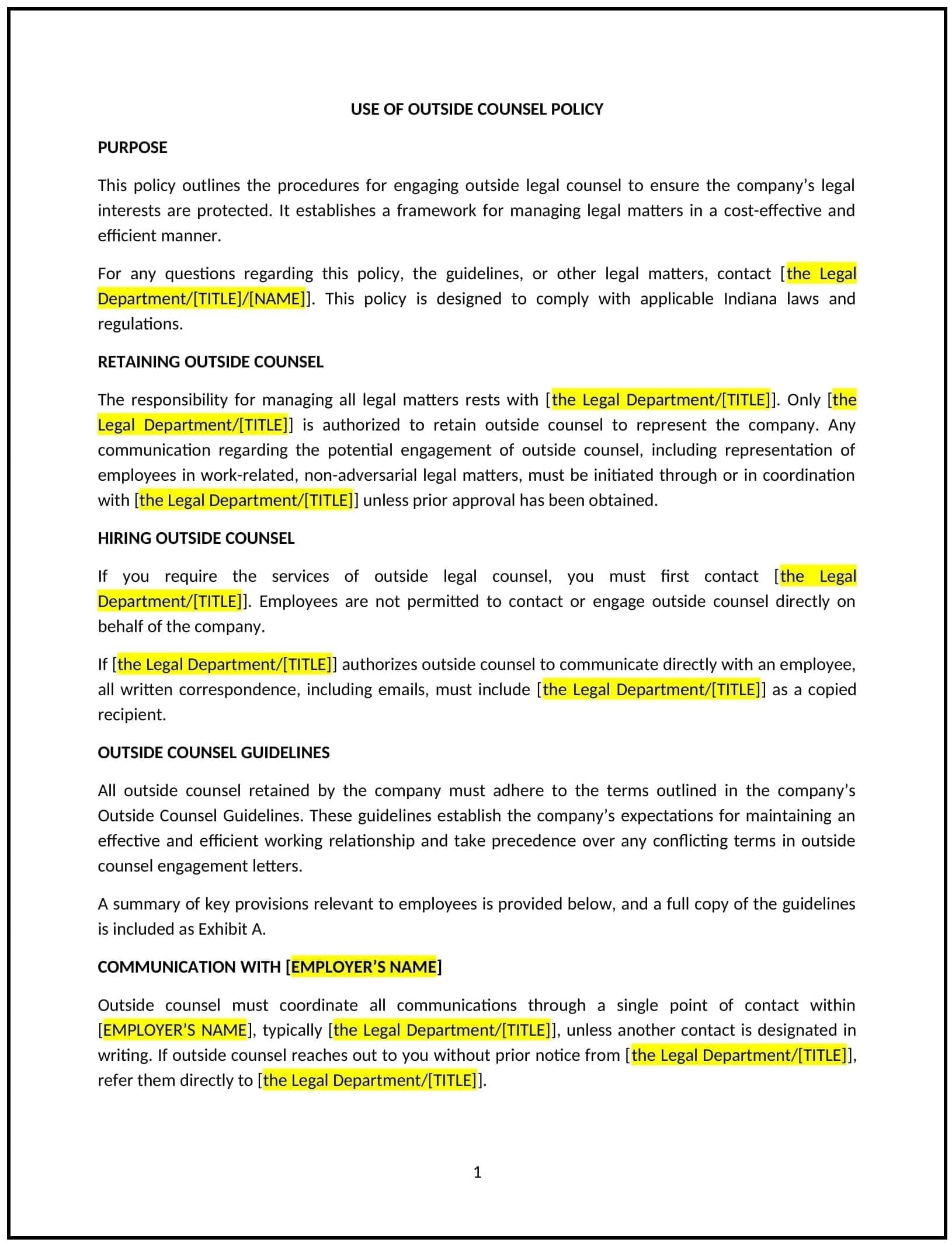
Outlines when Indiana companies should hire external legal support and how to manage approvals, billing, and oversight.
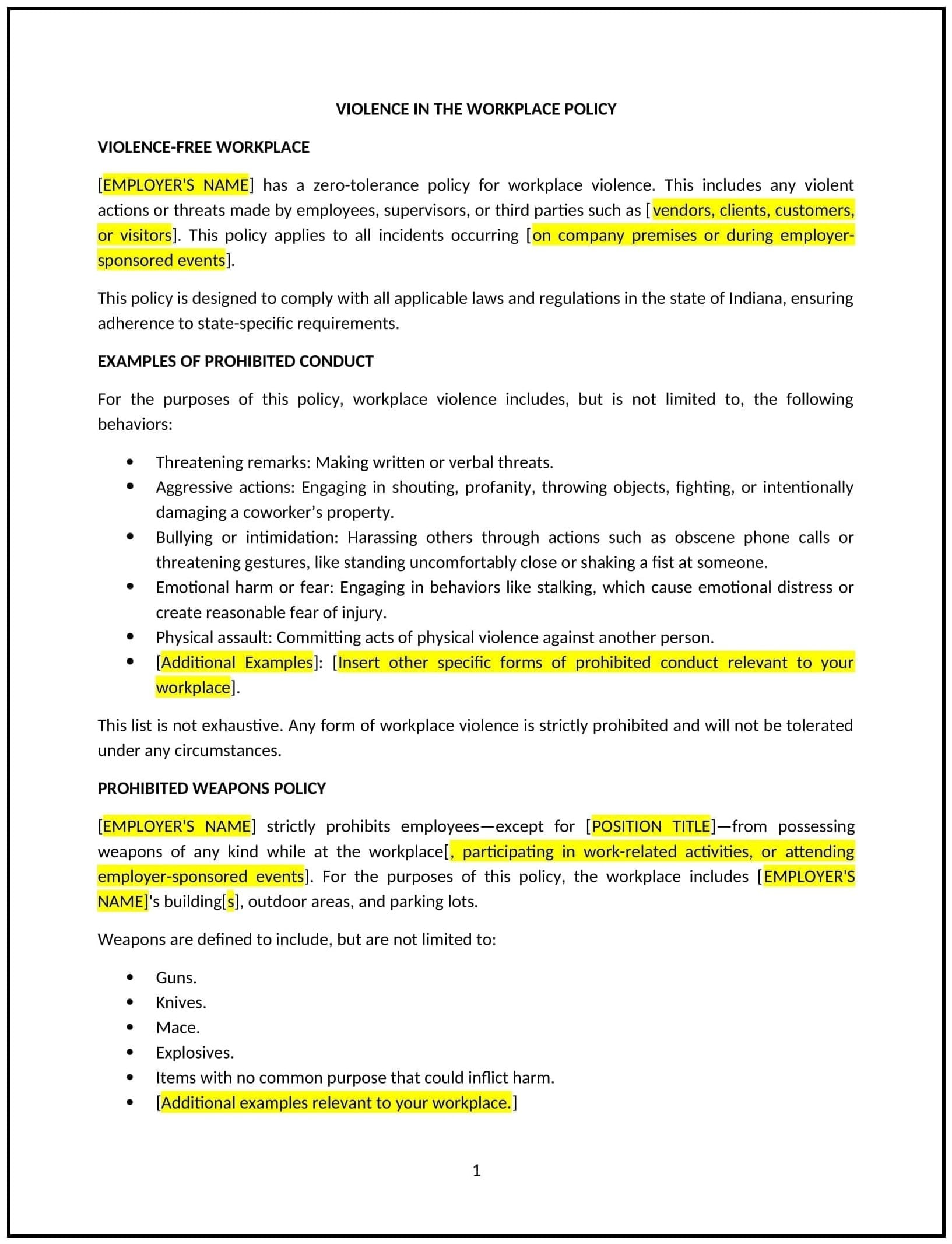
Prohibits threats, harassment, and physical violence in Indiana workplaces, with clear reporting and response procedures.
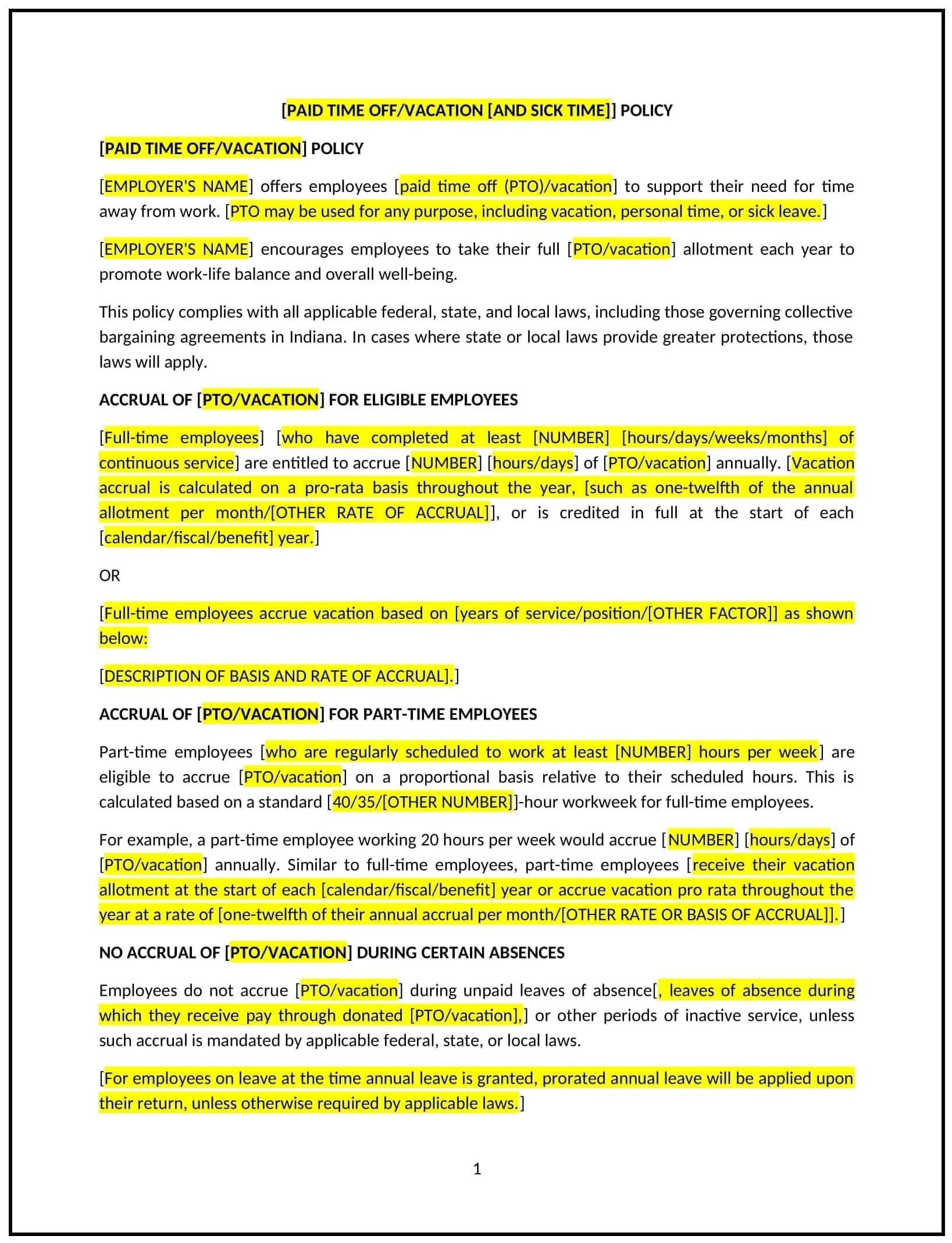
Defines how paid vacation is accrued, requested, and carried over for employees in Indiana, in compliance with company policy.