Ethics and conflict of interest policy (Kentucky): Free template
Got contracts to review? While you're here for policies, let Cobrief make contract review effortless—start your free review now.
Customize this template for free
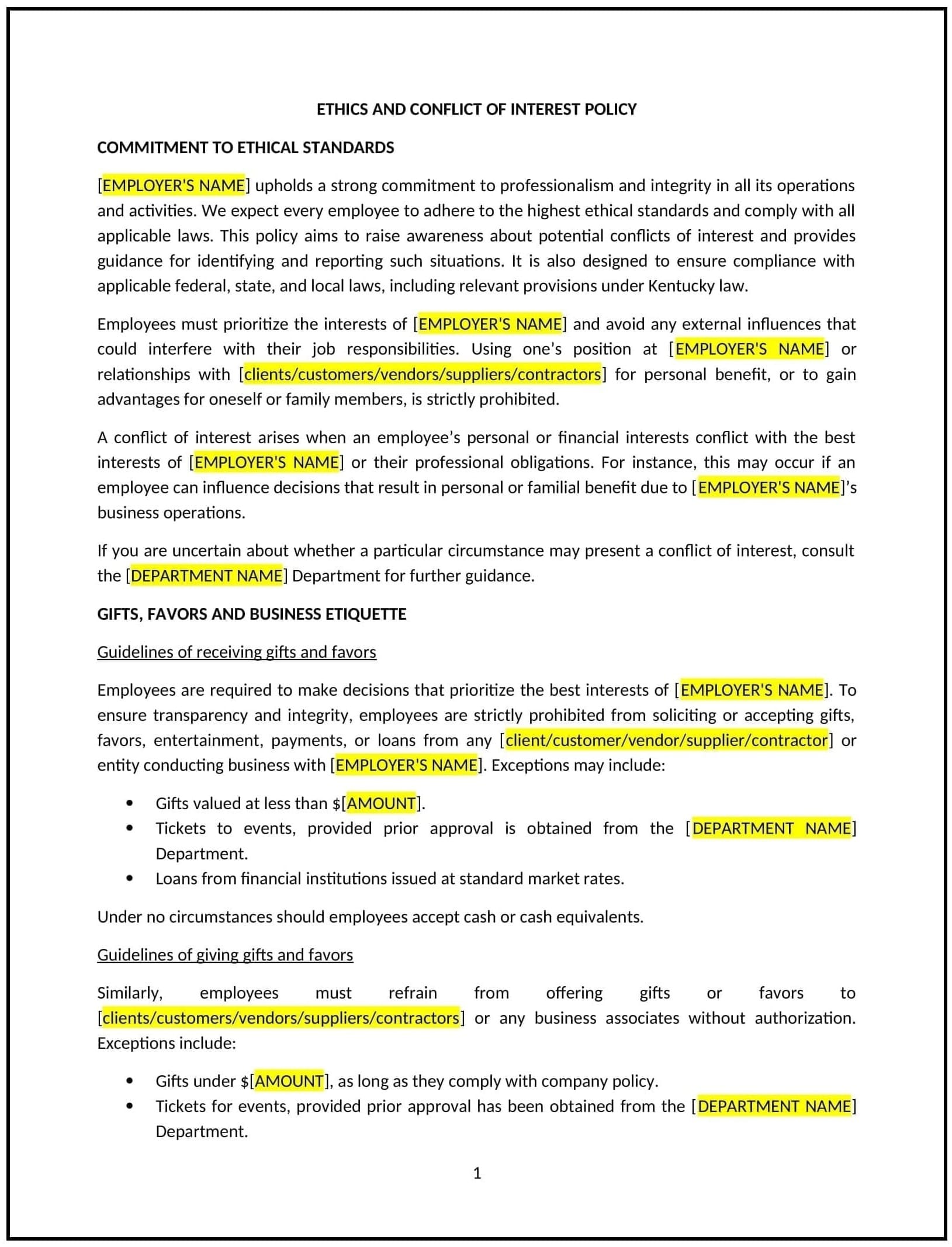
Ethics and conflict of interest policy (Kentucky)
An ethics and conflict of interest policy outlines the standards of ethical behavior expected of employees and addresses situations where personal interests could conflict with the business’s best interests. This policy helps Kentucky businesses maintain integrity, transparency, and accountability in all operations by ensuring that employees avoid actions that could harm the organization or its reputation.
By adopting this policy, businesses can build a culture of trust, mitigate risks, and promote ethical decision-making.
How to use this ethics and conflict of interest policy (Kentucky)
- Define ethical standards: Clearly outline the core ethical values expected of all employees, such as honesty, fairness, respect, and integrity.
- Identify conflict of interest situations: Specify what constitutes a conflict of interest, such as personal financial interests, relationships, or outside activities that could influence an employee’s professional decisions.
- Establish disclosure requirements: Require employees to disclose any potential conflicts of interest promptly to management or HR, especially when the conflict could impact their job responsibilities.
- Provide examples: Offer specific examples of potential conflicts of interest, such as accepting gifts from clients or competing with the business in a secondary role.
- Set procedures for managing conflicts: Define the steps the company will take when a conflict of interest arises, including recusal from decision-making, reassignment of duties, or other corrective actions.
- Emphasize transparency: Encourage open discussions about ethical dilemmas and conflicts of interest, ensuring that employees understand the importance of reporting potential issues.
- Clarify disciplinary actions: Specify the consequences of violating the ethics and conflict of interest policy, including warnings, suspension, or termination.
Benefits of using this ethics and conflict of interest policy (Kentucky)
This policy provides several advantages for Kentucky businesses:
- Promotes integrity: Establishes clear ethical guidelines that promote a culture of honesty, fairness, and accountability.
- Reduces risks: Helps prevent situations that could lead to legal liabilities, reputational damage, or conflicts with stakeholders.
- Builds trust: Encourages transparency and openness, fostering trust among employees, management, and external stakeholders.
- Enhances decision-making: Ensures that business decisions are made in the best interest of the company, without undue influence from personal interests.
- Supports compliance: Aligns with Kentucky and federal regulations related to business ethics, conflicts of interest, and corporate governance.
Tips for using this ethics and conflict of interest policy (Kentucky)
- Communicate the policy: Ensure all employees are aware of the policy during onboarding and periodically remind them of its importance through training and communications.
- Train employees: Offer regular training on identifying and avoiding conflicts of interest and encourage employees to ask questions when in doubt.
- Monitor adherence: Regularly review compliance with the policy and ensure any disclosed conflicts are managed appropriately.
- Foster a culture of ethics: Encourage employees to uphold high ethical standards by leading by example and promoting open discussions about ethical issues.
- Review periodically: Update the policy as needed to reflect changes in Kentucky laws, business operations, or emerging ethical concerns.