Ethics and conflict of interest policy (Minnesota): Free template
Got contracts to review? While you're here for policies, let Cobrief make contract review effortless—start your free review now.
Customize this template for free
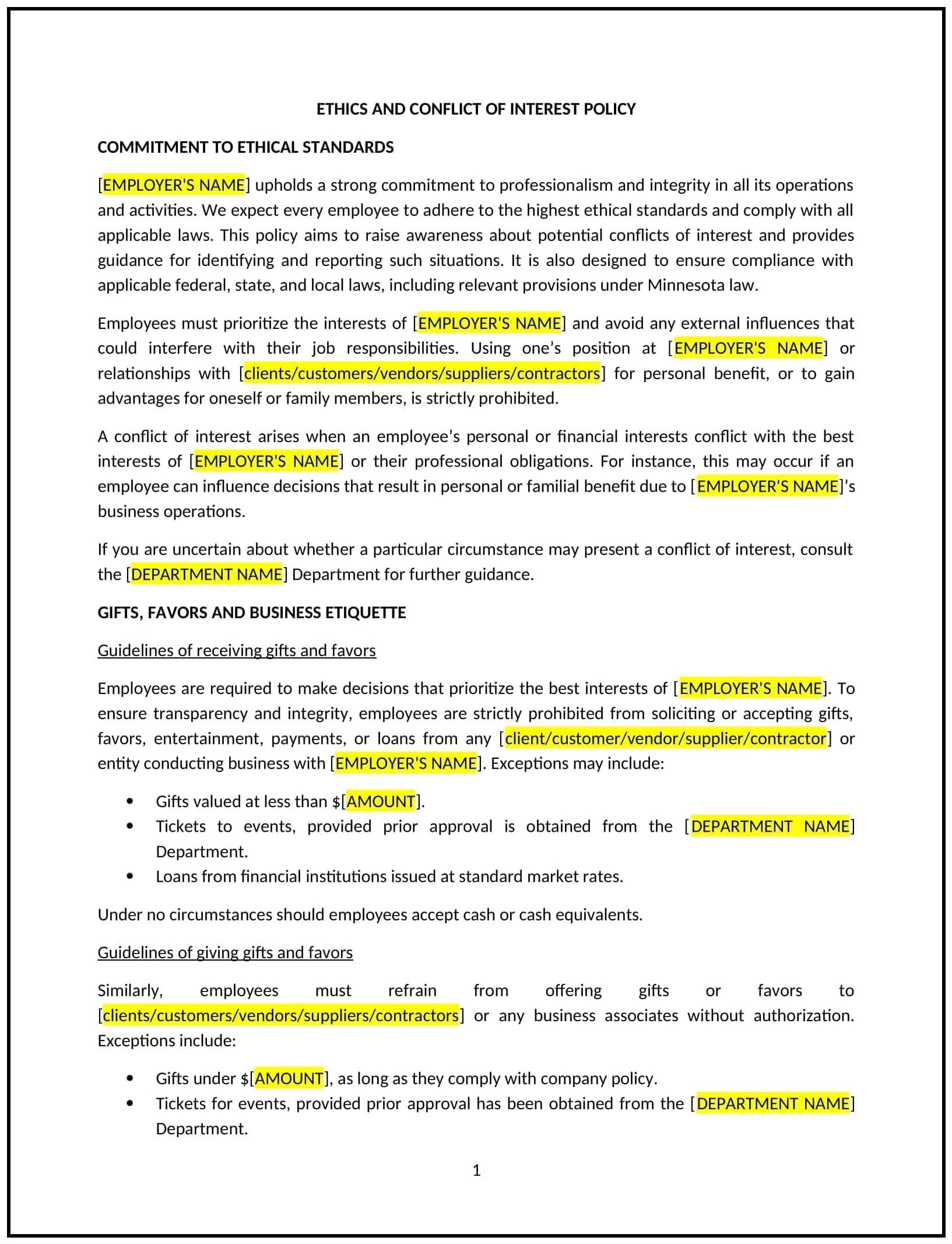
Ethics and conflict of interest policy (Minnesota)
This ethics and conflict of interest policy is designed to help Minnesota businesses establish clear guidelines for identifying and addressing potential conflicts of interest, ensuring that employees and management act in the best interest of the company. It outlines the principles of ethical conduct and provides procedures for disclosing, managing, and resolving conflicts that may arise.
By implementing this policy, businesses can maintain a culture of integrity, transparency, and fairness, ensuring that personal interests do not interfere with professional duties.
How to use this ethics and conflict of interest policy (Minnesota)
- Define conflicts of interest: Clearly explain what constitutes a conflict of interest, such as situations where personal, familial, or financial interests could influence an employee's professional decisions or actions.
- Establish disclosure procedures: Outline how employees should disclose potential conflicts of interest, including who to report to (e.g., HR, legal, or management) and the timeframe for disclosure.
- Set ethical standards: Define the ethical standards employees are expected to uphold, such as acting with honesty, integrity, and fairness, and avoiding situations where their judgment could be compromised.
- Provide guidelines for managing conflicts: Detail the steps that should be taken when a conflict of interest is identified, including the process for resolving the conflict, whether through recusal, reassignment of duties, or other actions.
- Address business relationships: Include guidelines for managing conflicts that may arise from personal relationships, such as when an employee has a close relationship with a vendor, client, or competitor.
- Establish monitoring and enforcement: Set up procedures for monitoring potential conflicts of interest and enforcing the policy, including disciplinary action for violations.
Benefits of using an ethics and conflict of interest policy (Minnesota)
Implementing this policy provides several advantages for Minnesota businesses:
- Promotes integrity: Encourages employees to act ethically and with transparency, fostering a culture of trust and accountability within the organization.
- Reduces risk of legal or financial issues: Identifying and addressing conflicts of interest early can prevent potential legal or financial risks related to unethical behavior.
- Enhances decision-making: By addressing conflicts of interest, businesses ensure that decisions are made based on what is best for the company, rather than being influenced by personal gain.
- Protects reputation: Demonstrating a commitment to ethical behavior helps build and maintain a positive company reputation with clients, stakeholders, and the community.
- Reflects Minnesota-specific considerations: Tailors the policy to comply with Minnesota’s laws and regulations regarding conflicts of interest and ethical conduct, addressing local business practices and expectations.
Tips for using this ethics and conflict of interest policy (Minnesota)
- Communicate clearly: Ensure that all employees understand the policy, its importance, and how to disclose potential conflicts of interest.
- Offer training: Provide regular training on recognizing and managing conflicts of interest, as well as the ethical standards the company expects from all employees.
- Monitor adherence: Regularly monitor employee behavior to ensure that conflicts of interest are identified and addressed promptly.
- Create a culture of transparency: Encourage employees to openly discuss potential conflicts and concerns, ensuring that they feel comfortable disclosing situations without fear of retaliation.
- Review and update regularly: Review the policy annually to ensure it remains relevant to the business, changes in local laws, and any evolving industry practices in Minnesota.