External communications policy (Alabama): Free template
Got contracts to review? While you're here for policies, let Cobrief make contract review effortless—start your free review now.
Customize this template for free
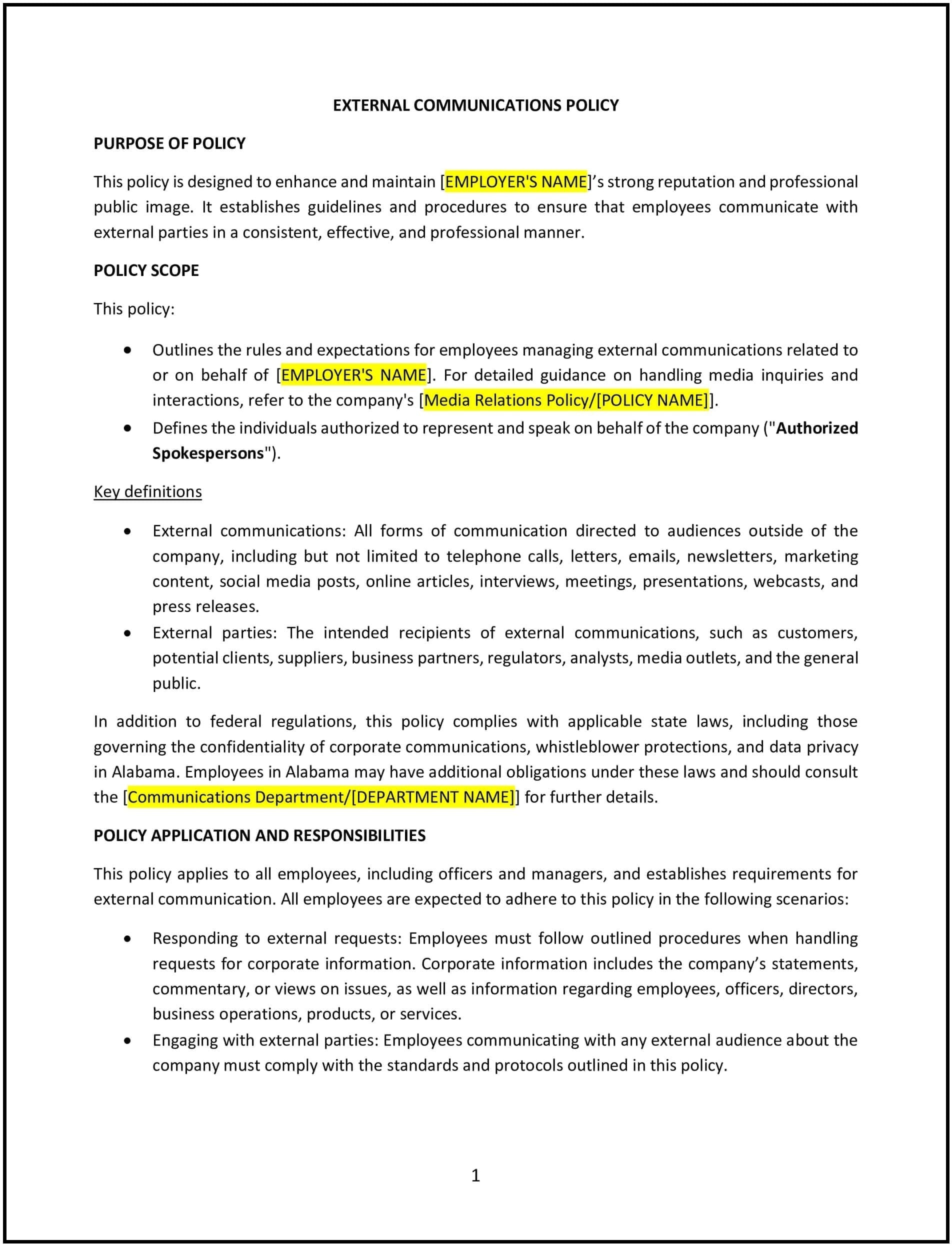
External communications policy (Alabama)
An external communications policy provides guidelines for how employees and representatives of a business interact with the public, media, clients, and other external stakeholders. For SMBs in Alabama, this policy helps ensure that all external messaging aligns with the company’s values and goals while protecting confidential information and mitigating risks of misinformation.
This policy outlines communication protocols, approval processes, and responsibilities, fostering consistency, professionalism, and transparency in all external interactions.
How to use this external communications policy (Alabama)
- Define communication channels: Specify which platforms or methods are included, such as emails, press releases, social media posts, or interviews.
- Establish approval processes: Identify who must review and approve external communications, particularly for sensitive topics or media engagement.
- Emphasize confidentiality: Highlight the importance of protecting proprietary or sensitive information when communicating externally.
- Provide spokesperson guidance: Designate authorized spokespersons for the company and clarify their roles in representing the business to the public or media.
- Address social media use: Include rules for employees posting about the company on personal or professional social media accounts, ensuring they align with company policies.
Benefits of using an external communications policy (Alabama)
A clear external communications policy provides numerous advantages for your business. Here’s how it helps:
- Ensures consistency: Maintains a unified message across all external communications, enhancing brand identity and reputation.
- Protects confidentiality: Safeguards sensitive business information from being inadvertently shared with external parties.
- Reduces misinformation: Establishes protocols to prevent unauthorized or inaccurate information from being disseminated.
- Enhances professionalism: Sets clear expectations for employees when interacting with clients, media, or the public.
- Strengthens public trust: Demonstrates the company’s commitment to clear, accurate, and responsible communication.
Tips for implementing an external communications policy (Alabama)
- Identify key stakeholders: Clarify which groups the policy applies to, such as employees, contractors, or third-party agencies.
- Train employees: Provide training on appropriate external communication practices, including email etiquette and social media guidelines.
- Monitor social media: Regularly review company-related social media activity to ensure compliance with the policy and address any issues promptly.
- Encourage internal collaboration: Foster collaboration between departments to ensure messaging aligns with business objectives and goals.
- Update as needed: Review and update the policy periodically to reflect changes in technology, company priorities, or legal considerations.