External communications policy (California): Free template
Got contracts to review? While you're here for policies, let Cobrief make contract review effortless—start your free review now.
Customize this template for free
External communications policy (California)
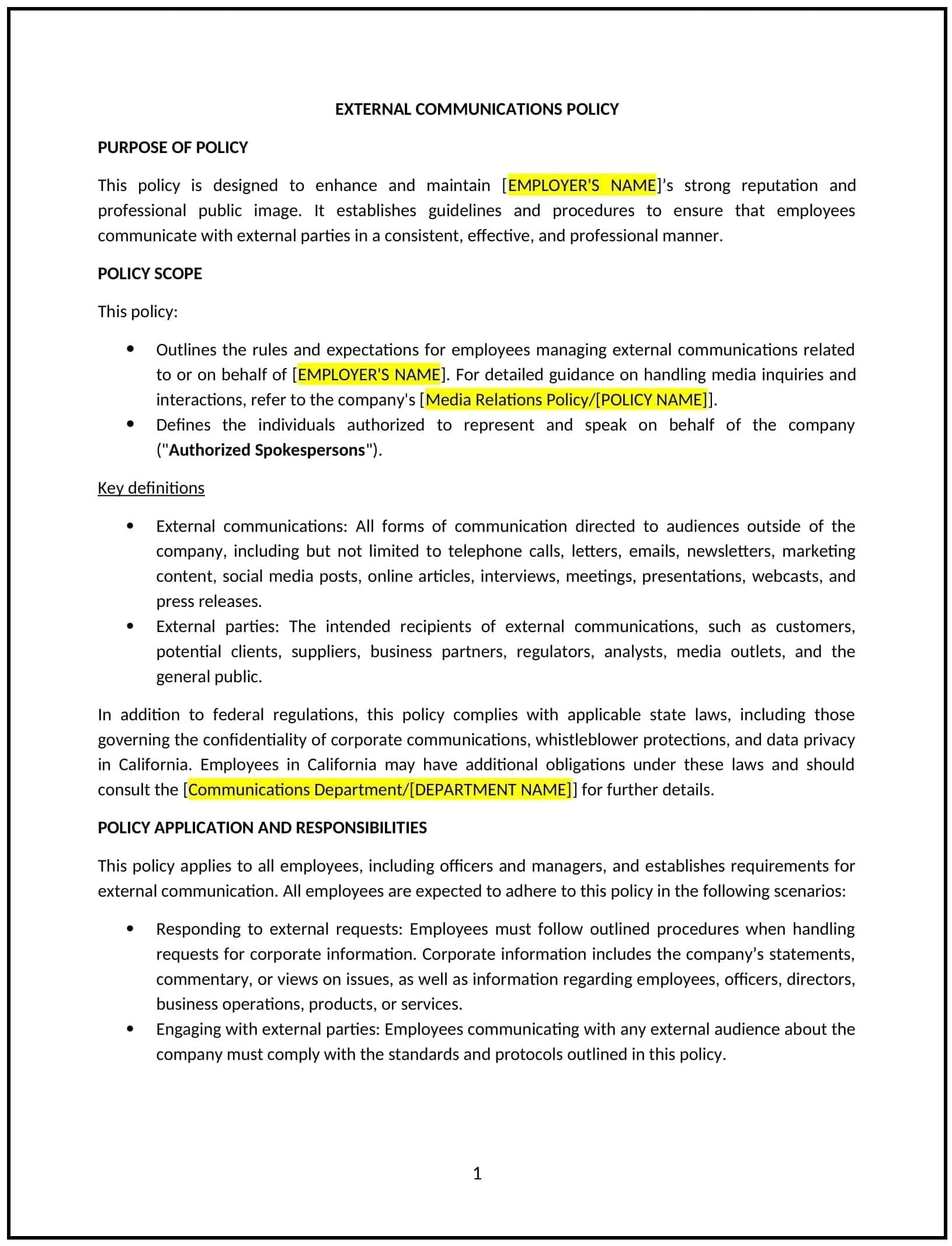
In California, an external communications policy provides businesses with guidelines for managing all forms of communication with external parties, such as media, clients, and the public. This policy ensures that communications align with the business’s objectives, protect its reputation, and support compliance with California laws, including privacy and consumer protection regulations.
This policy outlines the roles, responsibilities, and approval processes for external communications. By implementing this policy, California businesses can maintain consistency, mitigate risks, and promote clear and accurate messaging.
How to use this external communications policy (California)
- Define communication channels: Specify the types of external communications covered, such as press releases, social media posts, and client correspondence.
- Assign spokespersons: Designate authorized individuals to represent the business in public forums or media interactions.
- Establish approval processes: Outline steps for reviewing and approving communications before release, ensuring accuracy and compliance.
- Address confidentiality: Prohibit the disclosure of sensitive business information, including trade secrets or proprietary data, without authorization.
- Train employees: Educate staff on their roles in external communications and the importance of adhering to the policy.
Benefits of using this external communications policy (California)
This policy offers several advantages for California businesses:
- Supports compliance: Reflects California laws governing privacy, advertising, and consumer communication standards.
- Protects reputation: Ensures consistent messaging that aligns with the business’s values and objectives.
- Reduces risks: Minimizes potential liabilities arising from inaccurate or unauthorized communications.
- Promotes accountability: Clarifies roles and responsibilities for external messaging.
- Enhances clarity: Ensures external communications are clear, accurate, and professional.
Tips for using this external communications policy (California)
- Reflect California-specific laws: Address legal requirements for external communications, such as advertising disclosures and privacy considerations under the CCPA.
- Monitor compliance: Regularly review external communications to ensure they align with the policy and legal standards.
- Provide training: Educate employees and authorized spokespersons on best practices for public communications.
- Use approval workflows: Implement structured approval processes to review messaging before public release.
- Update regularly: Revise the policy as needed to reflect changes in California laws, business practices, or communication channels.