External communications policy (Colorado): Free template
Got contracts to review? While you're here for policies, let Cobrief make contract review effortless—start your free review now.
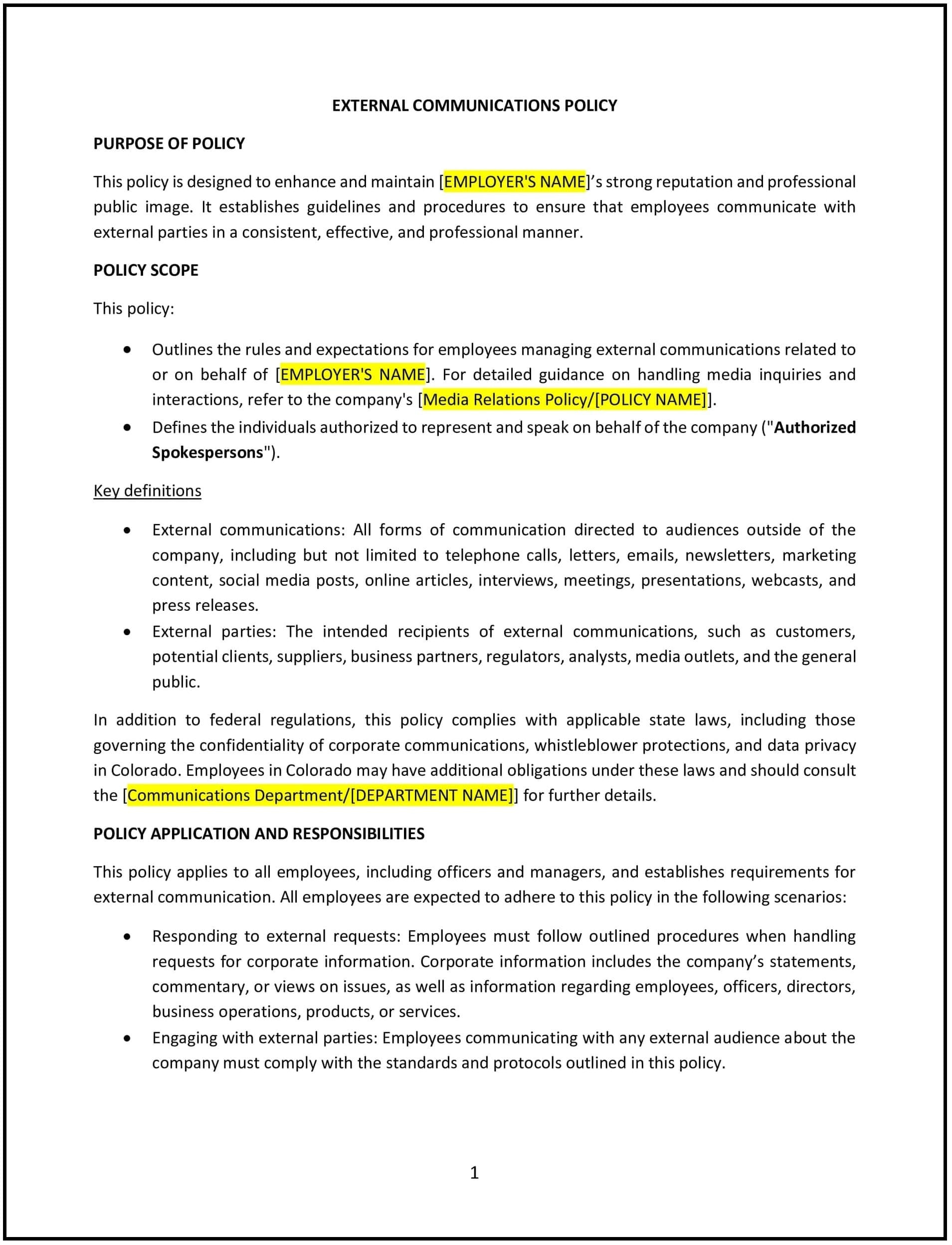
Customize this template for free
External communications policy (Colorado)
In Colorado, an external communications policy outlines the guidelines for how employees and management communicate with the public, media, and external stakeholders on behalf of the business. The policy ensures that the business maintains a consistent, professional, and legally compliant message while safeguarding its reputation and relationships with customers, investors, and the community.
By implementing this policy, Colorado businesses can establish clear communication protocols, avoid misrepresentation, and ensure that all external communications align with the company’s goals and values.
How to use this external communications policy (Colorado)
- Define external communications: Clearly specify what constitutes external communications, including press releases, social media posts, customer interactions, public statements, and other forms of communication with external audiences.
- Establish approval process: Outline the process for obtaining approval for external communications, including who is authorized to speak on behalf of the business and what messages need to be reviewed before dissemination.
- Maintain consistency: Set guidelines for ensuring consistency in messaging across all communication channels, ensuring that the business’s tone, values, and key messages are aligned in all external communications.
- Provide media relations guidelines: Establish specific procedures for engaging with the media, including designated spokespersons, how media inquiries should be handled, and how to respond to press requests or crisis situations.
- Address social media: Set rules for employee use of social media in relation to the business, ensuring that personal social media accounts are kept separate from professional representations of the company.
- Protect confidentiality: Ensure that confidential or proprietary information is not shared inappropriately during external communications, including sensitive business strategies, financials, or personal data.
Benefits of using this external communications policy (Colorado)
This policy offers several advantages for Colorado businesses:
- Supports consistency: Ensures that all communications reflect the business’s values and objectives, creating a cohesive and professional image across all external interactions.
- Reduces legal risks: By clearly defining what can and cannot be communicated, the policy helps reduce the risk of accidental miscommunication, legal liabilities, or breaches of confidentiality.
- Enhances reputation management: Protects the business’s reputation by ensuring that external communications are accurate, respectful, and aligned with public relations strategies.
- Improves stakeholder trust: Builds trust with customers, investors, and the public by ensuring that communications are transparent, consistent, and aligned with the company’s ethical standards.
- Supports business goals: Helps align external communications with the broader business strategy, ensuring that marketing, public relations, and customer communications all support the same objectives.
Tips for using this external communications policy (Colorado)
- Reflect Colorado-specific laws: Ensure that the policy complies with Colorado’s regulations regarding marketing, advertising, data privacy, and other relevant communications laws.
- Provide training: Educate employees, especially those in marketing, public relations, and customer-facing roles, on the policy’s guidelines and the importance of maintaining consistent and legally compliant communications.
- Review regularly: Periodically review and update the policy to adapt to changing regulations, new communication platforms (e.g., social media), and evolving business objectives.
- Empower designated spokespersons: Identify and train specific employees who are authorized to communicate on behalf of the company, ensuring they are well-equipped to represent the business accurately and professionally.
- Monitor external communications: Implement monitoring tools to track external communications and ensure they align with the business’s policy and public relations strategies.