External communications policy (Connecticut): Free template
Got contracts to review? While you're here for policies, let Cobrief make contract review effortless—start your free review now.
Customize this template for free
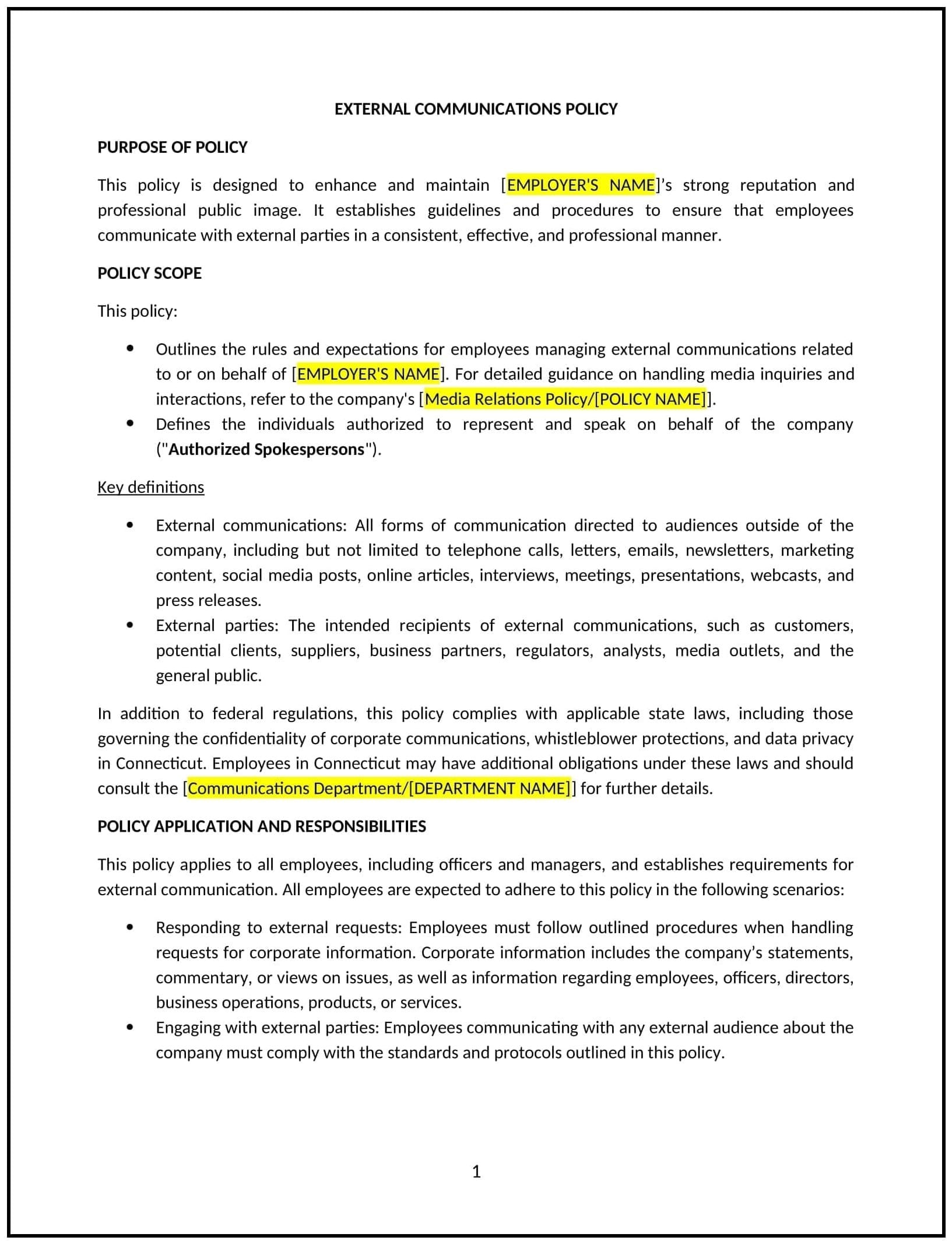
External communications policy (Connecticut)
An external communications policy helps Connecticut businesses manage how they interact with the public, media, and external stakeholders. This policy outlines who is authorized to communicate on behalf of the company, the processes for handling public statements, and the guidelines for ensuring that all external communications are consistent, accurate, and aligned with the company’s values and objectives.
By implementing this policy, businesses can protect their reputation, maintain consistent messaging, and ensure that all public-facing communications reflect the company’s best interests.
How to use this external communications policy (Connecticut)
- Define authorized spokespeople: Specify which individuals within the company are authorized to communicate with the media, investors, and the public.
- Establish messaging guidelines: Provide clear guidelines for consistent messaging across all platforms, including press releases, social media, emails, and other external communications.
- Set approval processes: Outline the approval process for all external communications to ensure that they are accurate, aligned with company goals, and legally compliant before being sent out.
- Address confidentiality: Include guidelines for protecting sensitive company information, ensuring that nothing confidential is shared without prior approval.
- Handle crisis communication: Define the process for managing communications during crises or emergencies, including how to respond to negative press or public scrutiny.
Benefits of using this external communications policy (Connecticut)
This policy offers several benefits for Connecticut businesses:
- Protects the company’s reputation: Ensures that all communications reflect the company’s values and objectives, reducing the risk of miscommunication or damage to the brand.
- Enhances consistency: Helps ensure that messaging is consistent across all external channels, providing a unified voice to clients, investors, and the public.
- Reduces legal risks: Ensures that all public statements are legally compliant, reducing the risk of legal consequences from inaccurate or inappropriate communications.
- Improves crisis management: Provides a clear framework for handling media inquiries or negative publicity, helping the company manage crises more effectively.
- Builds trust: Demonstrates professionalism and transparency in external communications, which can strengthen relationships with customers, stakeholders, and the public.
Tips for using this external communications policy (Connecticut)
- Communicate expectations clearly: Ensure all employees understand the policy and know who is authorized to speak on behalf of the company.
- Monitor external communications: Regularly review public-facing communications to ensure they align with company standards and messaging guidelines.
- Provide training: Offer training for authorized spokespeople on how to handle media inquiries, respond to difficult questions, and manage public-facing communications.
- Be proactive: Encourage proactive communication with the public and stakeholders to build positive relationships and address potential issues before they escalate.
- Review periodically: Update the policy regularly to reflect changes in company strategy, industry trends, or legal requirements.