External communications policy (Delaware): Free template
Got contracts to review? While you're here for policies, let Cobrief make contract review effortless—start your free review now.
Customize this template for free
External communications policy (Delaware)
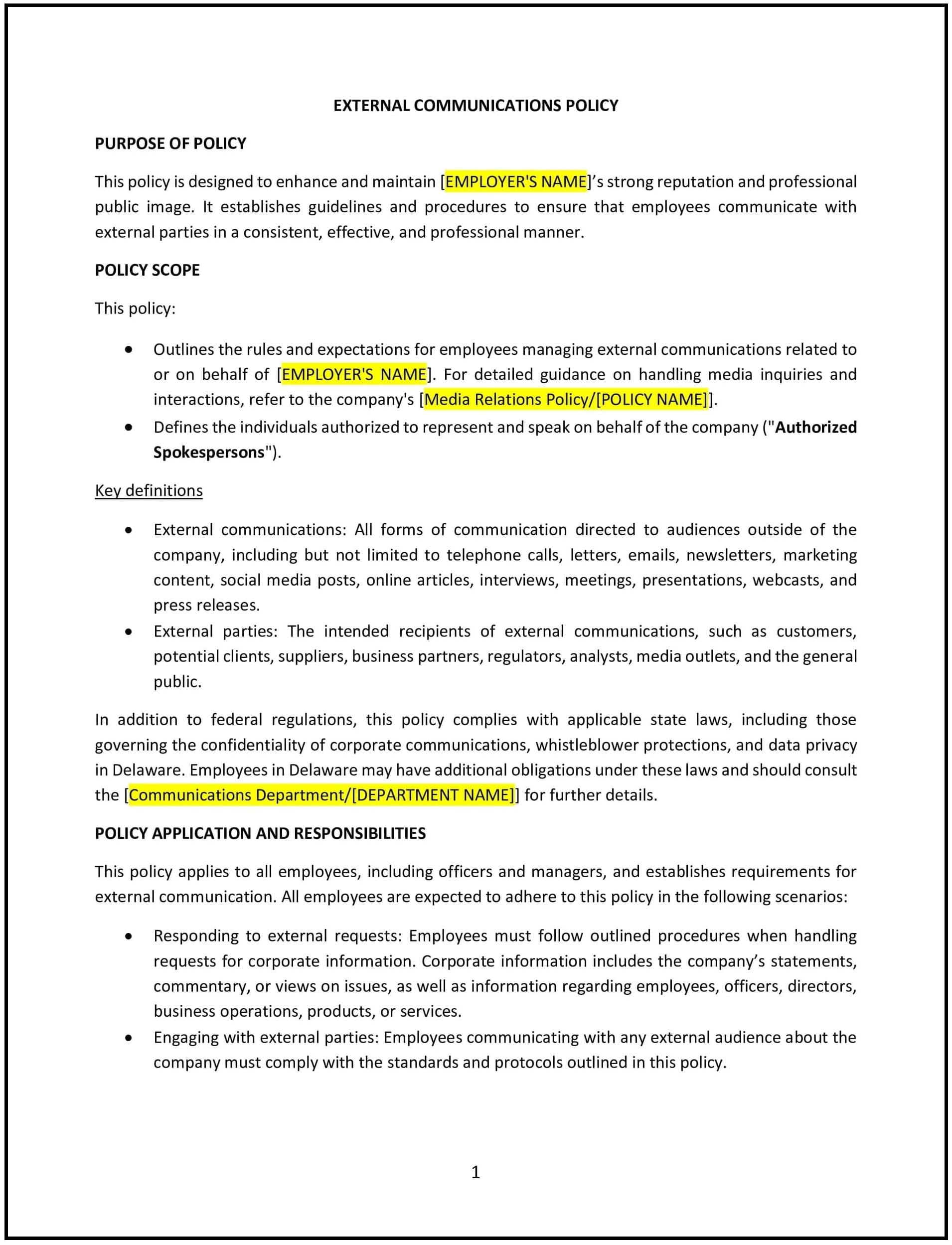
An external communications policy helps Delaware businesses manage how employees interact with external stakeholders, such as clients, media, and the public. This policy outlines guidelines for consistent messaging, appropriate communication channels, and handling sensitive information to safeguard the company’s reputation and ensure compliance with Delaware laws.
By implementing this policy, businesses can promote professionalism, protect confidential information, and maintain a consistent brand voice.
How to use this external communications policy (Delaware)
- Define authorized spokespersons: Specify which employees are permitted to speak on behalf of the company to external parties, such as media or clients.
- Establish approval processes: Require prior approval for public statements, press releases, or other communications representing the company.
- Outline communication channels: Provide guidelines for using official communication platforms, such as email, social media, or public statements.
- Protect confidentiality: Emphasize the importance of safeguarding proprietary and sensitive information in external communications.
- Manage crisis communications: Include protocols for addressing emergencies or public relations crises to ensure timely and appropriate responses.
- Train employees: Offer training on external communication best practices and the company’s expectations for representing the brand.
Benefits of using this external communications policy (Delaware)
This policy offers several benefits for Delaware businesses:
- Maintains brand consistency: Ensures all external communications align with the company’s values, tone, and messaging.
- Protects reputation: Reduces the risk of misinformation or inappropriate statements damaging the company’s public image.
- Safeguards confidential information: Minimizes the risk of unauthorized disclosures that could harm the business or its stakeholders.
- Enhances professionalism: Provides clear guidelines for engaging with external audiences effectively and respectfully.
- Promotes legal compliance: Aligns with Delaware regulations and industry standards for external communications and information sharing.
Tips for using this external communications policy (Delaware)
- Communicate the policy clearly: Ensure employees understand the guidelines for external communications and their role in maintaining the company’s reputation.
- Centralize media inquiries: Direct all media-related questions to designated spokespersons to ensure consistent and accurate messaging.
- Monitor social media use: Provide specific guidelines for employees’ use of personal and professional social media accounts when discussing the company.
- Prepare for crises: Develop a crisis communications plan that aligns with this policy to address emergencies or reputational risks effectively.
- Review regularly: Update the policy to reflect changes in Delaware laws, business needs, or communication platforms.