External communications policy (Hawaii): Free template
Got contracts to review? While you're here for policies, let Cobrief make contract review effortless—start your free review now.
Customize this template for free
External communications policy (Hawaiʻi)
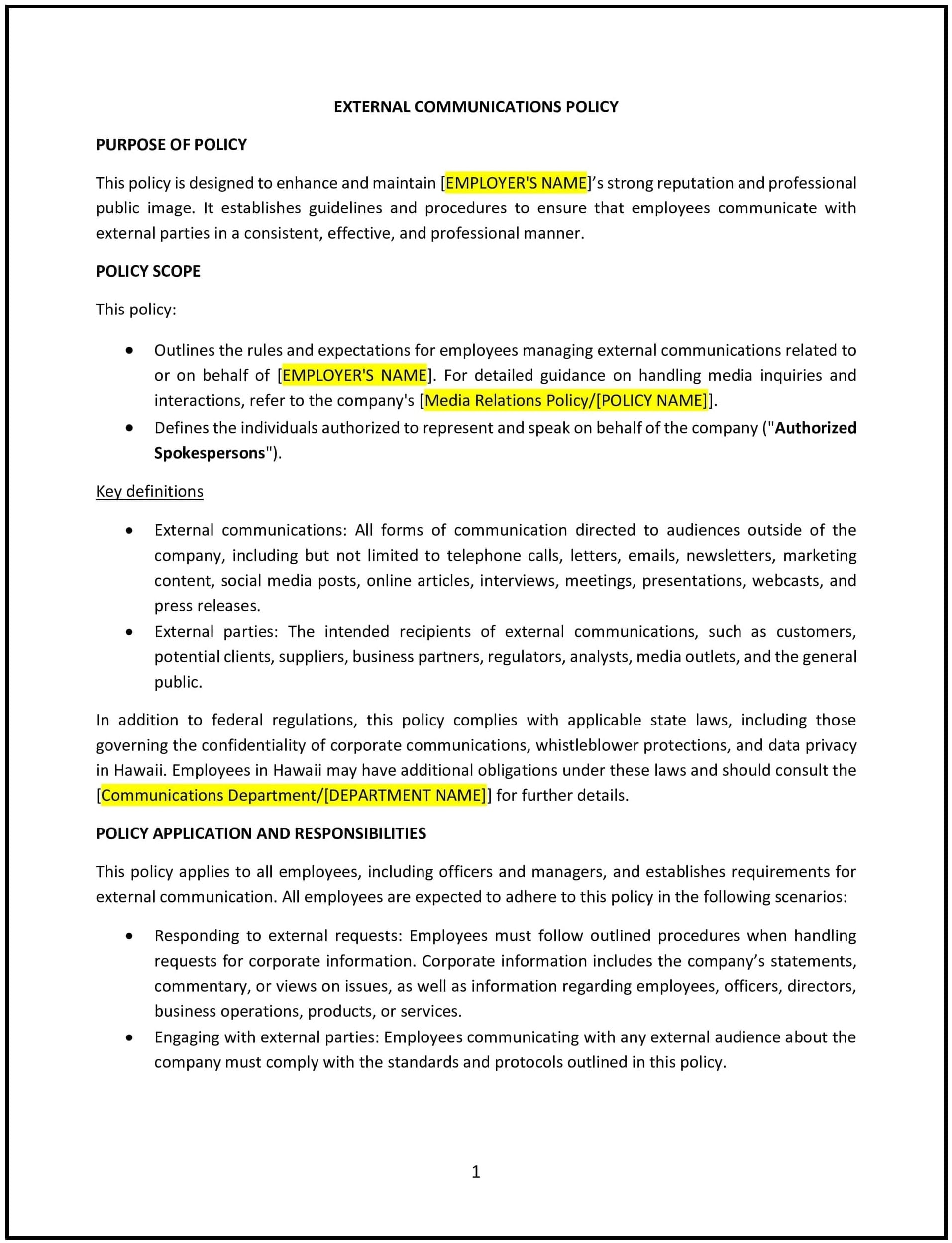
An external communications policy helps Hawaiʻi businesses establish guidelines for managing interactions with the public, media, and other external stakeholders. This policy outlines procedures for creating, approving, and distributing communications, such as press releases, social media posts, and marketing materials, while addressing Hawaiʻi’s unique cultural and business environment. It is designed to maintain a consistent brand voice, protect the business’s reputation, and ensure messages align with the company’s values and goals.
By implementing this policy, businesses in Hawaiʻi can enhance their public image, build trust with stakeholders, and communicate effectively with the community.
How to use this external communications policy (Hawaiʻi)
- Define scope and purpose: Specify the types of external communications covered by the policy, such as press releases, social media posts, or customer communications, and outline the policy’s purpose.
- Establish approval processes: Provide guidelines for creating and approving external communications, including designated approvers and review timelines.
- Maintain brand consistency: Outline standards for tone, style, and messaging to ensure all communications reflect the business’s brand and values.
- Address cultural sensitivity: Emphasize the importance of respecting Hawaiʻi’s diverse cultural heritage in all external communications.
- Train employees: Educate staff on the policy’s guidelines, including how to create and approve communications that align with the business’s standards.
- Monitor communications: Regularly review external communications to ensure adherence to the policy and address any issues promptly.
- Communicate the policy: Share the policy with employees during onboarding and through internal communications to ensure awareness and understanding.
- Review and update the policy: Regularly assess the policy’s effectiveness and make adjustments as needed to reflect changes in business needs, cultural norms, or industry standards.
Benefits of using this external communications policy (Hawaiʻi)
This policy offers several advantages for Hawaiʻi businesses:
- Protects the business’s reputation: Clear guidelines help prevent miscommunications or inappropriate messages that could harm the business’s image.
- Maintains brand consistency: Standardized procedures ensure all communications reflect the business’s brand voice and values.
- Builds trust with stakeholders: Professional and culturally sensitive communications foster trust with customers, partners, and the community.
- Enhances public image: A consistent and thoughtful approach to external communications strengthens the business’s reputation in Hawaiʻi.
- Reduces risks: A structured policy minimizes the likelihood of legal or reputational issues arising from poorly managed communications.
- Encourages accountability: Employees understand their responsibilities for creating and approving external communications.
- Supports inclusivity: Respecting Hawaiʻi’s cultural diversity in communications demonstrates the business’s commitment to inclusivity.
Tips for using this external communications policy (Hawaiʻi)
- Communicate the policy effectively: Share the policy with employees during onboarding and through regular reminders, such as emails or training sessions.
- Provide training: Educate staff on the policy’s guidelines, including how to create and approve communications that align with the business’s standards.
- Use templates: Provide approved templates for common communications, such as press releases or social media posts, to ensure consistency.
- Monitor communications: Regularly review external communications to ensure adherence to the policy and address any issues promptly.
- Be transparent: Clearly explain the policy’s purpose, benefits, and expectations to employees to build trust and cooperation.
- Review the policy periodically: Update the policy as needed to reflect changes in business needs, cultural norms, or industry standards.