External communications policy (Kansas): Free template
Got contracts to review? While you're here for policies, let Cobrief make contract review effortless—start your free review now.
Customize this template for free
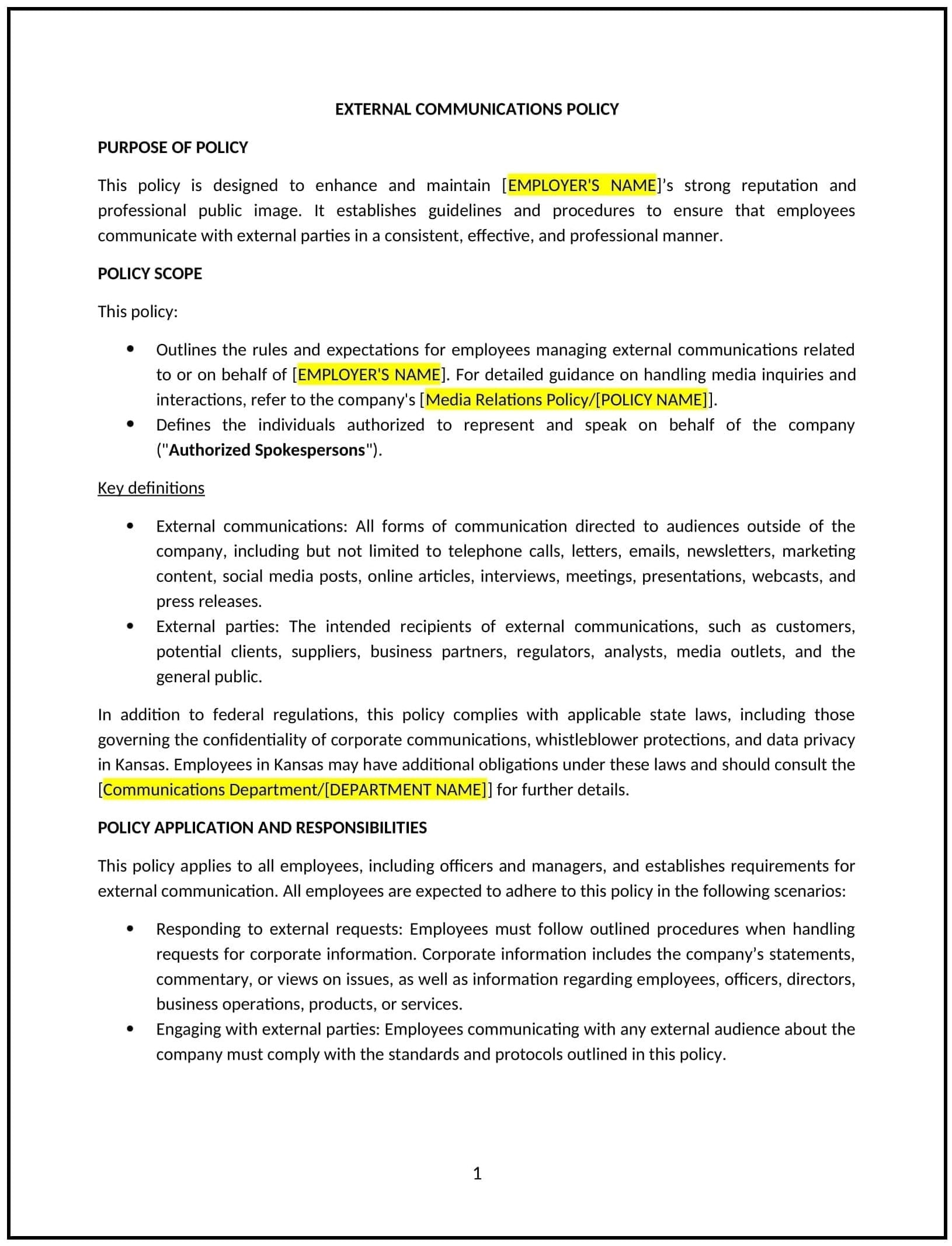
External communications policy (Kansas)
An external communications policy helps Kansas businesses manage how they interact with the public, the media, and external stakeholders, ensuring that all messages reflect the company’s values and are consistent with its brand. This policy outlines the procedures for approving, reviewing, and disseminating external communications, such as press releases, social media posts, public statements, and marketing materials.
By implementing this policy, businesses can control their messaging, protect their reputation, and maintain a consistent and professional image when communicating externally.
How to use this external communications policy (Kansas)
- Define key spokespersons: Businesses should designate individuals who are authorized to speak on behalf of the company, such as senior management, PR personnel, or designated communication teams.
- Set approval procedures: Businesses should establish a formal approval process for all external communications, ensuring they align with company messaging and legal requirements before being released.
- Outline channels and platforms: Businesses should define the approved channels for external communication, such as social media, websites, email newsletters, and press releases, and specify guidelines for each.
- Establish crisis communication protocols: Businesses should prepare a clear plan for communicating during a crisis, including how to address media inquiries and internal communication strategies.
- Protect confidentiality: Businesses should ensure that sensitive information is not shared externally without prior approval and outline how confidential data will be handled.
- Maintain brand consistency: Businesses should set guidelines for tone, language, and visuals to ensure that all external communication aligns with the company’s brand identity.
- Review and update regularly: Businesses should periodically assess the policy to ensure it reflects changing communication needs, new technologies, or legal developments.
Benefits of using an external communications policy (Kansas)
- Protects the company’s reputation: Helps businesses manage their public image by controlling what is communicated externally and ensuring consistent messaging.
- Promotes brand consistency: Ensures that all communication aligns with the company’s values, voice, and identity, reinforcing brand recognition.
- Reduces risks of misinformation: Prevents unapproved or inaccurate information from being shared externally, reducing the risk of miscommunication or legal challenges.
- Streamlines communication processes: Establishes clear guidelines and approval workflows, making it easier to handle communications efficiently.
- Improves crisis management: Prepares businesses for managing communication during a crisis, helping mitigate damage to the company’s reputation.
- Enhances trust with stakeholders: Clear, consistent communication builds trust with customers, investors, the media, and the public.
Tips for using this external communications policy (Kansas)
- Communicate the policy effectively: Businesses should ensure all employees, especially those involved in public-facing roles, are aware of the external communications policy.
- Provide training for spokespersons: Key individuals should be trained on how to represent the company in the media, including handling interviews and public statements.
- Monitor communication channels: Businesses should regularly monitor external communication channels to ensure that they align with company policy and respond promptly to any deviations.
- Be prepared for crises: Businesses should regularly update crisis communication plans to reflect new potential risks and ensure that all spokespeople are well-prepared.
- Maintain transparency: Businesses should aim to be transparent with external stakeholders when appropriate, balancing openness with the need to protect sensitive information.
- Update regularly: Businesses should review the policy annually or whenever changes in the organization, industry, or legal landscape require updates to the communication guidelines.