External communications policy (Minnesota): Free template
Got contracts to review? While you're here for policies, let Cobrief make contract review effortless—start your free review now.
Customize this template for free
External communications policy (Minnesota)
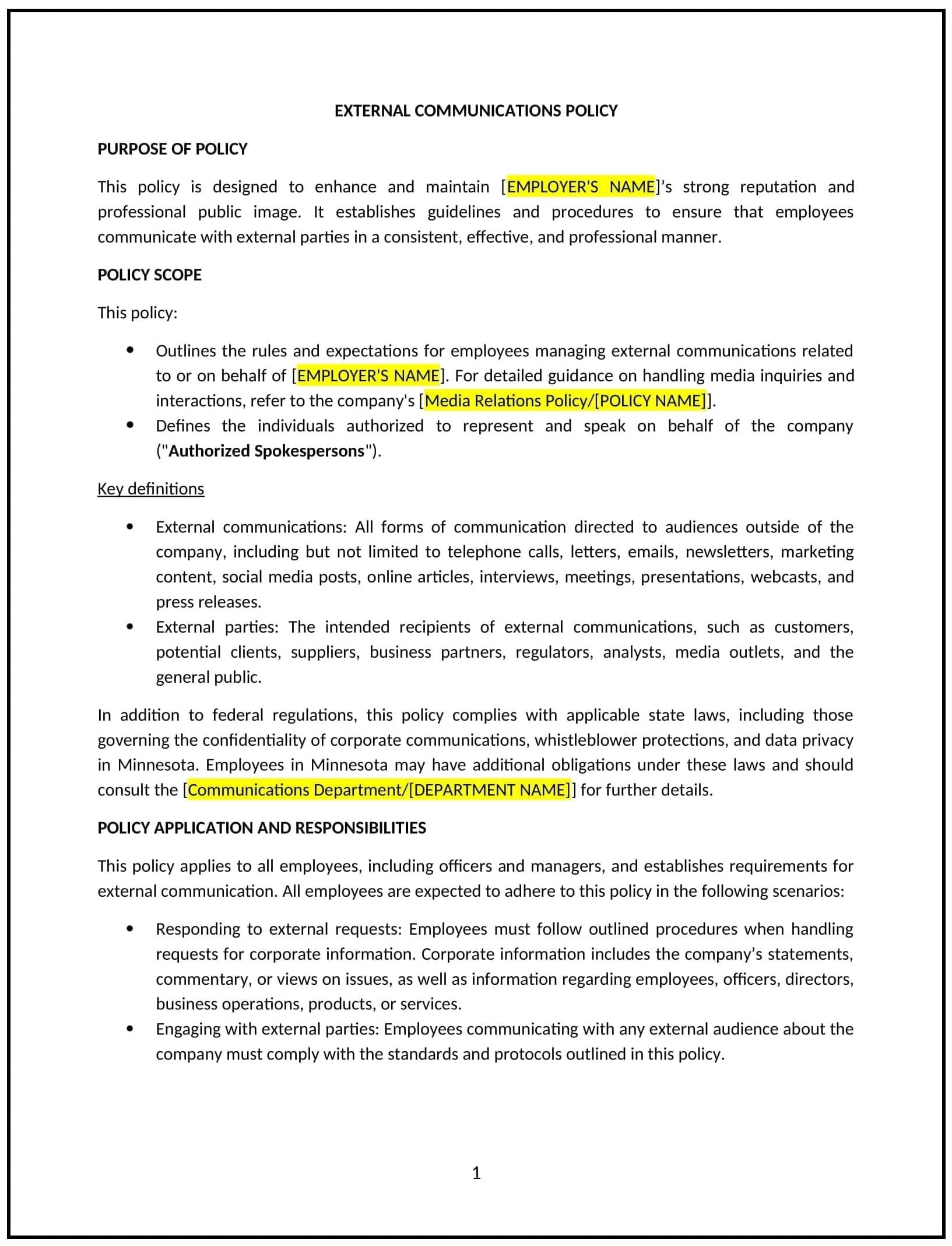
This external communications policy is designed to help Minnesota businesses establish guidelines for communicating with the public, media, and other external stakeholders. It outlines the roles and responsibilities of employees regarding external communications, ensuring consistency, accuracy, and alignment with the company’s values and objectives.
By implementing this policy, businesses can protect their brand reputation, manage public perception, and maintain professional and effective communication with external parties.
How to use this external communications policy (Minnesota)
- Define external communication channels: Specify the various platforms and channels for external communication, such as press releases, social media, public statements, and official company websites.
- Assign spokesperson roles: Designate key personnel responsible for handling external communications, such as the CEO, PR manager, or communication director, ensuring that only authorized individuals speak on behalf of the company.
- Set content guidelines: Outline the standards for tone, language, and messaging to ensure consistency across all communications. This may include avoiding certain sensitive topics or adhering to a specific style guide.
- Establish crisis communication procedures: Detail the steps for communicating during a crisis or emergency situation, ensuring that information is timely, accurate, and coordinated.
- Clarify employee participation: Specify whether employees can engage in external communication on behalf of the company, and under what circumstances (e.g., through company blogs, social media posts, or public forums).
- Address confidentiality and privacy: Ensure that employees are aware of the importance of protecting confidential or sensitive company information when communicating externally.
Benefits of using an external communications policy (Minnesota)
Implementing this policy provides several advantages for Minnesota businesses:
- Protects brand reputation: A consistent and well-managed approach to external communication helps maintain a positive public image and build trust with customers, partners, and the community.
- Ensures consistent messaging: By outlining communication guidelines, businesses can ensure that all messages align with the company’s values, goals, and objectives.
- Reduces risk of misinformation: Clear procedures for communicating with external parties reduce the risk of misstatements or conflicting information, which could harm the company’s credibility.
- Improves crisis management: A well-defined crisis communication plan allows businesses to respond quickly and effectively to emergencies, protecting the company’s reputation during challenging situations.
- Reflects Minnesota-specific considerations: Tailors the policy to Minnesota’s business environment and community expectations, including respecting local laws and cultural sensitivities in external communications.
Tips for using this external communications policy (Minnesota)
- Communicate clearly: Ensure that all employees, particularly those in customer-facing roles, understand the company’s expectations and guidelines for external communication.
- Offer training: Provide training to employees on how to handle external communications, emphasizing the importance of consistency, tone, and confidentiality.
- Monitor communication channels: Regularly review and monitor external communication channels, such as social media and media coverage, to ensure that messaging aligns with company policy and values.
- Implement a crisis communication plan: Ensure that all employees know who to contact in the event of a crisis and have a clear procedure for managing communication during emergencies.
- Review regularly: Periodically review and update the policy to adapt to changes in business operations, new communication technologies, or evolving public relations strategies in Minnesota.