External communications policy (Missouri): Free template
Got contracts to review? While you're here for policies, let Cobrief make contract review effortless—start your free review now.
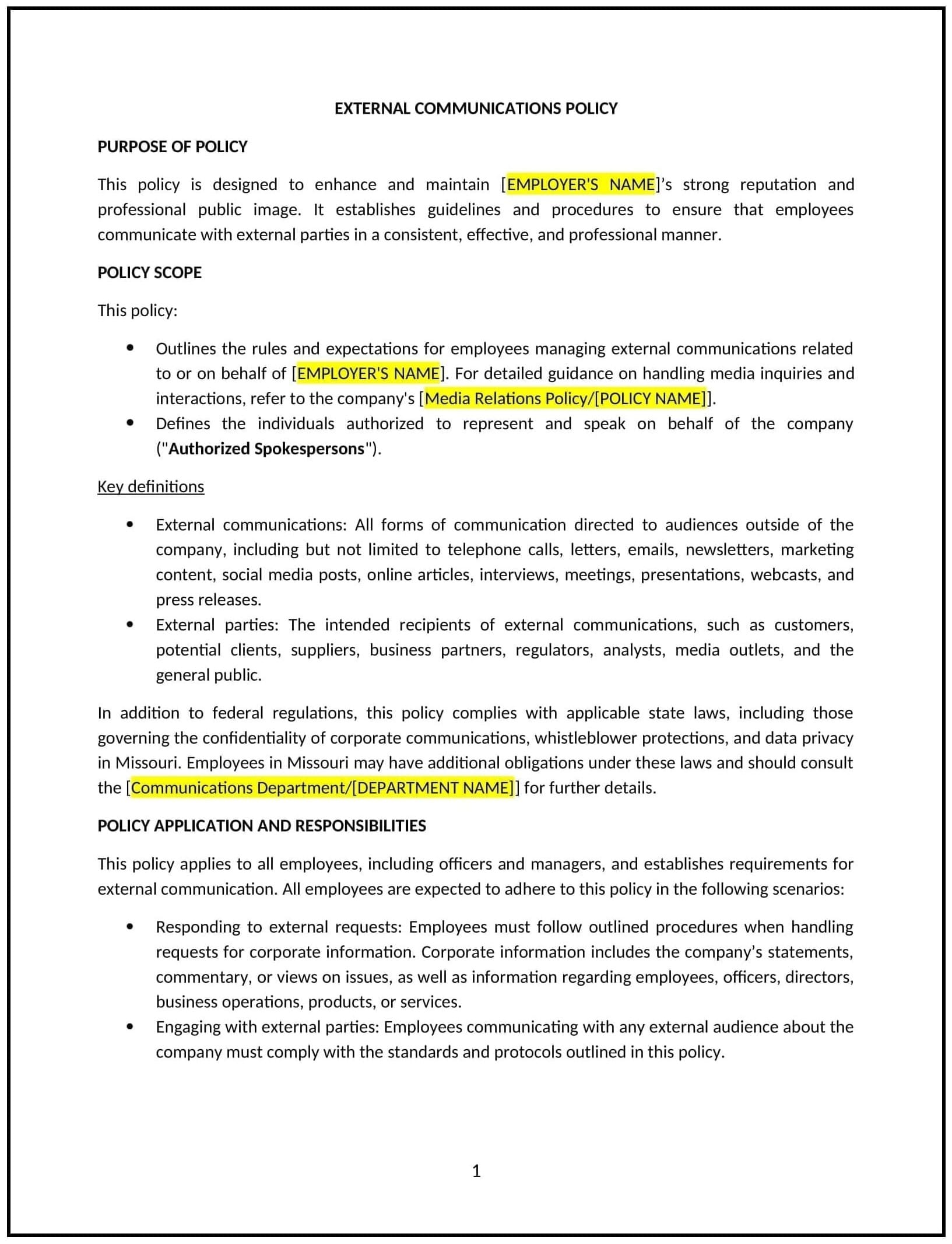
Customize this template for free
External communications policy (Missouri)
An external communications policy helps businesses in Missouri regulate and manage how they communicate with the public, customers, the media, and other external parties. This policy outlines the guidelines for creating, sharing, and responding to external communications, including press releases, public statements, marketing materials, and social media posts. It is designed to ensure consistency, professionalism, and adherence to the company’s brand and values when engaging with outside audiences.
By adopting this policy, businesses in Missouri can maintain control over their messaging, protect the company’s reputation, and ensure that all external communications are aligned with business goals.
How to use this external communications policy (Missouri)
- Define who is authorized to communicate externally: Specify which employees, departments, or roles are authorized to speak on behalf of the business, including senior leadership, public relations teams, and marketing staff.
- Establish communication channels: Outline the preferred methods and channels for external communication, such as company websites, press releases, social media accounts, and third-party platforms.
- Set content guidelines: Define the tone, style, and content requirements for external communications, ensuring consistency with the company’s brand and values. This may include avoiding certain topics or ensuring a professional, respectful tone.
- Address media interactions: Outline the process for engaging with the media, including who should handle media inquiries, how to prepare for interviews, and guidelines for responding to requests for information.
- Manage crisis communications: Provide procedures for handling external communications during a crisis or negative publicity, including the need for clear, timely, and consistent messaging.
- Protect confidential information: Ensure that sensitive business information is not disclosed without proper authorization and outline how to handle confidential or proprietary information.
- Review regularly: Periodically review the policy to ensure it remains relevant to changing business needs, media trends, and legal or regulatory requirements.
Benefits of using this external communications policy (Missouri)
This policy provides several benefits for businesses in Missouri:
- Protects brand reputation: A clear policy helps businesses control their messaging and maintain a positive, consistent brand image when communicating externally.
- Improves communication consistency: By setting guidelines for content, tone, and style, businesses can ensure that all external communications align with the company’s voice and values.
- Reduces legal risks: Clear rules around external communications help businesses avoid disclosing confidential information or making statements that could lead to legal issues or liability.
- Enhances crisis management: Having a policy in place for crisis communications ensures that the company can respond quickly and effectively to external challenges or negative publicity.
- Promotes efficiency: A structured process for managing external communications helps employees know when and how to communicate with the public, preventing confusion and minimizing delays.
- Builds trust with stakeholders: By providing consistent and transparent communication, businesses can build trust with customers, investors, media, and other external stakeholders.
Tips for using this external communications policy (Missouri)
- Communicate the policy clearly: Ensure that all employees, particularly those in customer-facing or public-facing roles, understand the policy and know who is authorized to speak on behalf of the company.
- Monitor communications: Regularly monitor all external communications channels, including social media, press releases, and customer interactions, to ensure consistency with the policy.
- Provide training: Offer training for employees who are responsible for external communications to ensure they understand the policy and how to manage interactions with the media, customers, and the public.
- Respond promptly: Establish procedures for responding to media inquiries, customer feedback, and other external requests, ensuring timely and accurate responses.
- Keep the policy up to date: Periodically review and update the policy to reflect changes in communication technologies, media trends, and legal or regulatory requirements.
- Handle crises with care: Be prepared with a set of standard responses or templates for handling media inquiries and customer concerns during a crisis, ensuring that the messaging is consistent and controlled.