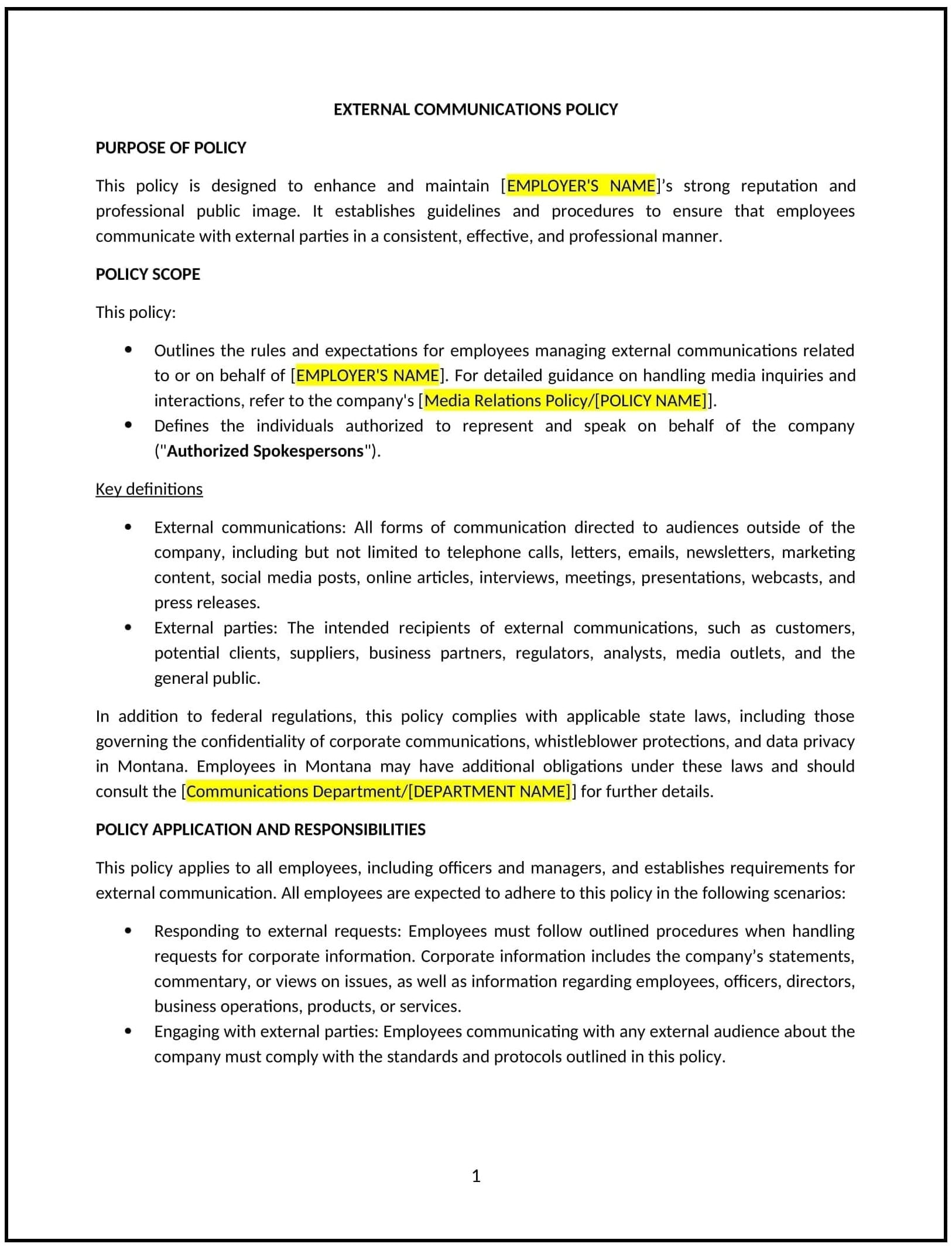
External communications policy (Montana): Free template
Guides how employees communicate with the public and media to maintain the company’s voice and image.
- Policies
- Montana
External communications policy (Montana)
An external communications policy helps Montana businesses manage and regulate all interactions with the outside world, including media, customers, suppliers, and the public. This policy outlines the appropriate channels, messaging, and procedures for communicating company news, marketing materials, and responses to inquiries.
By implementing this policy, businesses can maintain consistency, protect their reputation, and ensure that all external communications align with company values, goals, and legal requirements.
How to use this external communications policy (Montana)
- Define who is authorized to communicate externally: Businesses should specify which employees or departments are authorized to speak on behalf of the company, such as senior leadership, the PR team, or specific department heads.
- Set clear guidelines for messaging: The policy should establish consistent messaging guidelines, ensuring that all external communications align with the company’s values, mission, and brand voice.
- Identify communication channels: Businesses should outline the approved communication channels, such as social media, email, press releases, or official company websites, and specify the methods employees should use to communicate effectively.
- Address media interactions: The policy should specify how employees should respond to media inquiries, including the process for redirecting requests to the designated spokesperson or PR team.
- Outline social media guidelines: The policy should include rules for employees regarding personal and professional use of social media, specifying how to handle company-related discussions, online comments, or sensitive issues.
- Define crisis communication procedures: The policy should outline how the business will communicate externally during a crisis, such as a product recall, legal issues, or other emergency situations, including who will be responsible for the messaging.
- Review and update regularly: Businesses should review and update the policy regularly to reflect changes in communication practices, technology, or business needs.
Benefits of using this external communications policy (Montana)
This policy provides several key benefits for Montana businesses:
- Protects the company’s reputation: A well-structured communications policy helps ensure that all public interactions align with the company’s values, preventing inconsistent or damaging messaging.
- Fosters consistency: A standardized approach to external communications ensures that employees are on the same page and that the business speaks with one unified voice.
- Enhances customer trust: Clear and consistent communication helps build trust with customers, as they know what to expect from the business and feel confident in the company’s transparency.
- Reduces legal risks: The policy helps businesses avoid potential legal issues related to improper messaging, misrepresentation, or violations of privacy and confidentiality.
- Improves crisis management: Having a clear crisis communication plan in place enables businesses to handle emergencies or public relations issues quickly and effectively, reducing damage to the company’s image.
- Strengthens brand identity: Consistent external messaging reinforces the company’s brand identity, making it easier for customers, partners, and the public to recognize and relate to the business.
Tips for using this external communications policy (Montana)
- Communicate the policy clearly: Ensure that all employees understand the external communications policy, including who is authorized to speak on behalf of the company and the process for engaging with the media or public.
- Train employees on messaging: Provide training to employees on the importance of consistent messaging and the proper tone and content to use when communicating externally.
- Monitor communication channels: Regularly monitor social media and other external communication channels to ensure that messages are aligned with company standards and to address any potential issues promptly.
- Set up a crisis communications plan: Prepare a crisis communication strategy in advance to ensure a swift and coordinated response to emergencies, product recalls, or other incidents that may require external messaging.
- Ensure timely responses: Set expectations for response times to customer inquiries, media requests, and other external communications, ensuring that all requests are handled efficiently.
- Review the policy regularly: The policy should be updated annually or when there are changes in the business, media landscape, or communication practices to keep it relevant and effective.
Frequently asked questions (FAQs)
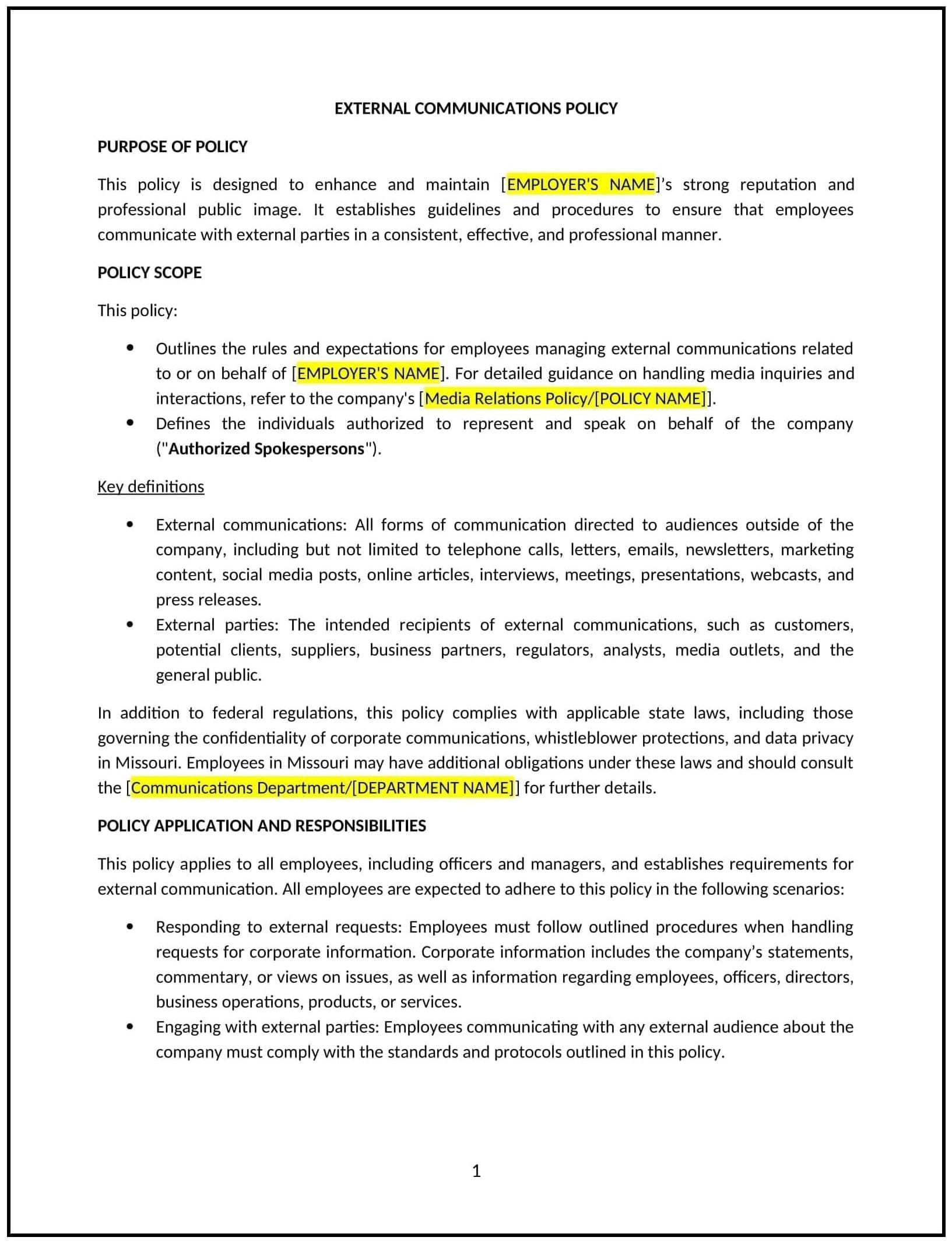
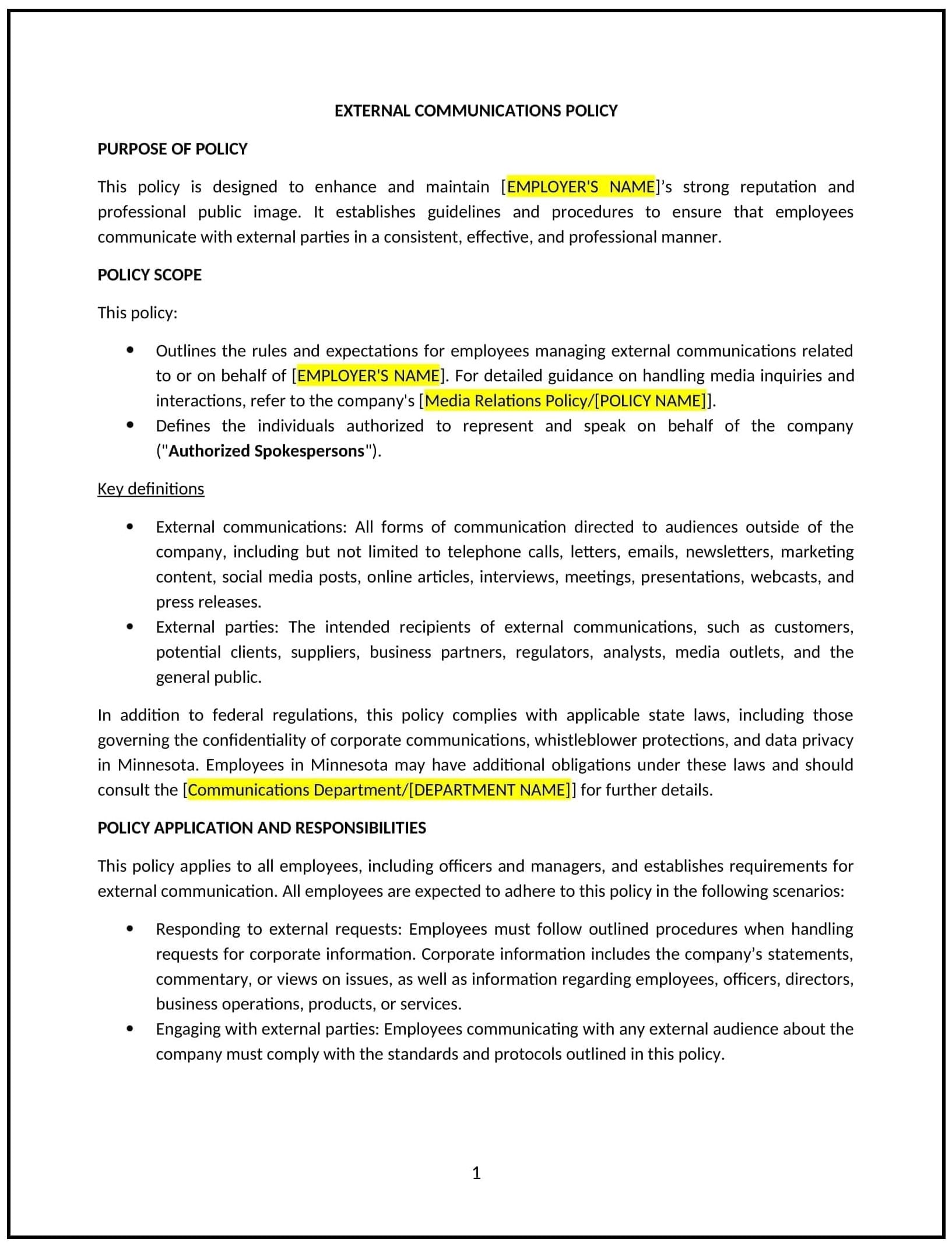
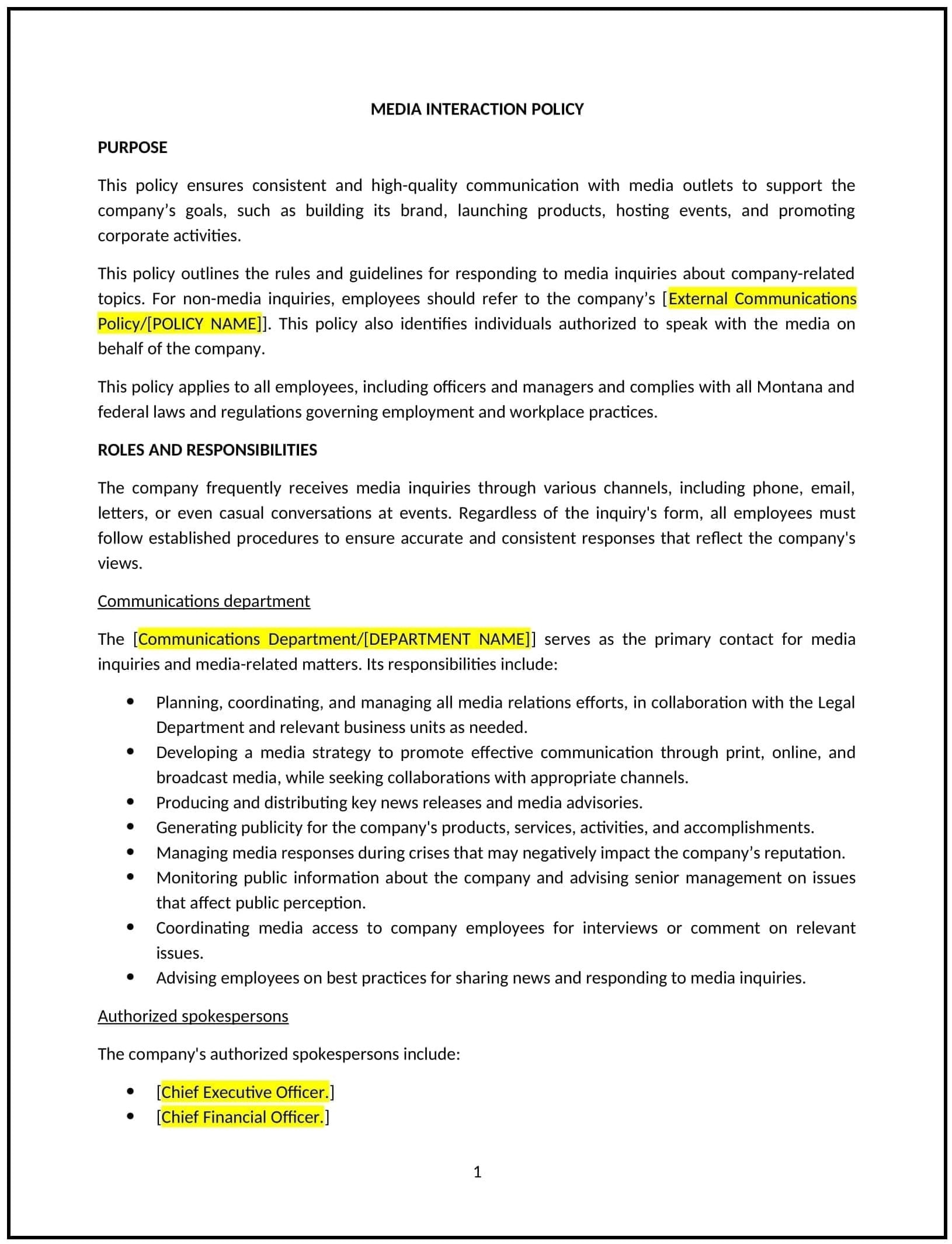
Similar templates
Where deals go from offer to paid
