External communications policy (South Carolina): Free template
Outlines who can speak on behalf of the company and how external messages should be managed.
- Policies
- South Carolina
External communications policy (South Carolina)
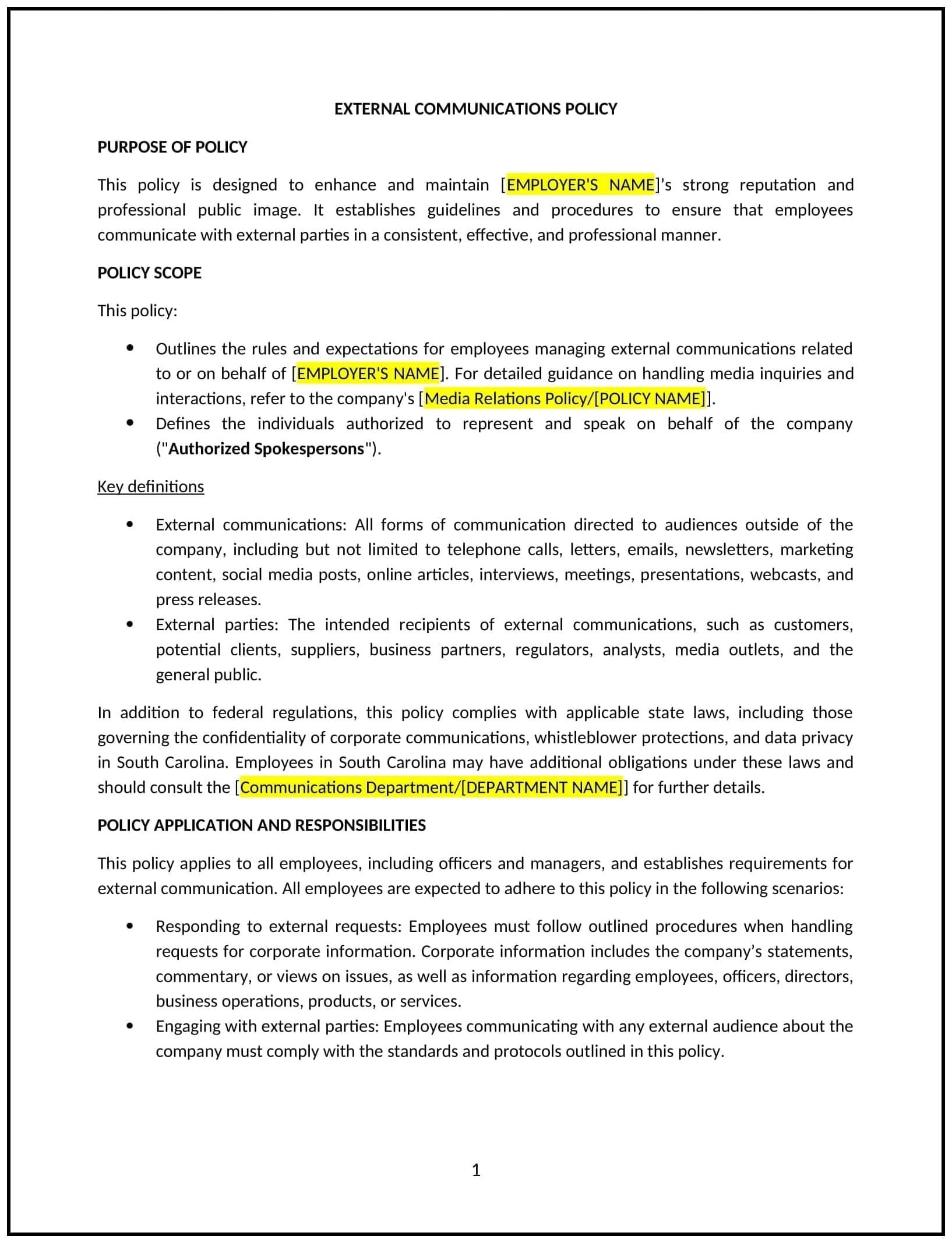
This external communications policy is designed to help South Carolina businesses establish guidelines for employees communicating with external parties, such as customers, vendors, or the media. It outlines procedures for maintaining professionalism, protecting sensitive information, and ensuring consistent messaging.
By adopting this policy, businesses can safeguard their reputation, protect confidential information, and align with general best practices for external communications.
How to use this external communications policy (South Carolina)
- Define scope: Explain what constitutes external communications, such as emails, social media posts, press releases, or customer interactions.
- Establish guidelines: Provide rules for professional communication, including tone, language, and response times.
- Address confidentiality: Outline procedures for protecting sensitive information when communicating with external parties.
- Designate spokespersons: Identify authorized individuals, such as PR representatives, who can speak on behalf of the business.
- Train employees: Educate staff on their responsibilities for adhering to the policy and maintaining professionalism.
- Review and update: Assess the policy annually to ensure it aligns with evolving business needs and communication standards.
Benefits of using this external communications policy (South Carolina)
This policy offers several advantages for South Carolina businesses:
- Protects reputation: Ensures all external communications reflect positively on the business.
- Safeguards confidential information: Reduces the risk of sensitive data being shared inappropriately.
- Aligns with best practices: Provides a structured approach to managing external communications.
- Enhances professionalism: Demonstrates a commitment to clear, consistent, and respectful communication.
- Reduces risks: Minimizes the potential for misunderstandings, legal disputes, or reputational damage.
Tips for using this external communications policy (South Carolina)
- Communicate the policy: Share the policy with employees and include it in the employee handbook.
- Provide training: Educate staff on their responsibilities for adhering to the policy and maintaining professionalism.
- Monitor adherence: Regularly review external communications to ensure compliance with the policy.
- Address issues promptly: Take corrective action if communications violate the policy or harm the business’s reputation.
- Update regularly: Assess the policy annually to ensure it aligns with evolving business needs and communication standards.
Frequently asked questions (FAQs)
Similar templates
Where deals go from offer to paid
