Family and medical leave policy (Idaho): Free template
Got contracts to review? While you're here for policies, let Cobrief make contract review effortless—start your free review now.
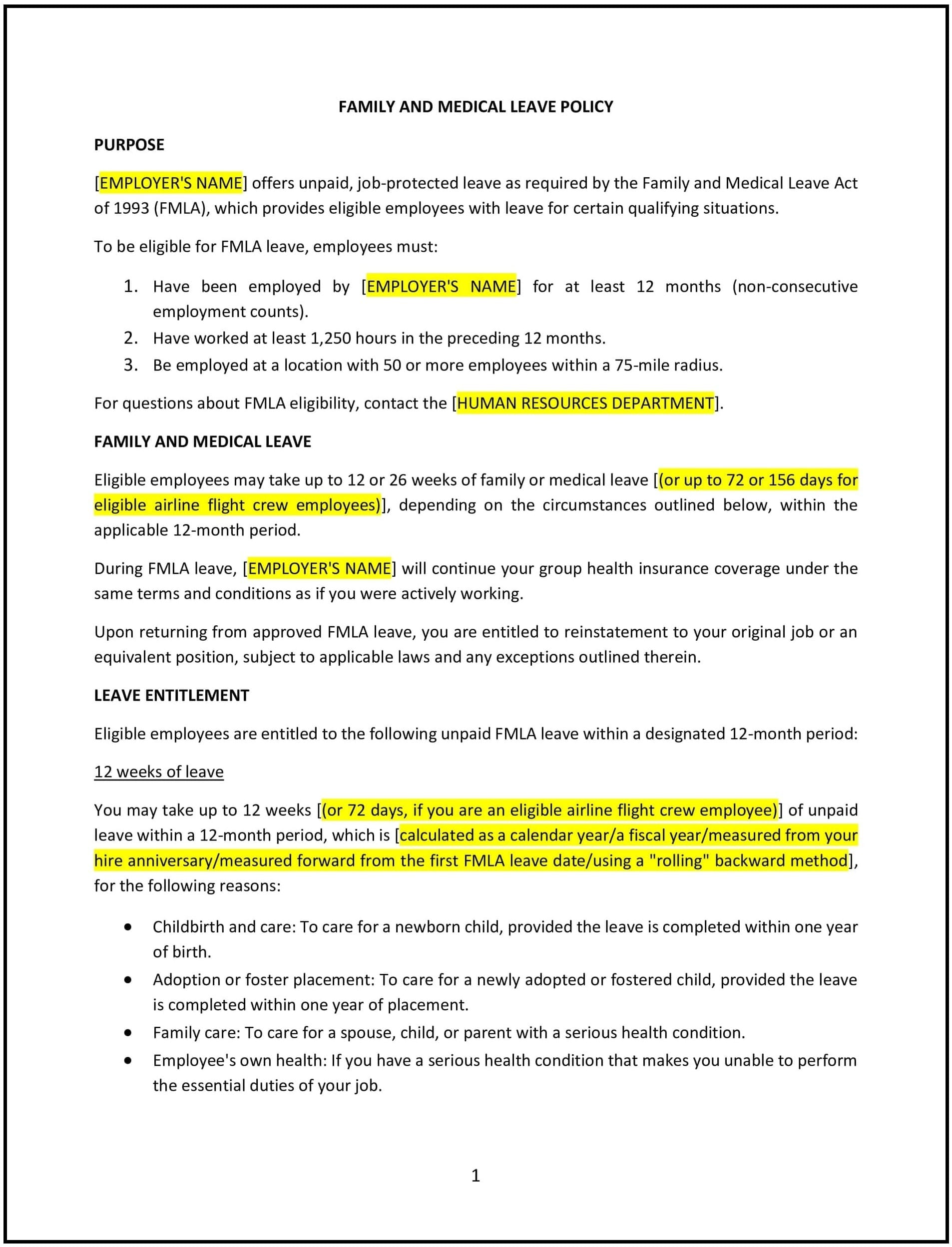
Customize this template for free
Family and medical leave policy (Idaho)
A family and medical leave policy helps Idaho businesses establish guidelines for employees to take time off for qualifying medical or family-related reasons. This policy outlines the types of leave available, eligibility criteria, and procedures for requesting and managing leave. It reflects the business’s commitment to supporting employees during significant life events while maintaining operational continuity.
By implementing this policy, businesses can promote work-life balance, enhance employee well-being, and comply with applicable leave laws.
How to use this family and medical leave policy (Idaho)
- Define leave types: Specify the types of family and medical leave covered by the policy, such as leave for childbirth, adoption, serious health conditions, or caring for a family member.
- Establish eligibility criteria: Outline the requirements for employees to qualify for leave, such as length of employment and hours worked.
- Set leave duration: Provide guidelines for the amount of leave employees can take, typically up to 12 weeks per year, as outlined in the federal Family and Medical Leave Act (FMLA).
- Outline request procedures: Describe the steps for requesting leave, including whom to notify, required documentation, and advance notice expectations.
- Address paid vs. unpaid leave: Clarify whether leave is paid or unpaid, and whether employees can use existing paid time off (PTO) during their absence.
- Communicate expectations: Ensure employees understand their responsibilities, such as coordinating their workload before taking leave and providing updates if needed.
- Review and update: Regularly review the policy to ensure it remains aligned with employee needs, business operations, and applicable laws.
Benefits of using this family and medical leave policy (Idaho)
This policy provides numerous benefits for Idaho businesses:
- Supports employee well-being: The policy allows employees to take time off for significant life events, promoting physical and emotional health.
- Enhances work-life balance: By offering family and medical leave, businesses help employees manage personal and professional responsibilities.
- Improves retention: Supporting employees during challenging times can increase loyalty and reduce turnover.
- Builds a positive workplace culture: The policy demonstrates the business’s commitment to employee care and inclusivity.
- Aligns with legal standards: The policy helps businesses adhere to federal and Idaho leave laws, such as the FMLA.
- Encourages accountability: The policy holds employees accountable for following proper procedures when requesting and managing leave.
- Attracts top talent: A supportive leave policy can make the business more attractive to job seekers.
Tips for using this family and medical leave policy (Idaho)
- Communicate the policy effectively: Share the policy with employees during onboarding, training sessions, and through internal communications to ensure awareness.
- Train managers: Ensure supervisors understand the policy, leave request procedures, and the importance of supporting employees during their absence.
- Document requests: Maintain records of leave requests, approvals, and durations to ensure consistency and transparency.
- Provide resources: Offer employees access to additional support, such as counseling services or employee assistance programs (EAPs), during their leave.
- Review the policy regularly: Update the policy as needed to reflect changes in employee needs, business operations, or applicable laws.
- Lead by example: Encourage leadership to model adherence to the policy and demonstrate a commitment to employee well-being.
- Monitor compliance: Regularly review leave requests and approvals to ensure the policy is applied fairly and consistently.