Family and medical leave policy (Kansas): Free template
Got contracts to review? While you're here for policies, let Cobrief make contract review effortless—start your free review now.
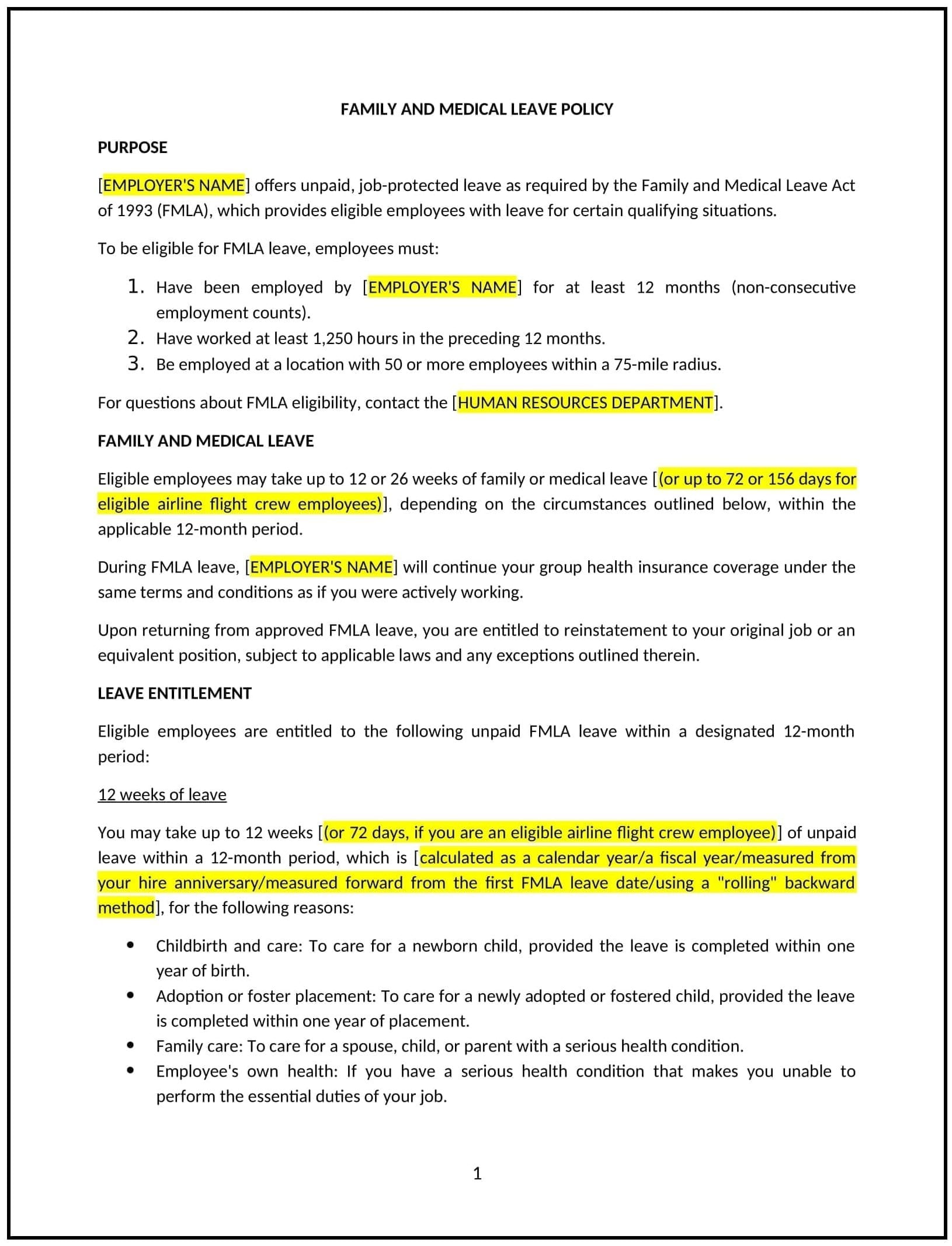
Customize this template for free
Family and medical leave policy (Kansas)
A family and medical leave policy helps Kansas businesses provide employees with the ability to take unpaid, job-protected leave for specific family and medical reasons, as required by state and federal laws. This policy outlines eligibility, procedures for requesting leave, and the process for reinstating employees after they return from leave.
By implementing this policy, businesses can support their employees’ health and family needs, promote work-life balance, and maintain a productive and compassionate workplace.
How to use this family and medical leave policy (Kansas)
- Define eligibility criteria: Businesses should specify which employees are eligible for family and medical leave, typically based on the number of hours worked and duration of employment.
- Outline covered reasons for leave: Businesses should detail the circumstances under which employees may take leave, including personal health conditions, the birth or adoption of a child, or the care of a family member with a serious health condition.
- Set leave duration: Businesses should clarify how much leave is available, whether it follows federal guidelines (e.g., 12 weeks in a 12-month period) or any additional benefits provided by the company.
- Provide notification procedures: Employees should know how much advance notice is required to request leave and what documentation, such as a doctor’s note or birth certificate, is needed.
- Maintain job protection: Businesses should ensure that employees can return to the same or an equivalent position after taking family and medical leave, without fear of retaliation.
- Address paid or unpaid leave: Businesses should clarify whether the leave is paid, unpaid, or a combination, and whether employees can use accrued paid time off (PTO) during their leave.
- Review and update regularly: Businesses should periodically assess the policy to reflect any changes in legal requirements or company needs.
Benefits of using a family and medical leave policy (Kansas)
- Supports employee well-being: Provides employees with the necessary time off to manage health issues or family responsibilities without the risk of losing their job.
- Increases employee retention: Offering family and medical leave helps employees balance work and personal life, reducing turnover and promoting loyalty.
- Promotes work-life balance: Helps employees manage personal and family health needs while maintaining a career, fostering a supportive workplace.
- Protects against legal risks: Helps businesses comply with state and federal leave laws, reducing the risk of discrimination or legal challenges.
- Enhances company culture: Businesses that support family and medical leave demonstrate a commitment to employee welfare and create a positive, caring work environment.
- Improves employee morale: Employees feel valued when they know they can take time off to address personal or family health matters without risking their employment.
Tips for using this family and medical leave policy (Kansas)
- Communicate the policy clearly: Businesses should ensure that employees are aware of their family and medical leave rights, including how to request leave and the documentation required.
- Track leave requests: Businesses should implement a system to track leave requests and ensure that employees are not taking more leave than permitted by the policy.
- Maintain confidentiality: Businesses should keep any medical or personal information related to the leave request confidential and shared only with authorized personnel.
- Encourage early notice: Businesses should encourage employees to give as much notice as possible when requesting leave to help with planning and coverage.
- Offer flexibility: If possible, businesses should offer flexible work arrangements or intermittent leave for employees to manage ongoing medical or family needs.
- Stay informed about legal changes: Businesses should regularly review the policy to stay updated on any changes to state or federal laws regarding family and medical leave.