Family and medical leave policy (Minnesota): Free template
Got contracts to review? While you're here for policies, let Cobrief make contract review effortless—start your free review now.
Customize this template for free
Family and medical leave policy (Minnesota)
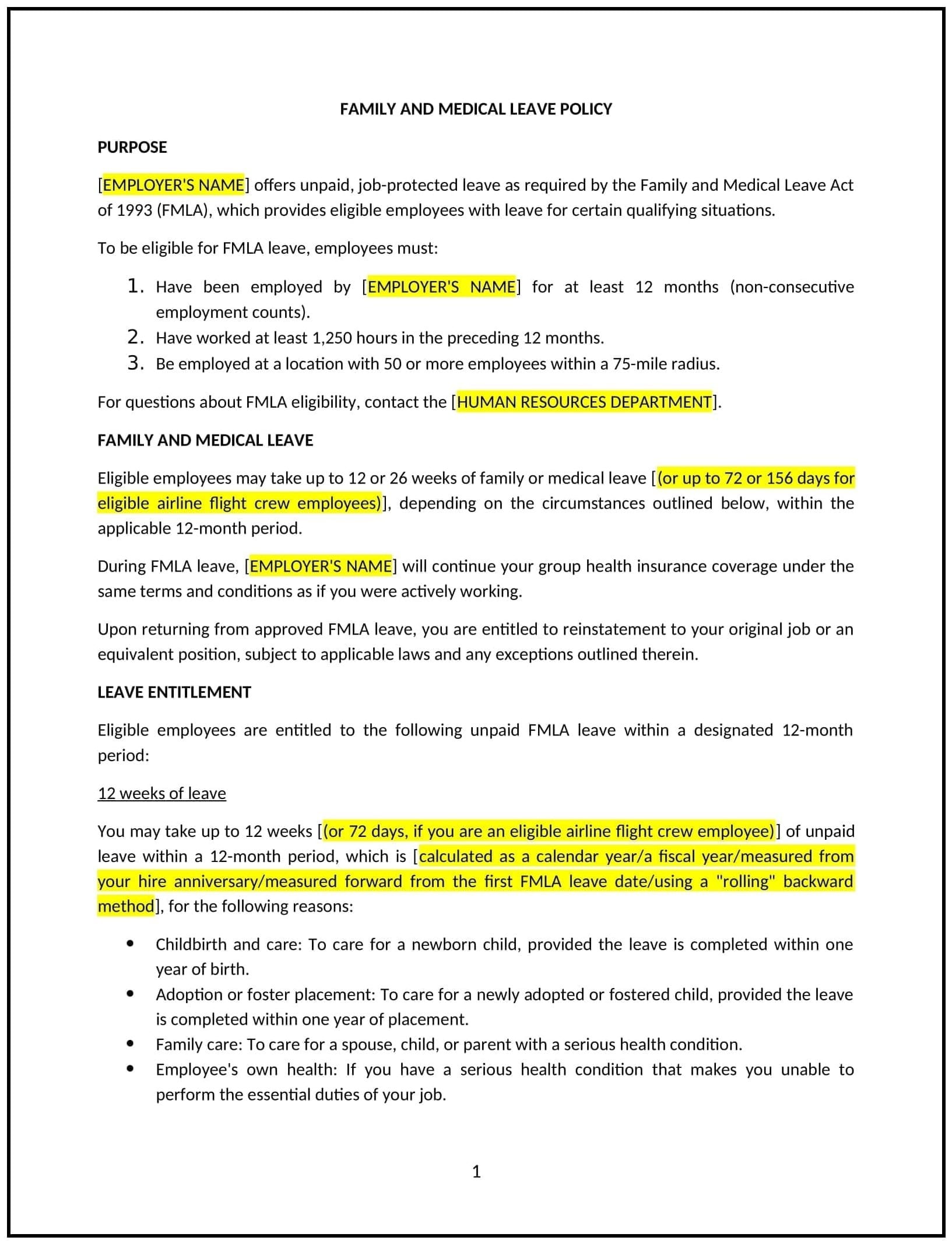
This family and medical leave policy is designed to help Minnesota businesses provide employees with time off to address personal or family health issues, as well as to bond with a new child. The policy outlines the conditions under which employees can take leave, the process for requesting leave, and the company’s expectations regarding job protection and benefits during leave periods.
By implementing this policy, businesses can support employees in managing their health and family needs while maintaining operational continuity and a positive work environment.
How to use this family and medical leave policy (Minnesota)
- Define eligibility: Specify which employees are eligible for family and medical leave, such as those who have worked for the company for a minimum period or meet other state-specific eligibility requirements.
- Outline qualifying events: Clearly list the types of events that qualify for family and medical leave, including the employee’s own serious health condition, the birth or adoption of a child, or the care of a sick family member.
- Set leave duration: Specify the amount of leave employees are entitled to, whether it’s in accordance with state law, the federal Family and Medical Leave Act (FMLA), or a more generous company policy.
- Explain the leave request process: Provide a clear procedure for requesting family and medical leave, including required documentation (e.g., medical certificates, birth certificates) and the time frame for submitting requests.
- Address job protection and benefits: Clarify that employees will be reinstated to the same or equivalent position upon returning from leave, and explain how benefits (such as health insurance) will be handled during the leave period.
- Ensure confidentiality: Ensure that any medical information or personal details provided by employees are kept confidential and used only for the purpose of managing the leave request.
Benefits of using a family and medical leave policy (Minnesota)
Implementing this policy provides several advantages for Minnesota businesses:
- Supports employee well-being: By offering family and medical leave, businesses show their commitment to supporting employees in balancing work and personal responsibilities, leading to improved morale and job satisfaction.
- Reduces turnover: Providing leave for health or family matters helps retain employees, particularly in times of significant life events, such as the birth of a child or illness in the family.
- Enhances work-life balance: Businesses that offer family and medical leave contribute to a healthier work-life balance, which can improve employee engagement and productivity.
- Protects company reputation: A strong family and medical leave policy demonstrates that the business values its employees’ needs and cares about their long-term success and well-being.
- Reflects Minnesota-specific considerations: Tailors the policy to comply with Minnesota-specific laws, such as the Minnesota Parental Leave Act and other state-level family leave protections, while aligning with federal regulations like the FMLA.
Tips for using this family and medical leave policy (Minnesota)
- Communicate clearly: Ensure all employees are informed about their rights under the family and medical leave policy, how to apply for leave, and the documentation required.
- Be proactive: Encourage employees to submit leave requests as early as possible, so that the business can plan accordingly and maintain adequate staffing levels.
- Train managers: Provide training to managers and HR personnel on how to handle family and medical leave requests professionally, consistently, and in accordance with company policies and state regulations.
- Offer flexible leave options: Consider providing employees with flexible options, such as intermittent leave or part-time leave, to accommodate varying needs and reduce operational disruptions.
- Review regularly: Reassess the policy periodically to ensure it aligns with any changes to state or federal law, as well as the evolving needs of the workforce.