Flexible work schedule policy (Colorado): Free template
Got contracts to review? While you're here for policies, let Cobrief make contract review effortless—start your free review now.
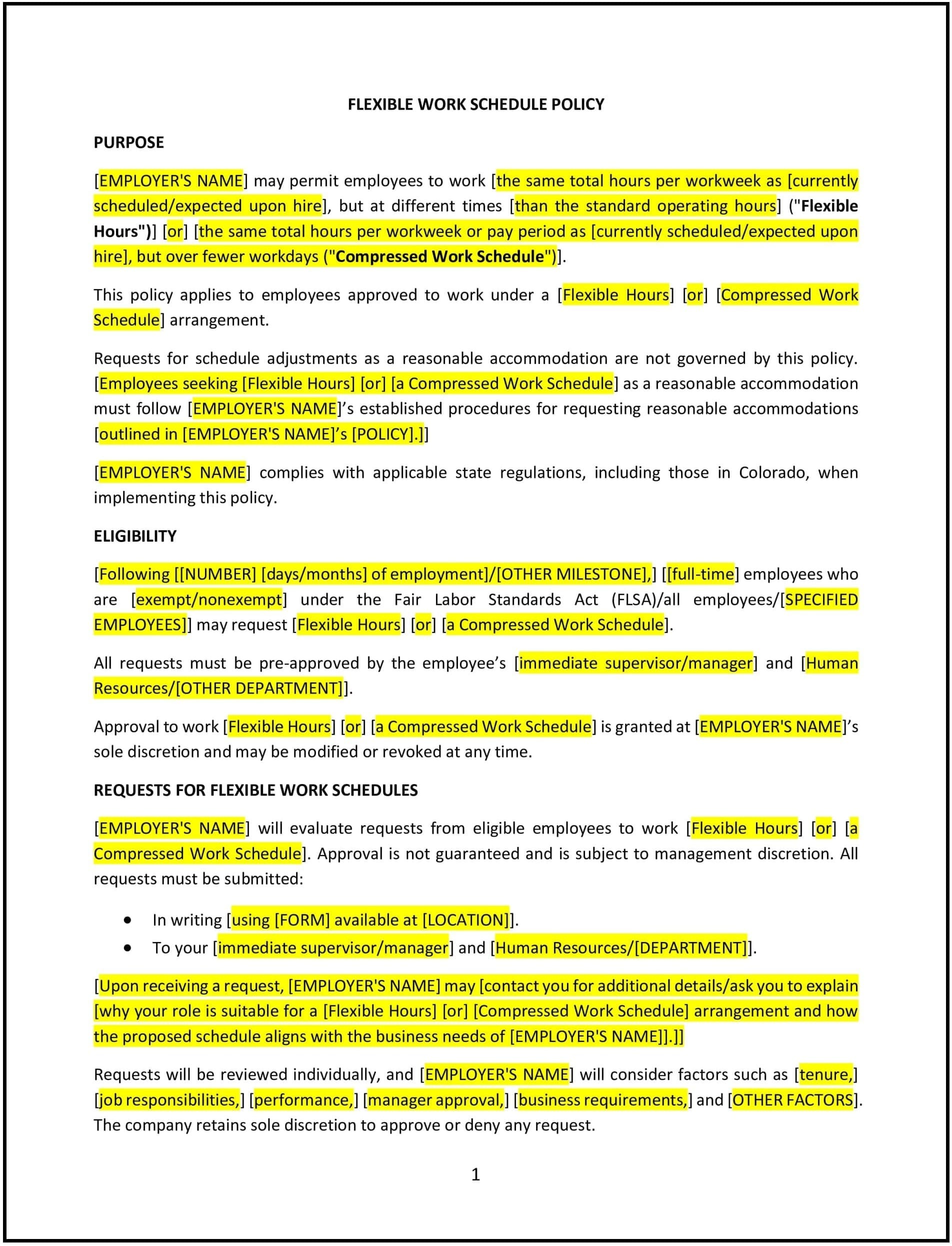
Customize this template for free
Flexible work schedule policy (Colorado)
In Colorado, a flexible work schedule policy outlines the guidelines and procedures for employees to arrange work hours that deviate from the standard office schedule. This policy allows employees to adjust their work hours or locations to balance work and personal commitments while maintaining productivity and meeting business needs. By offering flexible work arrangements, businesses can improve employee satisfaction, reduce turnover, and attract a diverse workforce.
This policy supports business operations by maintaining operational efficiency and promoting a healthy work-life balance for employees.
How to use this flexible work schedule policy (Colorado)
- Define eligibility: Specify which employees are eligible for flexible work arrangements, which may depend on their role, department, or tenure with the company.
- Outline available work schedule options: Provide examples of flexible work schedules, such as compressed workweeks, flexible hours, remote work, or staggered shifts, and explain how these schedules align with business needs.
- Set core hours: If applicable, define core hours when employees must be available (e.g., 10:00 a.m. to 3:00 p.m.) to ensure coverage and collaboration while allowing flexibility outside of these hours.
- Establish approval process: Outline the process for requesting a flexible schedule, including how to submit a request, the criteria for approval, and the timelines for reviewing and granting requests.
- Ensure communication: Encourage employees to communicate their work schedules clearly with their managers and colleagues to avoid confusion and ensure team collaboration.
- Review and monitor: Periodically review the impact of flexible work arrangements on business performance, employee satisfaction, and productivity, and make adjustments as needed.
Benefits of using this flexible work schedule policy (Colorado)
This policy offers several advantages for Colorado businesses:
- Supports employee well-being: Helps employees achieve a better work-life balance by allowing them to adjust their schedules according to their needs.
- Increases retention: Offering flexible work options can improve job satisfaction and reduce turnover by accommodating employees’ personal needs and preferences.
- Boosts productivity: Flexible schedules can help employees work during their most productive hours, reducing burnout and improving overall efficiency.
- Attracts diverse talent: By providing flexible work options, businesses can attract a wider range of candidates, including those who may need accommodations such as parents or caregivers.
- Enhances business reputation: A flexible work schedule promotes a positive company culture, showing that the business values employee well-being and fosters a supportive work environment.
Tips for using this flexible work schedule policy (Colorado)
- Reflect Colorado-specific laws: Ensure that the policy aligns with Colorado’s labor laws, including rules about overtime, meal breaks, and exempt/non-exempt employee classifications.
- Provide clear guidelines: Make sure the policy clearly explains eligibility, scheduling options, and the approval process to avoid confusion and ensure fairness.
- Maintain open communication: Encourage employees to regularly check in with their managers to ensure that work schedules are meeting both their personal needs and the needs of the business.
- Offer training: Train managers and HR personnel on how to implement the policy effectively, ensuring that flexible work arrangements are managed consistently and in line with company goals.
- Review periodically: Assess the success of the flexible work arrangements on employee performance, satisfaction, and business needs, and adjust the policy as necessary.