Flexible work schedule policy (Hawaiʻi): Free template
Got contracts to review? While you're here for policies, let Cobrief make contract review effortless—start your free review now.
Customize this template for free
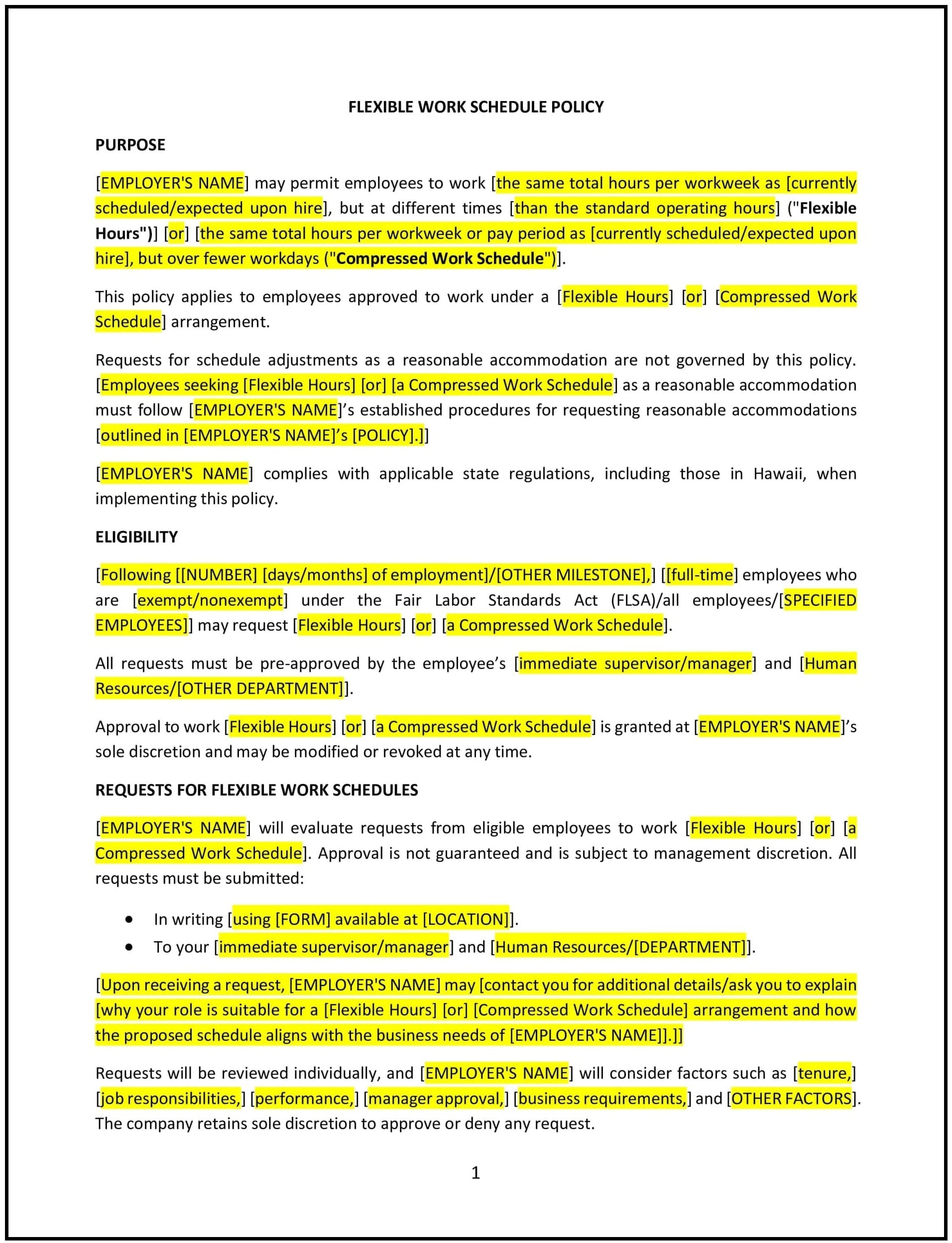
Flexible work schedule policy (Hawaiʻi)
A flexible work schedule policy helps Hawaiʻi businesses provide employees with options for adjusting their work hours or locations to better balance personal and professional responsibilities. This policy outlines guidelines for requesting and managing flexible schedules, such as remote work, compressed workweeks, or adjusted start and end times, while addressing Hawaiʻi’s unique cultural and business environment. It is designed to promote work-life balance, enhance employee satisfaction, and support productivity.
By implementing this policy, businesses in Hawaiʻi can attract and retain top talent, improve employee morale, and adapt to modern work trends.
How to use this flexible work schedule policy (Hawaiʻi)
- Define flexible work options: Specify the types of flexible schedules available, such as remote work, flextime, compressed workweeks, or job sharing.
- Establish eligibility criteria: Outline which employees are eligible for flexible schedules, such as full-time staff or those in specific roles, and any performance or tenure requirements.
- Create request procedures: Provide clear instructions for employees to request flexible schedules, including required documentation, approval processes, and trial periods.
- Address performance expectations: Clarify that employees on flexible schedules are expected to meet the same performance standards as those working traditional hours.
- Ensure communication: Outline how employees on flexible schedules should stay connected with their teams, such as through regular check-ins or virtual meetings.
- Communicate the policy: Share the policy with employees during onboarding and through internal communications to ensure awareness and understanding.
- Train managers: Educate supervisors on how to evaluate and manage flexible work arrangements effectively.
- Monitor effectiveness: Regularly review flexible work arrangements to ensure they meet business needs and address any issues promptly.
- Review and update the policy: Regularly assess the policy’s effectiveness and make adjustments as needed to reflect changes in business needs, employee preferences, or workplace dynamics.
Benefits of using this flexible work schedule policy (Hawaiʻi)
This policy offers several advantages for Hawaiʻi businesses:
- Improves work-life balance: Flexible schedules help employees manage personal and professional responsibilities more effectively.
- Enhances employee satisfaction: Offering flexibility can increase job satisfaction, morale, and loyalty.
- Attracts top talent: A flexible work policy makes the business more appealing to job seekers who value work-life balance.
- Boosts productivity: Employees with flexible schedules often experience reduced stress and increased focus, leading to higher productivity.
- Supports inclusivity: Flexible work options accommodate diverse employee needs, such as caregiving responsibilities or long commutes.
- Reduces absenteeism: Employees with flexible schedules are less likely to take unscheduled time off.
- Adapts to modern trends: Embracing flexible work arrangements positions the business as forward-thinking and adaptable.
Tips for using this flexible work schedule policy (Hawaiʻi)
- Communicate the policy effectively: Share the policy with employees during onboarding and through regular reminders, such as emails or training sessions.
- Provide training: Educate employees and managers on the policy’s guidelines, including how to request and manage flexible work arrangements.
- Be transparent: Clearly explain the policy’s purpose, benefits, and expectations to employees to build trust and cooperation.
- Monitor effectiveness: Regularly review flexible work arrangements to ensure they meet business needs and address any issues promptly.
- Encourage feedback: Gather input from employees and managers to identify areas for improvement and ensure the policy meets their needs.
- Review the policy periodically: Update the policy as needed to reflect changes in business needs, employee preferences, or workplace dynamics.