Flexible work schedule policy (Illinois): Free template
Got contracts to review? While you're here for policies, let Cobrief make contract review effortless—start your free review now.
Customize this template for free
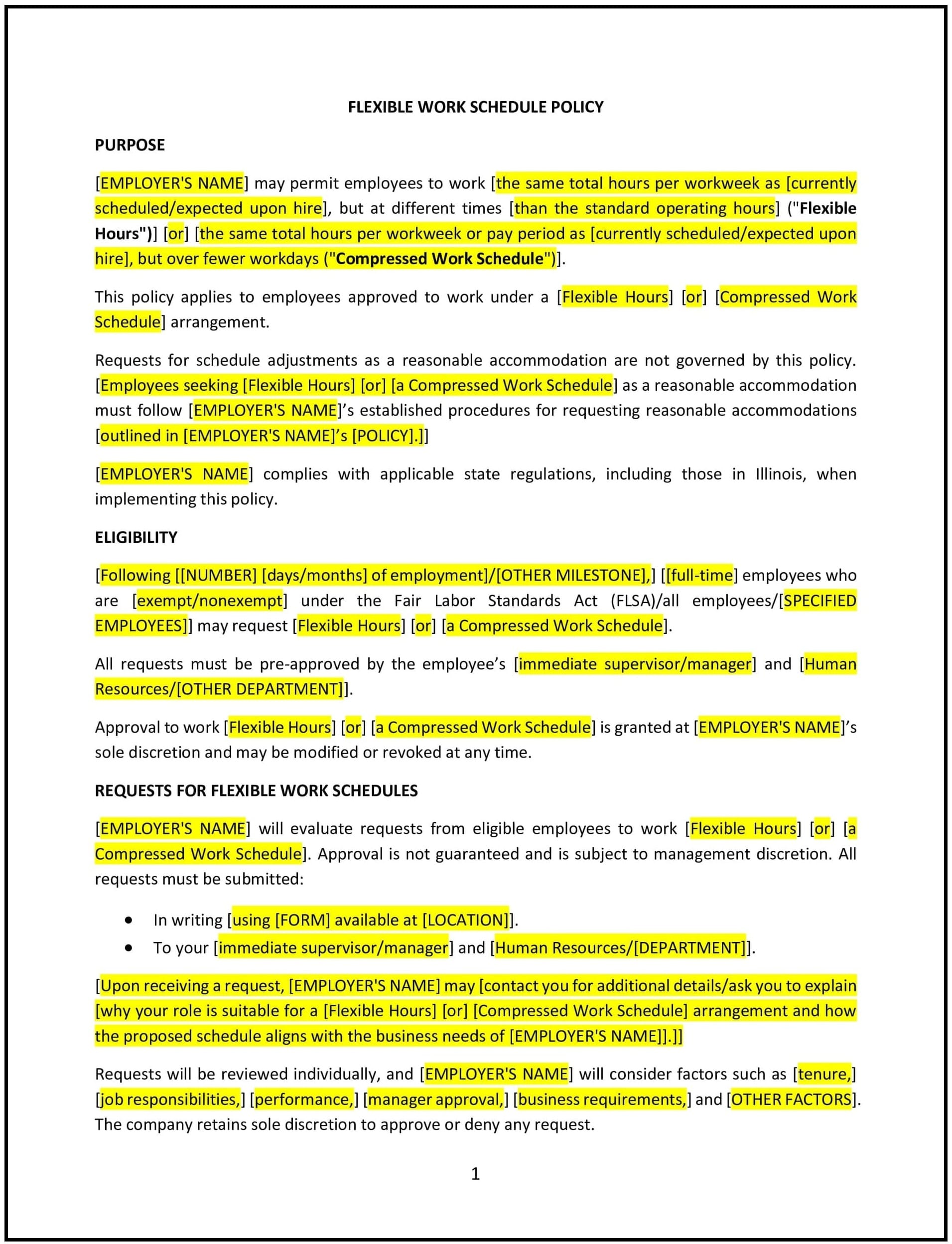
Flexible work schedule policy (Illinois)
This flexible work schedule policy is designed to help Illinois businesses provide employees with alternative work arrangements, such as adjusted hours or remote work options. It outlines eligibility, procedures, and expectations to promote work-life balance while maintaining productivity and compliance with Illinois labor laws.
By adopting this policy, businesses can enhance employee satisfaction, improve retention, and adapt to diverse workforce needs.
How to use this flexible work schedule policy (Illinois)
- Define flexible arrangements: Specify the types of schedules offered, such as flextime, compressed workweeks, or remote work.
- Identify eligibility criteria: Outline which employees or roles are eligible for flexible schedules based on job requirements and company needs.
- Provide request procedures: Explain how employees can request a flexible work schedule, including submitting a written proposal to their manager or HR.
- Establish approval processes: Detail the criteria managers will use to evaluate requests, such as the role’s compatibility with flexible arrangements and operational feasibility.
- Set expectations: Clarify responsibilities for maintaining productivity, meeting deadlines, and ensuring availability during agreed-upon hours.
- Address performance monitoring: Include guidelines for tracking performance and evaluating the effectiveness of flexible work schedules.
- Include trial periods: Offer a trial period to assess the suitability of the arrangement before making it permanent.
- Monitor compliance: Ensure adherence to Illinois labor laws, including overtime and minimum wage requirements.
Benefits of using this flexible work schedule policy (Illinois)
This policy provides several benefits for Illinois businesses:
- Increases employee satisfaction: Promotes work-life balance and reduces stress by accommodating personal and professional needs.
- Enhances retention: Encourages loyalty by offering employees greater flexibility in managing their schedules.
- Improves productivity: Supports employees in working during their most productive hours.
- Attracts talent: Positions the company as a forward-thinking employer that values employee well-being.
- Supports compliance: Aligns with Illinois labor laws to reduce the risk of wage or hour disputes.
Tips for using this flexible work schedule policy (Illinois)
- Communicate the policy: Share the policy with employees during onboarding and make it accessible in the employee handbook.
- Train managers: Equip managers with tools to evaluate requests fairly and monitor performance under flexible arrangements.
- Encourage open communication: Foster regular check-ins between employees and managers to address challenges or adjust schedules as needed.
- Use technology: Implement tools for time tracking, collaboration, and communication to support flexible work schedules.
- Update regularly: Revise the policy to reflect changes in Illinois labor laws, workplace practices, or employee needs.