Flexible work schedule policy (Kansas): Free template
Got contracts to review? While you're here for policies, let Cobrief make contract review effortless—start your free review now.
Customize this template for free
Flexible work schedule policy (Kansas)
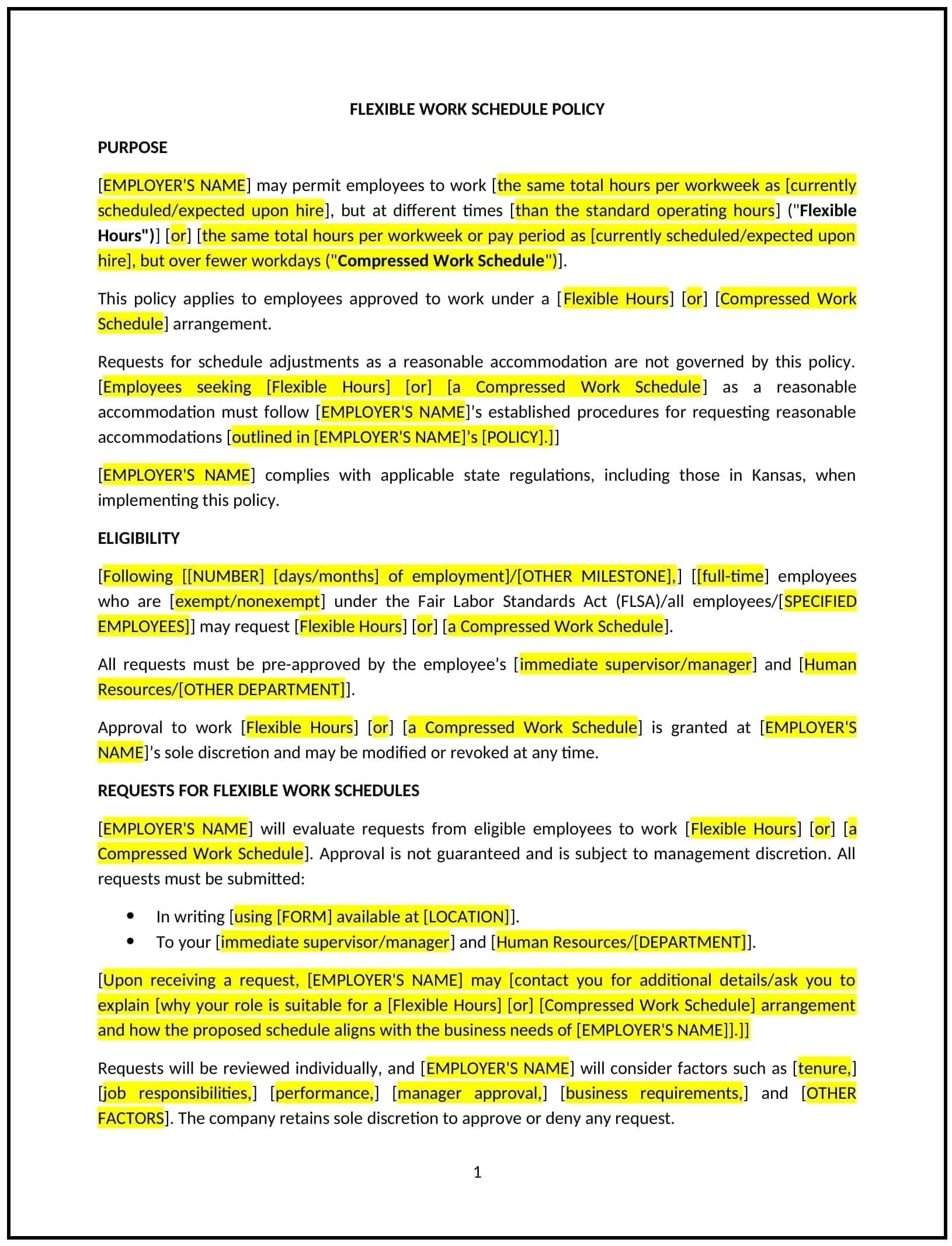
A flexible work schedule policy helps Kansas businesses offer employees the ability to adjust their working hours or work from alternate locations, providing greater work-life balance. This policy outlines the parameters for flexible working arrangements, eligibility, and how requests will be handled.
By implementing this policy, businesses can increase employee satisfaction, attract top talent, and improve productivity by accommodating diverse needs and preferences.
How to use this flexible work schedule policy (Kansas)
- Define eligible employees: Businesses should outline which employees are eligible for flexible work arrangements, based on factors like job role, seniority, and performance.
- Establish flexible schedule options: Businesses should specify the types of flexible schedules available, such as staggered hours, compressed workweeks, or remote work arrangements.
- Set expectations for core hours: If applicable, businesses should define core hours when employees are expected to be available, ensuring team collaboration while allowing flexibility.
- Outline request procedures: Businesses should provide a clear process for employees to request flexible work schedules, including how to submit requests and any necessary approvals.
- Maintain communication: Businesses should ensure that employees on flexible schedules remain connected with their teams, attending meetings, collaborating, and meeting deadlines.
- Address performance and accountability: Businesses should outline how performance will be monitored and ensure that flexible work schedules do not affect productivity or outcomes.
- Review and update regularly: Businesses should assess the policy periodically to ensure it aligns with the company’s needs and continues to meet employee expectations.
Benefits of using a flexible work schedule policy (Kansas)
- Enhances work-life balance: Offers employees the ability to adjust their schedules to accommodate personal or family needs, increasing overall satisfaction.
- Boosts productivity: Flexible work arrangements can lead to increased productivity, as employees are able to work during their most effective hours.
- Attracts and retains top talent: Businesses that offer flexible schedules are more likely to attract skilled candidates and retain experienced employees who value flexibility.
- Reduces absenteeism: Employees are more likely to take fewer sick days or leave when they have the flexibility to manage personal matters around their work hours.
- Improves employee morale: Offering flexibility demonstrates trust and respect for employees' personal lives, leading to higher job satisfaction and engagement.
- Promotes diversity and inclusivity: A flexible work schedule can help accommodate employees with different needs, such as those with disabilities or caregiving responsibilities.
Tips for using this flexible work schedule policy (Kansas)
- Communicate the policy clearly: Businesses should ensure that all employees are aware of the flexible work schedule options available and how to apply for them.
- Be consistent in enforcement: Businesses should apply the policy fairly across the organization to avoid favoritism or confusion among employees.
- Track performance and results: Businesses should monitor employee performance and outcomes to ensure that flexible work schedules do not negatively affect productivity or team dynamics.
- Promote collaboration: Businesses should ensure that employees on flexible schedules remain integrated with their teams, using communication tools and attending meetings when necessary.
- Offer flexibility without compromising accountability: Businesses should strike a balance between flexibility and maintaining high standards of work performance, ensuring that goals are still met.
- Review periodically: Businesses should periodically evaluate the effectiveness of flexible work schedules and make adjustments based on employee feedback and organizational needs.