Flexible work schedule policy (Kentucky): Free template
Got contracts to review? While you're here for policies, let Cobrief make contract review effortless—start your free review now.
Customize this template for free
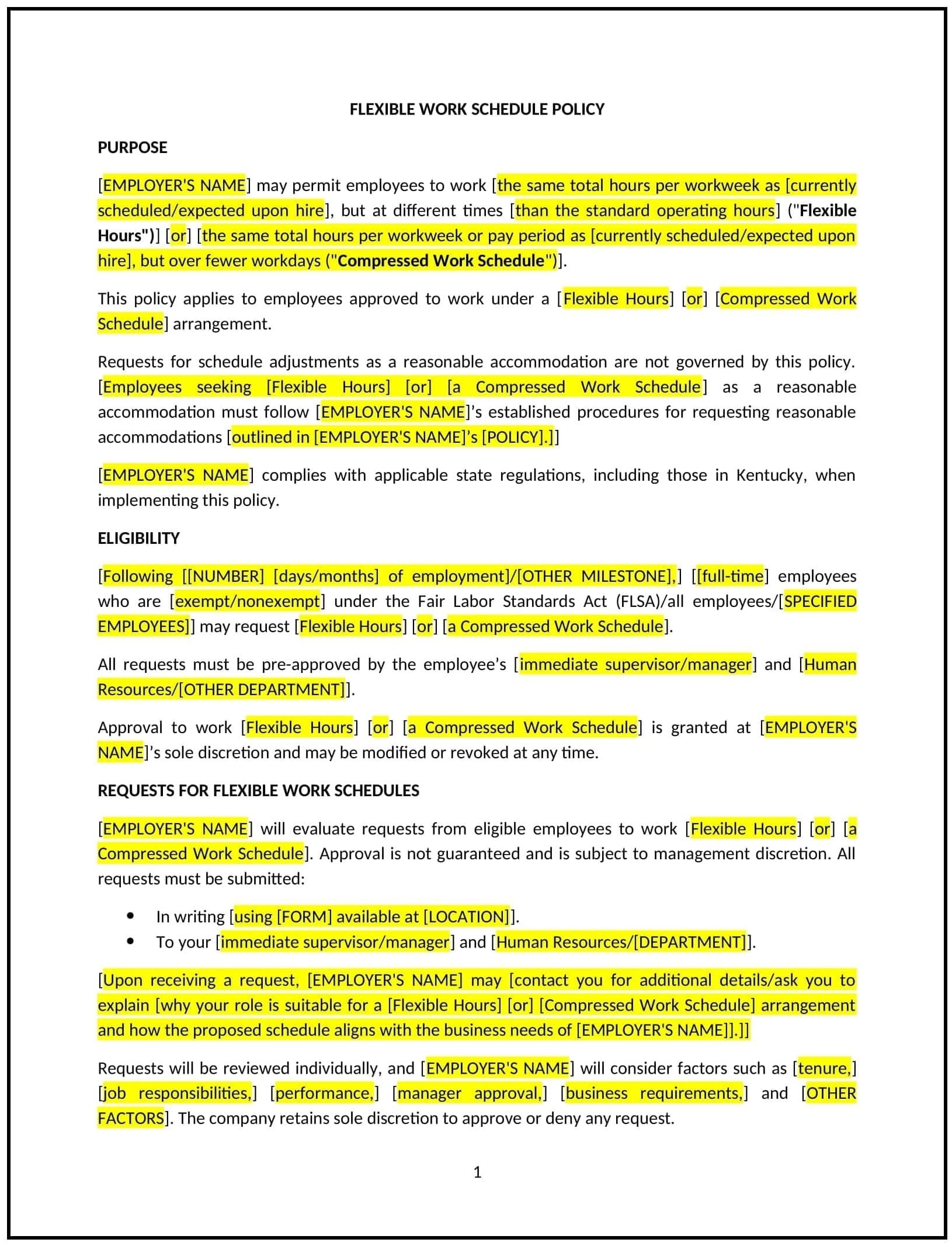
Flexible work schedule policy (Kentucky)
A flexible work schedule policy allows Kentucky businesses to provide employees with the ability to adjust their work hours or locations to better suit personal needs while maintaining business productivity. This policy defines the guidelines for offering flexibility in work schedules, including core hours, job requirements, and approval procedures.
By adopting this policy, businesses can increase employee satisfaction, enhance work-life balance, and attract top talent while ensuring work continues to meet organizational goals.
How to use this flexible work schedule policy (Kentucky)
- Define eligibility: Specify which employees are eligible for flexible work schedules, based on job roles, tenure, or other criteria.
- Set core hours: Establish core hours during which employees must be available for meetings or collaboration, ensuring the business remains operational during key times.
- Outline flexible scheduling options: Provide examples of flexible arrangements, such as compressed workweeks, flextime, or remote work options, and specify the conditions for each.
- Set expectations for productivity: Clearly define performance expectations for employees with flexible schedules to ensure that work objectives are met despite varying hours.
- Implement approval processes: Outline the process for requesting and approving flexible work schedules, including necessary documentation or forms and who must approve the request.
- Address communication: Set guidelines for maintaining clear and consistent communication between employees on flexible schedules and their managers or teams.
- Monitor and review: Establish a system for monitoring the effectiveness of flexible work arrangements, including regular check-ins to ensure that both the employee and the business are meeting their needs.
Benefits of using this flexible work schedule policy (Kentucky)
This policy provides several key benefits for Kentucky businesses:
- Improves employee satisfaction: Allows employees to balance personal commitments with work, leading to higher job satisfaction and retention.
- Enhances work-life balance: Supports employees in managing their professional and personal responsibilities more effectively.
- Increases productivity: Flexible schedules can improve focus and reduce burnout, leading to more efficient work output.
- Attracts and retains talent: Offering flexible work arrangements can make the business more attractive to job candidates and help retain existing employees.
- Supports business goals: The policy can be structured to meet the needs of the business while providing flexibility to employees, ensuring continued performance and service levels.
Tips for using this flexible work schedule policy (Kentucky)
- Communicate the policy: Ensure that all employees are aware of the policy and understand the process for requesting flexible work arrangements.
- Establish clear guidelines: Set specific expectations for work hours, availability, and performance to ensure the flexibility does not impact the business’s operations.
- Offer flexibility based on business needs: While providing flexibility, ensure that the business’s needs are met by defining critical hours, deliverables, and communication standards.
- Track performance: Regularly assess the success of flexible work arrangements and make adjustments if needed to ensure productivity and employee well-being are maintained.
- Review periodically: Update the policy as needed to reflect changes in Kentucky laws, business needs, or employee preferences.