Flexible work schedule policy (Maine): Free template
Got contracts to review? While you're here for policies, let Cobrief make contract review effortless—start your free review now.
Customize this template for free
Flexible work schedule policy (Maine): Free template
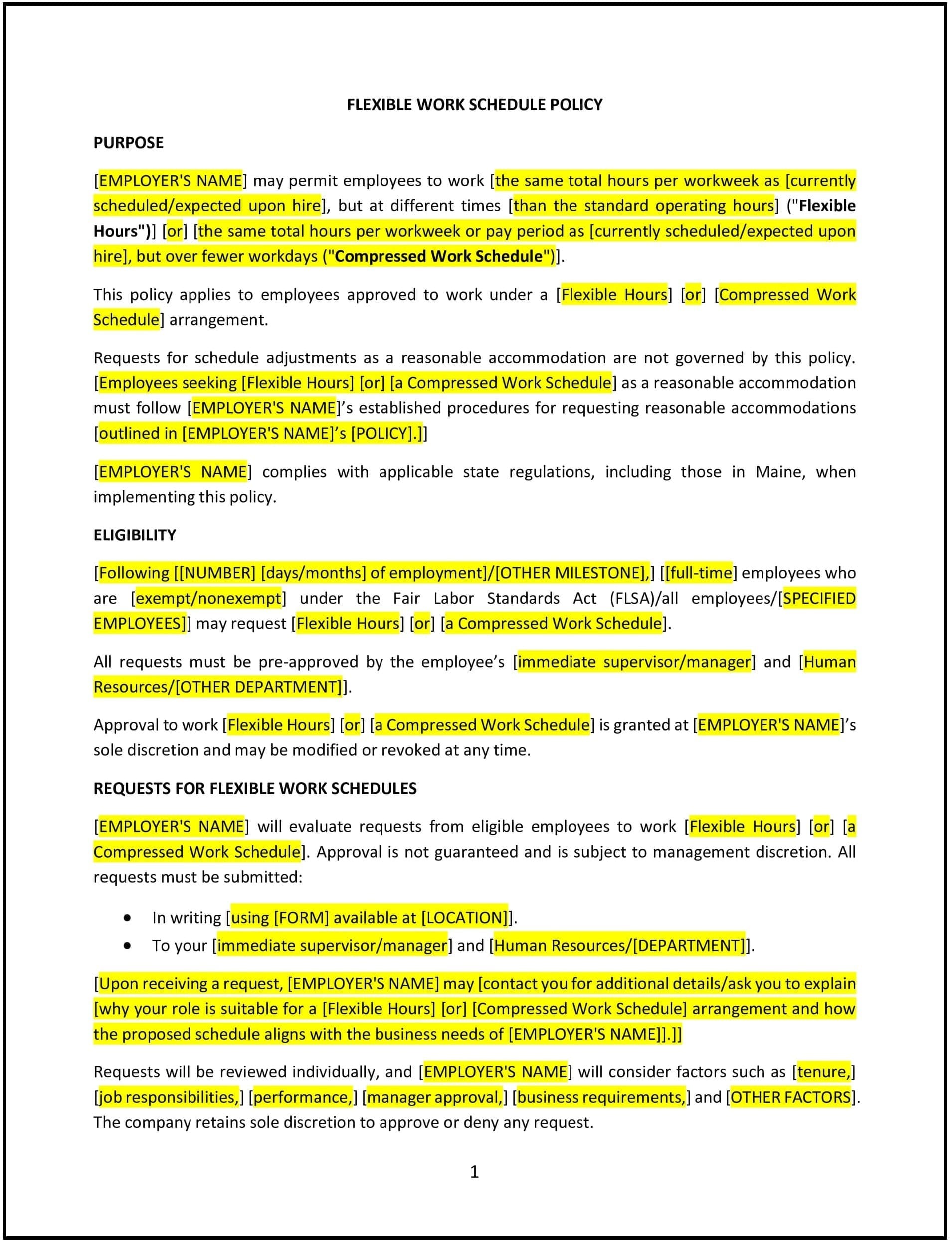
This flexible work schedule policy is designed to help Maine businesses offer employees alternative work arrangements, such as adjusted hours, compressed workweeks, or remote work options. It outlines eligibility, request procedures, and expectations to balance employee needs with business operations.
By implementing this policy, Maine businesses can promote work-life balance, enhance productivity, and attract and retain top talent.
How to use this flexible work schedule policy (Maine)
- Define flexibility options: Specify the types of flexible schedules available, such as flexible start and end times, compressed workweeks, or remote work.
- Set eligibility criteria: Identify which roles or employees qualify for flexible schedules based on job responsibilities, performance, and operational requirements.
- Detail the request process: Provide steps for employees to request a flexible schedule, including required documentation and notice periods.
- Include evaluation criteria: Clarify how requests will be assessed, such as alignment with business needs and the employee’s ability to meet job expectations.
- Outline expectations: Include clear guidelines for maintaining productivity, meeting deadlines, and being available during core business hours if required.
- Address compliance: Ensure the policy adheres to Maine labor laws, including overtime regulations and wage requirements.
- Review regularly: Update the policy as necessary to reflect changes in workplace practices or Maine labor laws.
Benefits of using this flexible work schedule policy (Maine)
Implementing this policy provides several benefits for Maine businesses:
- Enhances work-life balance: Supports employees in managing personal and professional commitments.
- Increases retention: Attracts and retains top talent by offering desirable work arrangements.
- Boosts productivity: Improves focus and efficiency by allowing employees to work during their most productive hours.
- Reduces absenteeism: Minimizes unplanned absences by providing scheduling flexibility.
- Ensures consistency: Establishes a clear framework for approving and managing flexible schedules.
Tips for using this flexible work schedule policy (Maine)
- Communicate the policy: Share the policy with employees during onboarding and ensure it is easily accessible.
- Train managers: Provide training on evaluating requests fairly and maintaining operational effectiveness.
- Monitor performance: Regularly assess how flexible arrangements impact productivity and business goals.
- Use technology: Leverage tools for time tracking, collaboration, and communication to support flexible work arrangements.
- Address fairness: Ensure all employees have equal opportunities to request and benefit from flexible schedules.
- Stay compliant: Review Maine labor laws to ensure adherence to wage, hour, and overtime regulations.