Flexible work schedule policy (Minnesota): Free template
Got contracts to review? While you're here for policies, let Cobrief make contract review effortless—start your free review now.
Customize this template for free
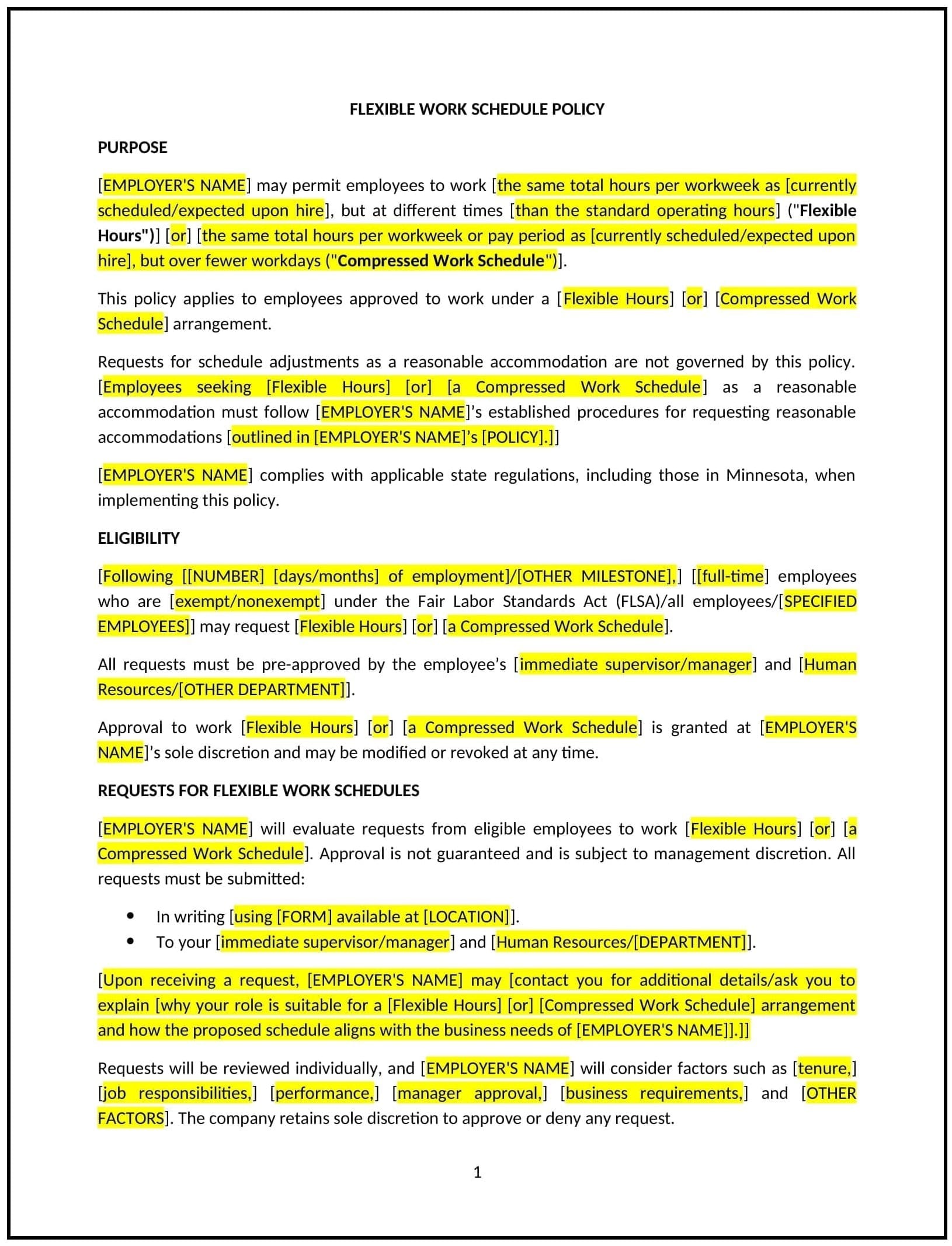
Flexible work schedule policy (Minnesota)
This flexible work schedule policy is designed to help Minnesota businesses offer employees the flexibility to adjust their work hours and location while maintaining productivity and meeting the company’s operational needs. It outlines the process for requesting flexible work arrangements, the types of flexibility available (such as remote work or adjusted hours), and the expectations for both employees and managers.
By implementing this policy, businesses can improve work-life balance, increase employee satisfaction, and enhance productivity, all while adapting to modern workplace trends and employee preferences.
How to use this flexible work schedule policy (Minnesota)
- Define eligible employees: Specify the criteria for which employees are eligible for flexible work schedules, such as job role, tenure, or performance.
- Outline flexible work options: Describe the types of flexible work arrangements available, such as remote work, flexible start and end times, compressed workweeks, or part-time schedules.
- Set expectations for communication and availability: Establish guidelines for how employees should remain accessible during flexible work hours, including expectations for response times, meetings, and communication channels.
- Create a request process: Provide a clear process for employees to request flexible work arrangements, including how much notice is required, how to submit requests, and any necessary documentation.
- Set performance metrics: Specify how employee performance will be measured when working flexible hours, ensuring that business objectives are met without compromising quality or productivity.
- Address confidentiality and data security: For remote work arrangements, ensure that employees understand the importance of maintaining company confidentiality, data security, and following IT protocols.
Benefits of using a flexible work schedule policy (Minnesota)
Implementing this policy provides several advantages for Minnesota businesses:
- Enhances employee work-life balance: Flexible work schedules allow employees to manage their personal responsibilities, reducing stress and improving overall well-being.
- Increases employee satisfaction and retention: Offering flexibility can increase job satisfaction, which in turn can help businesses retain top talent and reduce turnover.
- Boosts productivity: Employees who have flexibility in their schedules often experience fewer distractions, leading to improved focus and productivity.
- Expands talent pool: By offering flexible work arrangements, businesses can attract candidates from diverse geographic locations or those who require flexible schedules due to family or personal commitments.
- Reflects Minnesota-specific considerations: Tailors the policy to accommodate Minnesota’s workforce needs and local cultural preferences, ensuring it aligns with regional labor trends and employee expectations.
Tips for using this flexible work schedule policy (Minnesota)
- Communicate clearly: Ensure that all employees are aware of the policy and understand how flexible work arrangements can benefit both them and the company.
- Offer a variety of options: Provide employees with different types of flexibility, such as remote work, compressed workweeks, or flexible hours, to meet diverse needs while balancing business requirements.
- Be flexible with the flexibility: Be open to adjusting work schedules to accommodate personal circumstances, as long as it does not negatively affect business operations.
- Set clear boundaries: Establish clear guidelines for working hours, communication expectations, and performance outcomes to avoid confusion or misuse of flexible arrangements.
- Monitor performance: Regularly assess how flexible work arrangements are affecting productivity and employee satisfaction, and adjust the policy as needed to improve results.