Flexible work schedule policy (Mississippi): Free template
Got contracts to review? While you're here for policies, let Cobrief make contract review effortless—start your free review now.
Customize this template for free
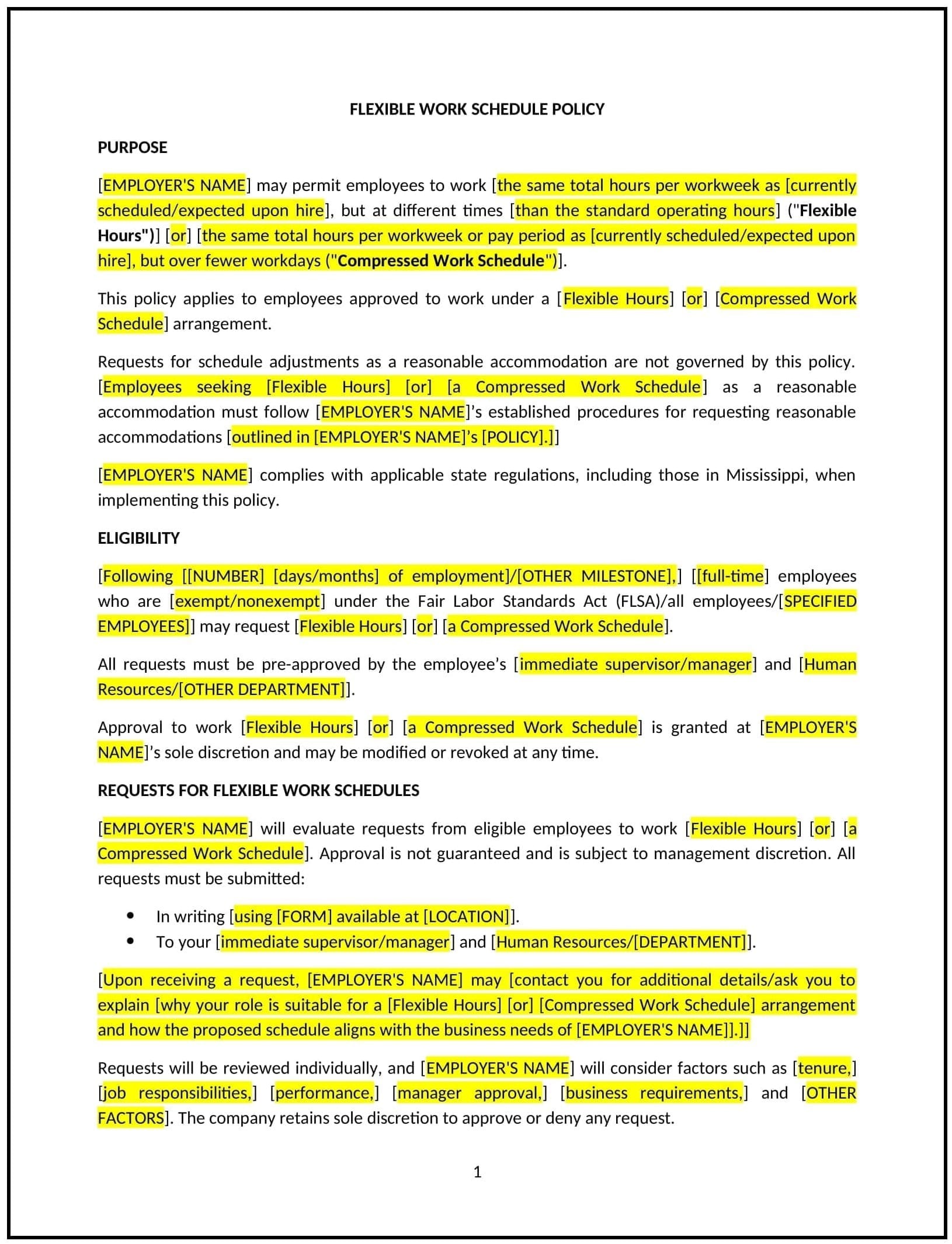
Flexible work schedule policy (Mississippi)
A flexible work schedule policy helps Mississippi businesses provide employees with greater flexibility in when and where they work, balancing personal needs with job responsibilities. This policy enables employees to choose work hours that align with their life, such as adjusting start and end times, compressed workweeks, or remote work options.
By adopting this policy, businesses promote a positive work-life balance, increase employee satisfaction, and attract a broader pool of talent, while maintaining productivity and meeting organizational goals.
How to use this flexible work schedule policy (Mississippi)
- Define the scope of flexible work options: Clearly outline what types of flexible work schedules are available, such as flextime, compressed workweeks, or remote work arrangements.
- Set eligibility criteria: Specify which employees are eligible for flexible work schedules, taking into consideration factors such as job duties, performance, and the needs of the business.
- Outline the approval process: Detail the process by which employees request a flexible work schedule, including who they should submit requests to and any required documentation or justification.
- Provide guidelines for working hours: Specify the core working hours, if any, during which employees are expected to be available, and outline the flexibility employees have in setting their hours.
- Address communication and availability: Clarify expectations regarding communication during flexible work hours, such as availability for meetings, response times to emails, and participation in team collaboration.
- Establish performance expectations: Ensure that employees understand that performance and productivity expectations remain the same, regardless of the flexibility in their schedule.
- Ensure business continuity: Provide guidelines for ensuring that business operations are not disrupted by flexible work schedules, including measures for coordinating team schedules and managing workloads.
- Address remote work: If remote work is part of the flexible work schedule, outline the company’s expectations for work-from-home setups, including technology requirements, security protocols, and communication practices.
- Review and update the policy regularly: Periodically review the policy to ensure it continues to meet the needs of both employees and the business, and adjust it based on employee feedback or changes in business operations.
Benefits of using this flexible work schedule policy (Mississippi)
This policy offers several benefits for Mississippi businesses:
- Enhances employee satisfaction: Offering flexible work schedules helps employees balance personal and professional responsibilities, leading to higher satisfaction and greater loyalty to the company.
- Increases employee retention: A flexible work environment is highly valued by employees, and businesses that offer it are more likely to retain top talent and reduce turnover.
- Improves productivity: Studies show that employees with flexible schedules are often more productive as they can work when they are most focused and energized.
- Attracts a diverse talent pool: Flexible work options make the company more attractive to candidates, especially those with caregiving responsibilities, or those seeking better work-life balance.
- Reduces absenteeism: When employees have the flexibility to adjust their schedules, they are more likely to take care of personal matters outside of working hours, reducing the need for unplanned absences.
- Supports inclusivity: Flexible schedules make it easier for employees with varying needs—such as parents, caregivers, or individuals with disabilities—to manage their professional and personal lives.
Tips for using this flexible work schedule policy (Mississippi)
- Communicate the policy clearly: Ensure that all employees are aware of the flexible work schedule options available to them and understand the process for requesting adjustments to their hours.
- Set clear boundaries: Establish boundaries for employees so they can balance flexibility with company expectations, such as being available during core hours for meetings or communication.
- Provide training for managers: Train managers to effectively manage teams with varying work schedules, including how to maintain communication, monitor productivity, and address potential issues.
- Encourage transparency: Promote open communication between employees and managers to ensure that flexible schedules do not negatively impact team collaboration or business operations.
- Track performance: While offering flexibility, continue to evaluate employee performance based on outcomes and productivity, not just hours worked, to ensure business goals are being met.