Gender transition in the workplace policy (California): Free template
Got contracts to review? While you're here for policies, let Cobrief make contract review effortless—start your free review now.
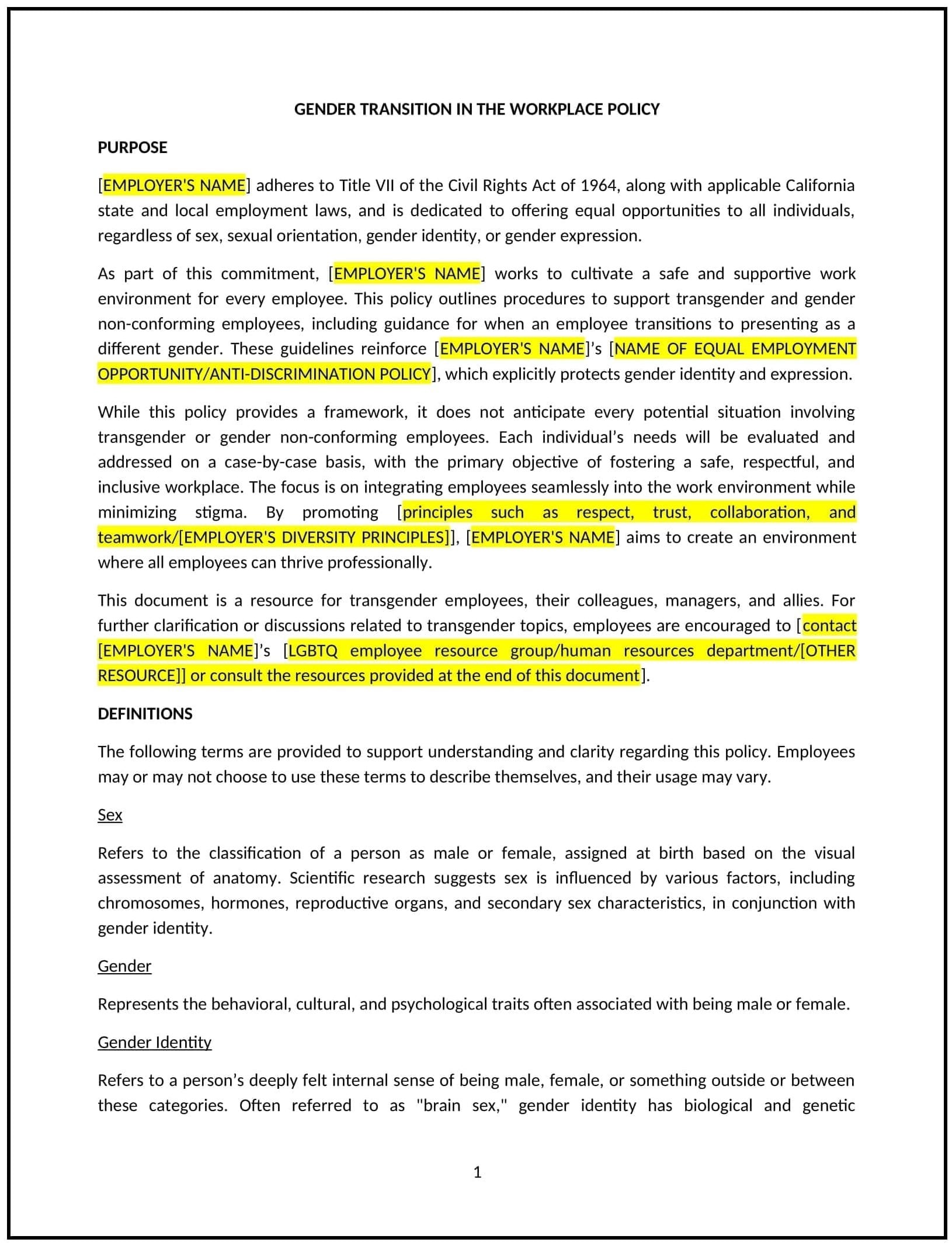
Customize this template for free
Gender transition in the workplace policy (California)
In California, a gender transition in the workplace policy provides businesses with guidelines to support employees undergoing a gender transition. This policy fosters inclusivity, promotes understanding, and supports compliance with California laws, such as the Fair Employment and Housing Act (FEHA), which prohibits discrimination based on gender identity and expression.
This policy outlines the business’s commitment to respecting employees’ rights, procedures for transitioning employees, and steps to maintain an inclusive work environment. By implementing this policy, California businesses can create a supportive workplace for all employees.
How to use this gender transition in the workplace policy (California)
- Define terms: Provide clear definitions of gender identity, gender expression, and gender transition to ensure mutual understanding.
- Support transitioning employees: Outline steps the business will take to support employees during their transition, including adjusting records and providing accommodations.
- Address privacy: Ensure that transitioning employees’ information is handled confidentially and shared only with their consent.
- Foster inclusivity: Encourage the use of inclusive language and provide training on gender sensitivity for all employees.
- Communicate reporting procedures: Establish channels for employees to report concerns related to discrimination or harassment.
Benefits of using this gender transition in the workplace policy (California)
This policy offers several advantages for California businesses:
- Supports compliance: Reflects California laws prohibiting discrimination based on gender identity and expression.
- Promotes inclusivity: Demonstrates the business’s commitment to creating a respectful and supportive work environment.
- Enhances morale: Helps transitioning employees feel valued and supported, boosting engagement and retention.
- Reduces risks: Minimizes potential legal claims by proactively addressing discrimination and harassment concerns.
- Builds trust: Fosters a culture of respect and understanding among employees.
Tips for using this gender transition in the workplace policy (California)
- Reflect California-specific laws: Address requirements under FEHA and other state protections for transgender and non-binary employees.
- Train employees: Provide regular training on gender sensitivity and the importance of inclusivity.
- Update records promptly: Ensure employee records, such as name and gender markers, are updated upon request.
- Provide accommodations: Offer flexibility and resources, such as restrooms that align with employees’ gender identities.
- Review regularly: Update the policy to reflect changes in California laws, workplace needs, or societal standards.