Gender transition in the workplace policy (Hawaiʻi): Free template
Got contracts to review? While you're here for policies, let Cobrief make contract review effortless—start your free review now.
Customize this template for free
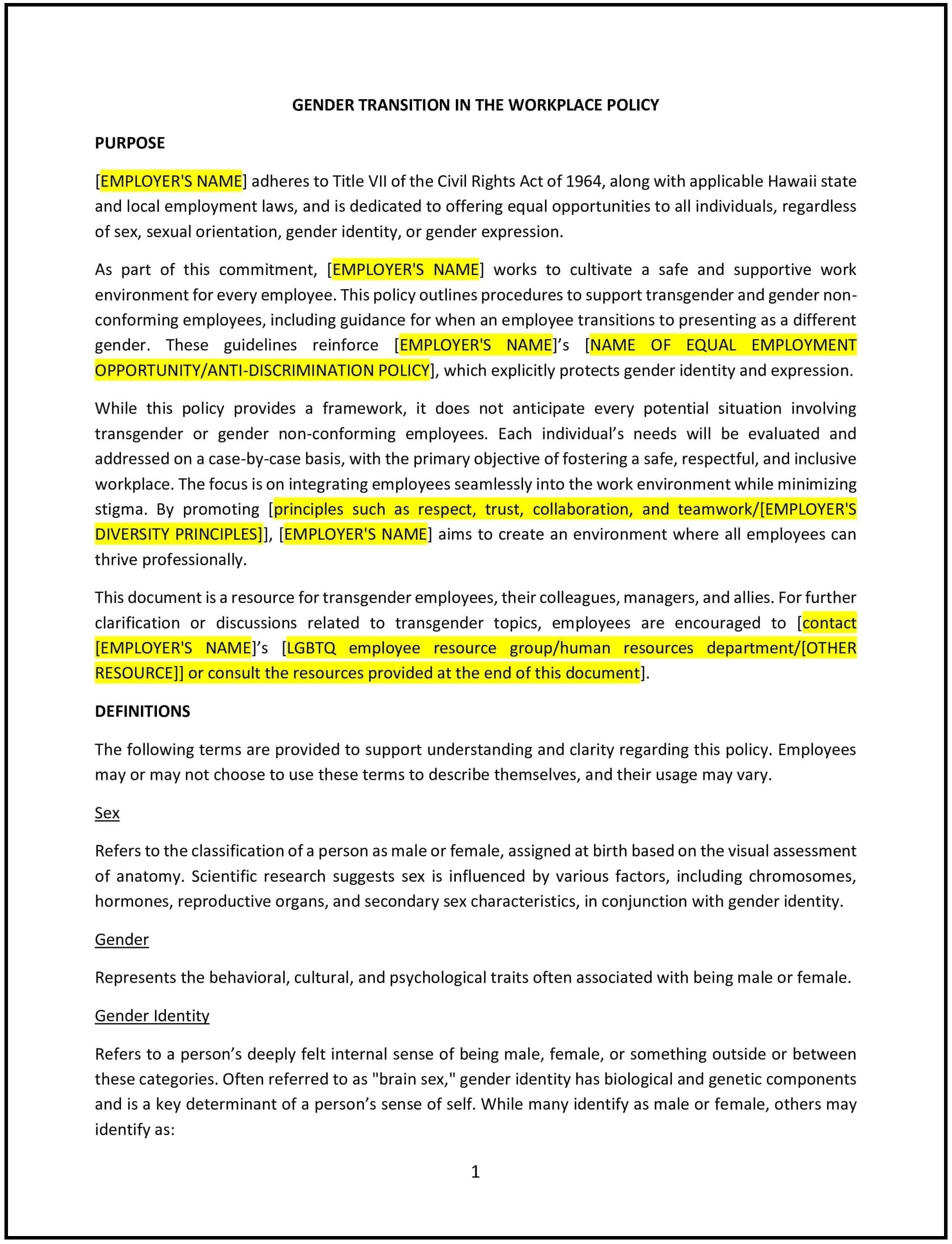
Gender transition in the workplace policy (Hawaiʻi)
A gender transition in the workplace policy helps Hawaiʻi businesses create a supportive and inclusive environment for employees undergoing gender transition. This policy outlines guidelines for respecting employees’ gender identity, providing accommodations, and fostering a culture of acceptance, while addressing Hawaiʻi’s unique cultural and legal landscape. It is designed to promote dignity, equity, and respect for all employees, regardless of their gender identity or expression.
By implementing this policy, businesses in Hawaiʻi can demonstrate their commitment to inclusivity, improve employee morale, and create a workplace where everyone feels valued and respected.
How to use this gender transition in the workplace policy (Hawaiʻi)
- Define key terms: Provide clear definitions of terms such as gender identity, gender expression, and gender transition to ensure understanding and consistency.
- Establish confidentiality: Outline procedures for protecting the privacy of employees undergoing gender transition, including limiting access to personal information.
- Provide accommodations: Specify the types of accommodations available, such as updating name and gender markers in records, restroom access, and dress code flexibility.
- Address communication: Provide guidance on how to communicate with the transitioning employee, including the use of preferred names and pronouns.
- Train employees and managers: Educate staff on the policy’s guidelines, including how to support colleagues undergoing gender transition and address potential biases.
- Create a transition plan: Work with the transitioning employee to develop a personalized plan that outlines timelines, accommodations, and communication strategies.
- Communicate the policy: Share the policy with employees during onboarding and through internal communications to ensure awareness and understanding.
- Monitor compliance: Regularly review workplace practices to ensure adherence to the policy and address any issues promptly.
- Review and update the policy: Regularly assess the policy’s effectiveness and make adjustments as needed to reflect changes in laws, employee needs, or workplace dynamics.
Benefits of using this gender transition in the workplace policy (Hawaiʻi)
This policy offers several advantages for Hawaiʻi businesses:
- Promotes inclusivity: A supportive policy fosters a workplace where all employees feel respected and valued, regardless of their gender identity.
- Enhances employee morale: Demonstrating a commitment to inclusivity can improve job satisfaction and loyalty among employees.
- Attracts top talent: A gender transition policy makes the business more appealing to job seekers who value diversity and inclusion.
- Reduces discrimination: Clear guidelines help prevent discrimination and harassment based on gender identity or expression.
- Builds trust: Employees are more likely to trust leadership when they see a commitment to supporting their needs and rights.
- Aligns with legal requirements: The policy helps businesses comply with Hawaiʻi state laws and federal regulations protecting gender identity and expression.
- Strengthens reputation: Demonstrating a commitment to inclusivity enhances the business’s reputation among customers, partners, and the community.
Tips for using this gender transition in the workplace policy (Hawaiʻi)
- Communicate the policy effectively: Share the policy with employees during onboarding and through regular reminders, such as emails or training sessions.
- Provide training: Educate employees and managers on the policy’s guidelines, including how to support colleagues undergoing gender transition and address potential biases.
- Be transparent: Clearly explain the policy’s purpose, benefits, and expectations to employees to build trust and cooperation.
- Monitor compliance: Regularly review workplace practices to ensure adherence to the policy and address any issues promptly.
- Encourage feedback: Gather input from employees to identify areas for improvement and ensure the policy meets their needs.
- Review the policy periodically: Update the policy as needed to reflect changes in laws, employee needs, or workplace dynamics.