Gender transition in the workplace policy (Indiana): Free template
Got contracts to review? While you're here for policies, let Cobrief make contract review effortless—start your free review now.
Customize this template for free
Gender transition in the workplace policy (Indiana): Free template
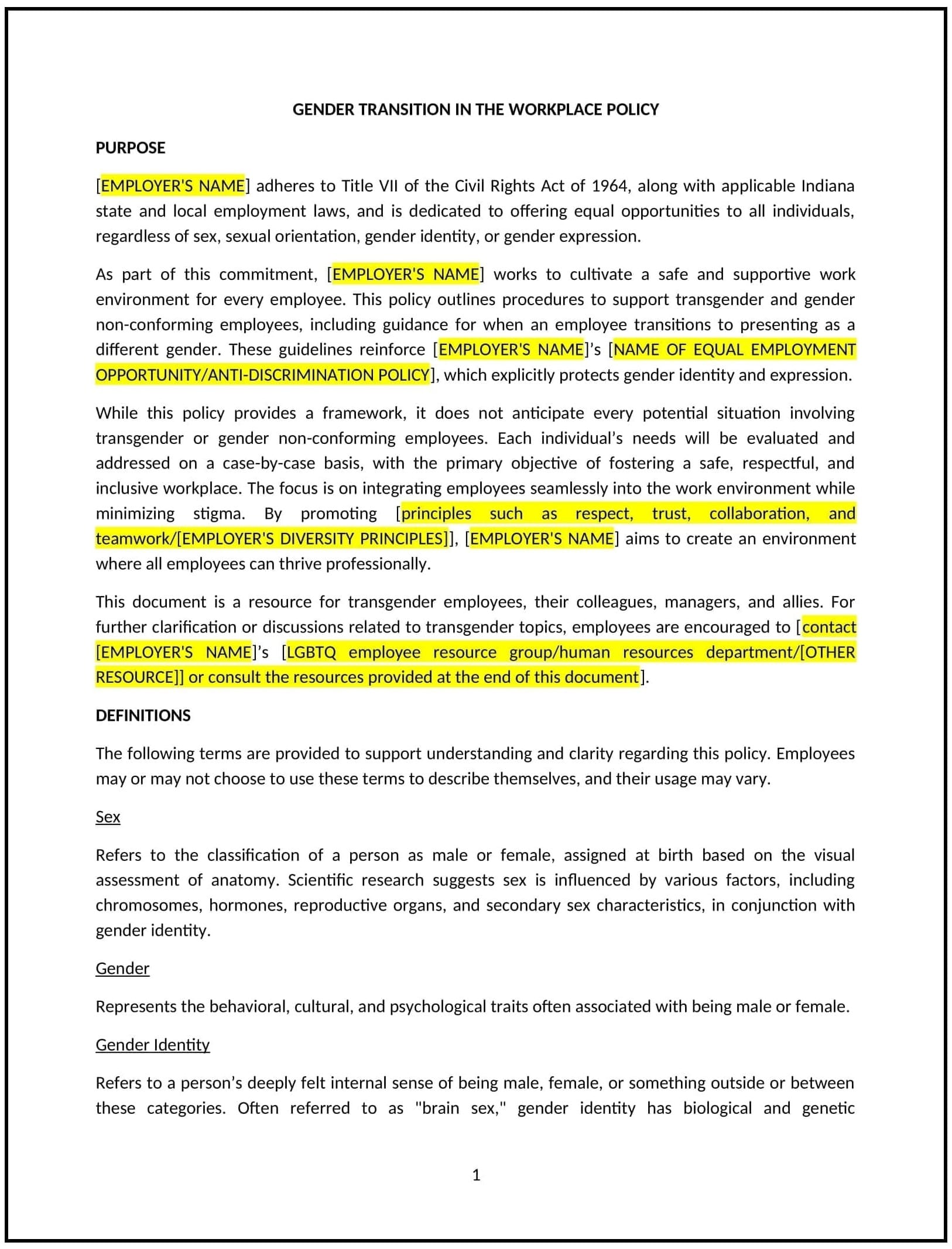
The gender transition in the workplace policy helps Indiana businesses create a supportive, inclusive, and respectful environment for employees undergoing gender transition. This policy outlines the company’s commitment to providing equal opportunities for all employees, regardless of their gender identity, and addresses the specific needs of employees undergoing gender transition, such as name changes, pronoun usage, and bathroom access. By using this template, businesses can ensure that their workplace is a safe space for all employees and that gender transition is handled with dignity and respect.
By implementing this policy, Indiana businesses can promote a culture of inclusivity, reduce discrimination and harassment, and ensure that all employees are treated fairly, regardless of their gender identity or transition status.
How to use this gender transition in the workplace policy (Indiana)
- Define gender transition: Clearly define what gender transition involves, including changes in name, pronouns, appearance, and other aspects of gender identity. The policy should emphasize that gender transition is a personal process and can vary from employee to employee.
- Establish confidentiality protocols: Ensure that employees undergoing gender transition are treated with respect and privacy. The policy should specify that any information about an employee’s gender identity or transition process will be kept confidential, and disclosure will only occur with the employee’s consent.
- Address name and pronoun usage: Provide guidelines for updating an employee’s name and pronouns in company records, email addresses, and workplace communications. The policy should encourage employees and management to use the correct name and pronouns, as indicated by the transitioning employee.
- Ensure bathroom access: Specify that employees undergoing gender transition should have access to the bathroom facilities that align with their gender identity. The policy should ensure that employees feel comfortable and safe using the facilities without fear of discrimination or harassment.
- Provide support during the transition: Outline the resources and support available to employees undergoing gender transition, such as counseling services, HR assistance, or peer support groups. The policy should ensure that employees know they can seek support during their transition and that the company will provide reasonable accommodations as needed.
- Address communication and training: Encourage open communication between the transitioning employee and management to address any concerns or accommodations. The policy should also require training for all employees on gender identity, respectful communication, and inclusivity to foster a supportive workplace culture.
- Promote inclusivity and respect: Ensure that the workplace is welcoming and respectful for all employees, regardless of their gender identity. The policy should reinforce the company’s commitment to inclusivity, diversity, and preventing discrimination or harassment based on gender identity.
- Define grievance procedures: Establish clear procedures for employees to report any issues related to discrimination, harassment, or mistreatment during gender transition. The policy should ensure that there is a confidential process for addressing complaints and taking corrective actions if necessary.
Benefits of using this gender transition in the workplace policy (Indiana)
Implementing this policy provides several key benefits for Indiana businesses:
- Promotes inclusivity and diversity: A gender transition policy helps create a more inclusive workplace where all employees, regardless of gender identity, are valued and respected.
- Reduces discrimination and harassment: The policy helps reduce the risk of discrimination and harassment related to gender transition by clearly outlining expectations for respectful behavior and providing support for transitioning employees.
- Improves employee morale and retention: A supportive and inclusive environment increases employee satisfaction and engagement, leading to better retention rates, particularly among employees who may otherwise face discrimination in the workplace.
- Enhances company reputation: Businesses that support gender transition and inclusivity demonstrate corporate social responsibility, which can enhance their reputation and appeal to a broader range of talent.
- Increases legal compliance: The policy helps ensure that the business complies with federal, state, and local laws regarding gender identity and workplace discrimination, reducing the risk of legal action or lawsuits.
- Supports positive workplace culture: Fostering an inclusive and respectful environment contributes to a positive workplace culture where employees feel safe, supported, and valued.
Tips for using this gender transition in the workplace policy (Indiana)
- Communicate the policy clearly: Ensure that all employees are aware of the gender transition policy by including it in the employee handbook, during onboarding, and through company-wide communications. Make sure employees understand the company’s commitment to inclusivity and the importance of respecting gender identity.
- Provide training and education: Offer regular training for employees and management on gender identity, the importance of using correct pronouns, and how to support colleagues who are undergoing gender transition. This helps foster an inclusive, supportive work environment.
- Be proactive in offering support: Regularly check in with employees undergoing gender transition to ensure that their needs are being met and that they have the support they need throughout the process. This includes offering resources, guidance, and accommodations where appropriate.
- Promote a respectful workplace culture: Ensure that employees understand the importance of treating all colleagues with respect and dignity, regardless of gender identity. Create a culture of openness and inclusivity by encouraging respectful dialogue and addressing any instances of discrimination or harassment immediately.
- Regularly review the policy: The policy should be reviewed periodically to ensure it is up to date with evolving best practices, legal requirements, and feedback from employees. Regular reviews ensure that the policy continues to support a positive and inclusive workplace.