Gender transition in the workplace policy (Kansas): Free template
Got contracts to review? While you're here for policies, let Cobrief make contract review effortless—start your free review now.
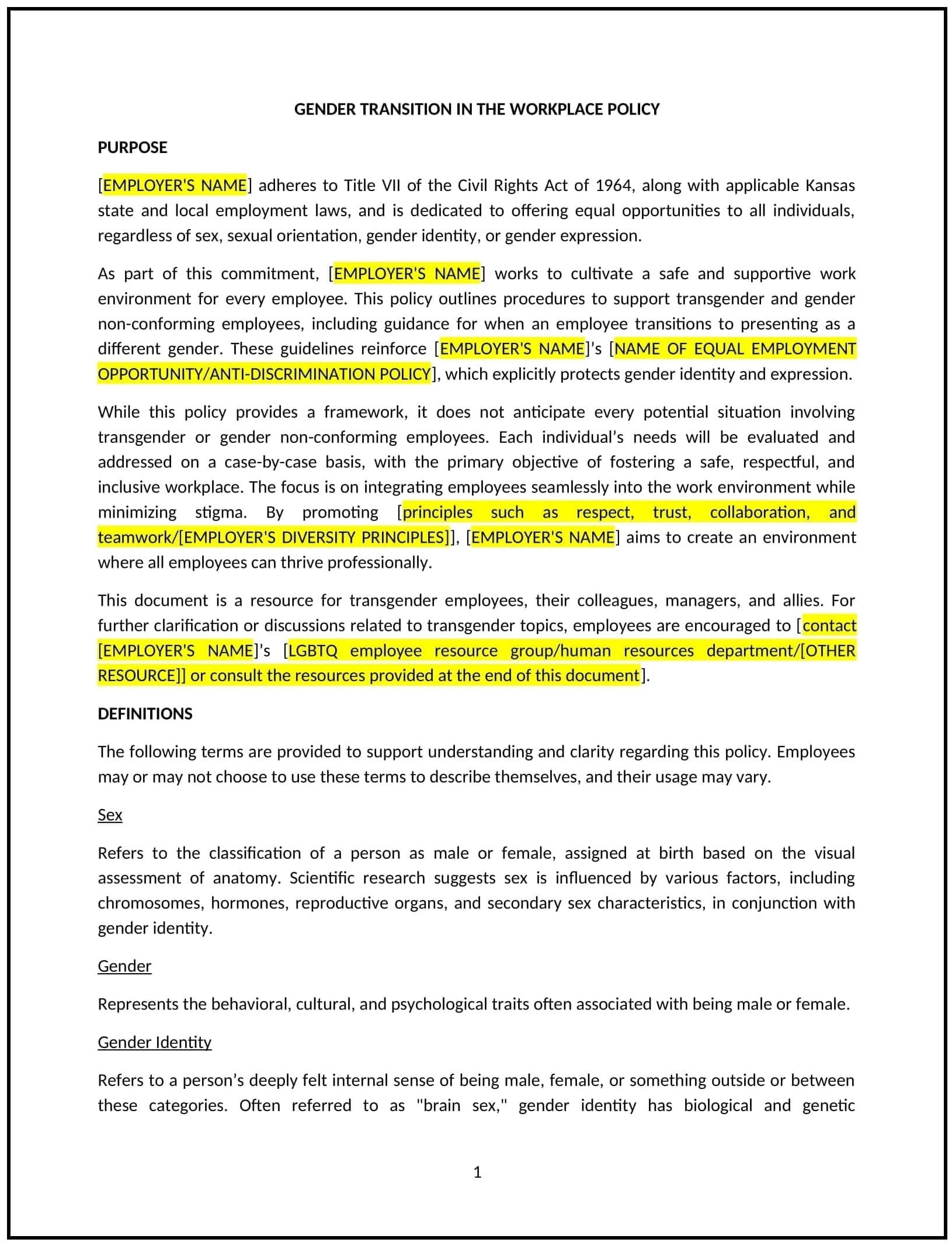
Customize this template for free
Gender transition in the workplace policy (Kansas)
A gender transition in the workplace policy helps Kansas businesses create an inclusive and supportive environment for employees who are transitioning to a different gender. This policy outlines the steps the business will take to support employees during their transition, including confidentiality, communication, and changes to workplace policies.
By implementing this policy, businesses can foster a respectful and inclusive workplace culture, support employees through their transition, and ensure that all employees are treated with dignity and fairness.
How to use this gender transition in the workplace policy (Kansas)
- Define gender transition: Businesses should define what constitutes a gender transition in the context of their workplace, acknowledging that it may involve medical, social, and legal changes.
- Establish support channels: Businesses should provide clear channels for employees to request support during their transition, including HR, management, and access to Employee Assistance Programs (EAPs) if available.
- Maintain confidentiality: Businesses should ensure that any personal information regarding an employee’s gender transition is kept confidential and only shared on a need-to-know basis with authorized personnel.
- Outline communication procedures: Businesses should clarify how employees will inform their colleagues and customers about their transition, ensuring respectful and professional communication throughout.
- Provide accommodations as needed: Businesses should outline how they will support employees during the transition, including offering flexibility with medical appointments, time off, or any specific needs related to the transition.
- Promote respect and inclusion: Businesses should take steps to educate employees on gender identity and encourage an inclusive environment, including training on respect, language, and behavior in the workplace.
- Review and update regularly: Businesses should periodically assess and update the policy to ensure it remains inclusive and reflects the evolving needs of the workforce.
Benefits of using a gender transition in the workplace policy (Kansas)
- Promotes inclusivity and respect: By supporting gender transition, businesses create a more inclusive workplace where all employees feel respected and valued.
- Increases employee retention: Employees who feel supported during their gender transition are more likely to remain with the company, improving employee morale and loyalty.
- Enhances company reputation: Businesses that promote diversity and inclusivity are viewed more favorably by customers, clients, and potential employees.
- Reduces legal risks: A clear policy helps prevent potential discrimination claims and ensures that the company meets its legal obligations regarding equal treatment and workplace fairness.
- Fosters a positive work environment: Creating a supportive and respectful environment promotes higher productivity and a more cohesive team.
- Encourages diversity: Supporting gender transition helps create a diverse workforce, bringing in employees from various backgrounds and perspectives.
Tips for using this gender transition in the workplace policy (Kansas)
- Communicate the policy clearly: Businesses should ensure all employees are aware of the gender transition policy, including the support and resources available.
- Provide training and education: Businesses should offer training to employees and managers on gender identity, inclusivity, and respectful communication to foster a supportive environment.
- Be flexible with accommodations: Businesses should be open to discussing specific needs with transitioning employees, such as time off for medical procedures or adjustments to the workplace environment.
- Monitor the work environment: Businesses should actively work to ensure that the workplace remains respectful and free from discrimination or harassment, providing a safe space for all employees.
- Involve employees in the process: Businesses should involve transitioning employees in discussions about their needs and preferences, making sure they feel heard and respected.
- Regularly review the policy: Businesses should assess the policy’s effectiveness and update it to meet evolving legal standards and the needs of employees.