Gender transition in the workplace policy (Minnesota): Free template
Got contracts to review? While you're here for policies, let Cobrief make contract review effortless—start your free review now.
Customize this template for free
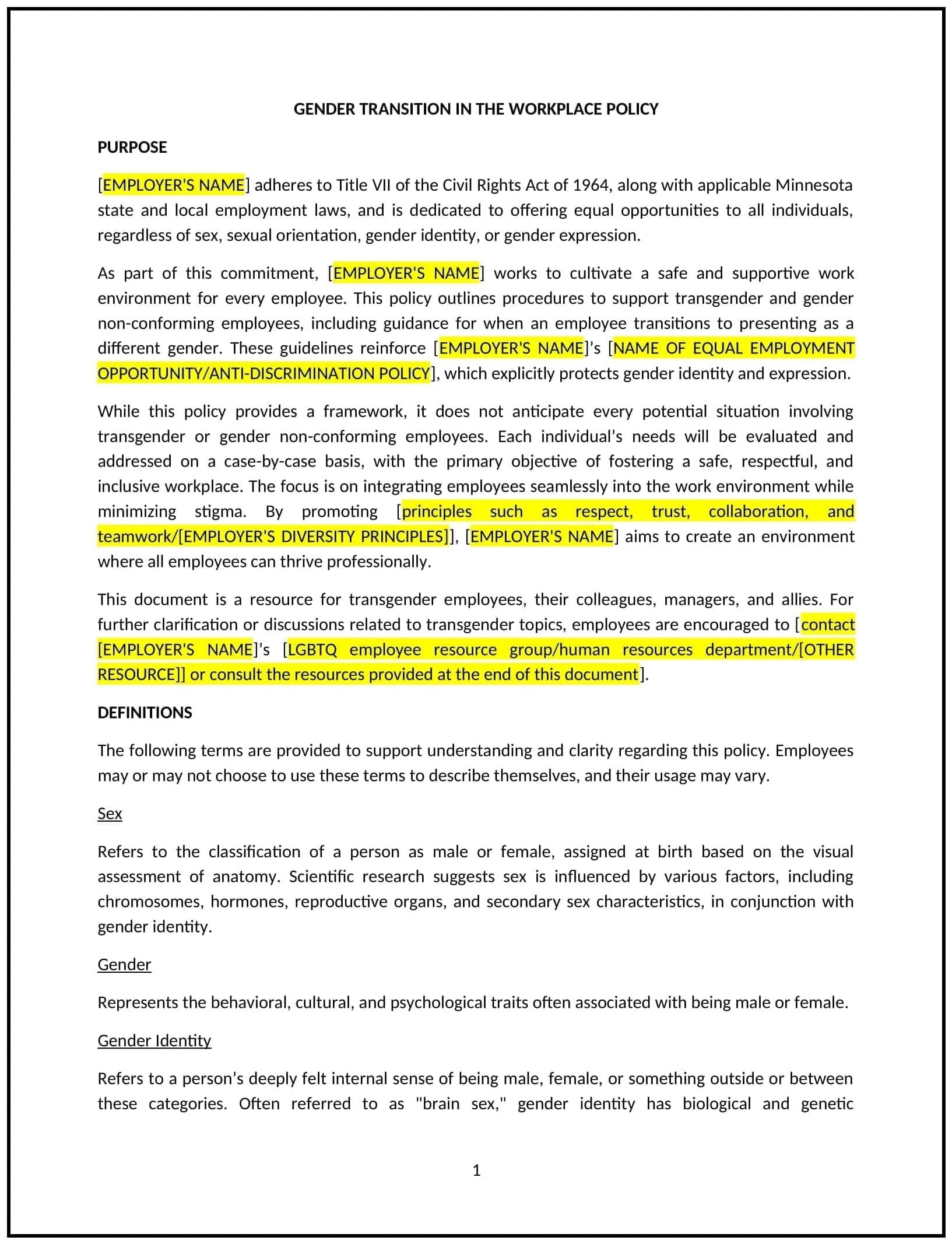
Gender transition in the workplace policy (Minnesota)
This gender transition in the workplace policy is designed to provide Minnesota businesses with guidelines for supporting employees who are transitioning gender. It outlines the steps businesses should take to ensure that employees transitioning in the workplace are treated with respect, dignity, and fairness, while maintaining a supportive and inclusive environment for all employees.
By implementing this policy, businesses can foster an environment of inclusion, reduce discrimination, and show their commitment to creating a respectful, diverse, and supportive workplace for all employees.
How to use this gender transition in the workplace policy (Minnesota)
- Define gender transition: Clearly outline what gender transition involves, including the personal and professional aspects of an employee's transition, such as changes in name, pronouns, and gender expression.
- Set expectations for respect and privacy: Ensure that employees and management understand the importance of using the correct name and pronouns for the transitioning employee and maintaining confidentiality about personal details related to the transition.
- Establish support systems: Outline the support available to employees undergoing gender transition, such as offering flexibility in work schedules, providing counseling or EAP services, and ensuring that employees feel comfortable discussing their needs with HR or managers.
- Set clear procedures for requesting accommodations: Specify how employees can request accommodations related to their gender transition, such as changes in uniforms, restroom access, or time off for medical appointments.
- Ensure equal treatment: Clarify that employees undergoing a gender transition will continue to have the same opportunities for advancement, promotions, and compensation as other employees, and that any discrimination will not be tolerated.
- Educate employees: Provide training for all employees to promote understanding and sensitivity to gender transition issues, focusing on creating an inclusive and supportive work environment for everyone.
Benefits of using a gender transition in the workplace policy (Minnesota)
Implementing this policy provides several advantages for Minnesota businesses:
- Promotes a culture of inclusion: By supporting employees through gender transitions, businesses can foster a work environment where all individuals feel respected, valued, and supported.
- Enhances employee morale and retention: Employees who feel supported during gender transitions are more likely to remain engaged and loyal to the organization, reducing turnover and increasing productivity.
- Strengthens diversity and reputation: Companies that demonstrate inclusivity and respect for diversity attract top talent and build a reputation as an employer of choice for diverse candidates.
- Reduces legal risk: By implementing clear policies, businesses can reduce the risk of discrimination lawsuits or complaints related to gender transition in the workplace.
- Reflects Minnesota-specific considerations: Tailors the policy to Minnesota’s labor laws, including state-specific protections for LGBTQ+ employees and cultural norms surrounding inclusivity and diversity.
Tips for using this gender transition in the workplace policy (Minnesota)
- Communicate clearly: Ensure that all employees understand the policy, its purpose, and the steps they need to take to support colleagues who are transitioning.
- Provide training and resources: Regularly offer training sessions on gender identity, sensitivity, and inclusivity to educate employees on how to be supportive and respectful toward transitioning individuals.
- Be open to accommodations: Offer flexibility and openness when discussing accommodations, such as adjusting dress codes, providing private spaces, or allowing time off for medical procedures.
- Maintain confidentiality: Ensure that personal information regarding an employee’s gender transition is kept confidential, shared only on a need-to-know basis, and handled with respect and sensitivity.
- Review regularly: Periodically review the policy to ensure it remains aligned with Minnesota-specific laws, workplace culture, and best practices in diversity and inclusion.