Got contracts to review? While you're here for policies, let Cobrief make contract review effortless—start your free review now.
Customize this template for free
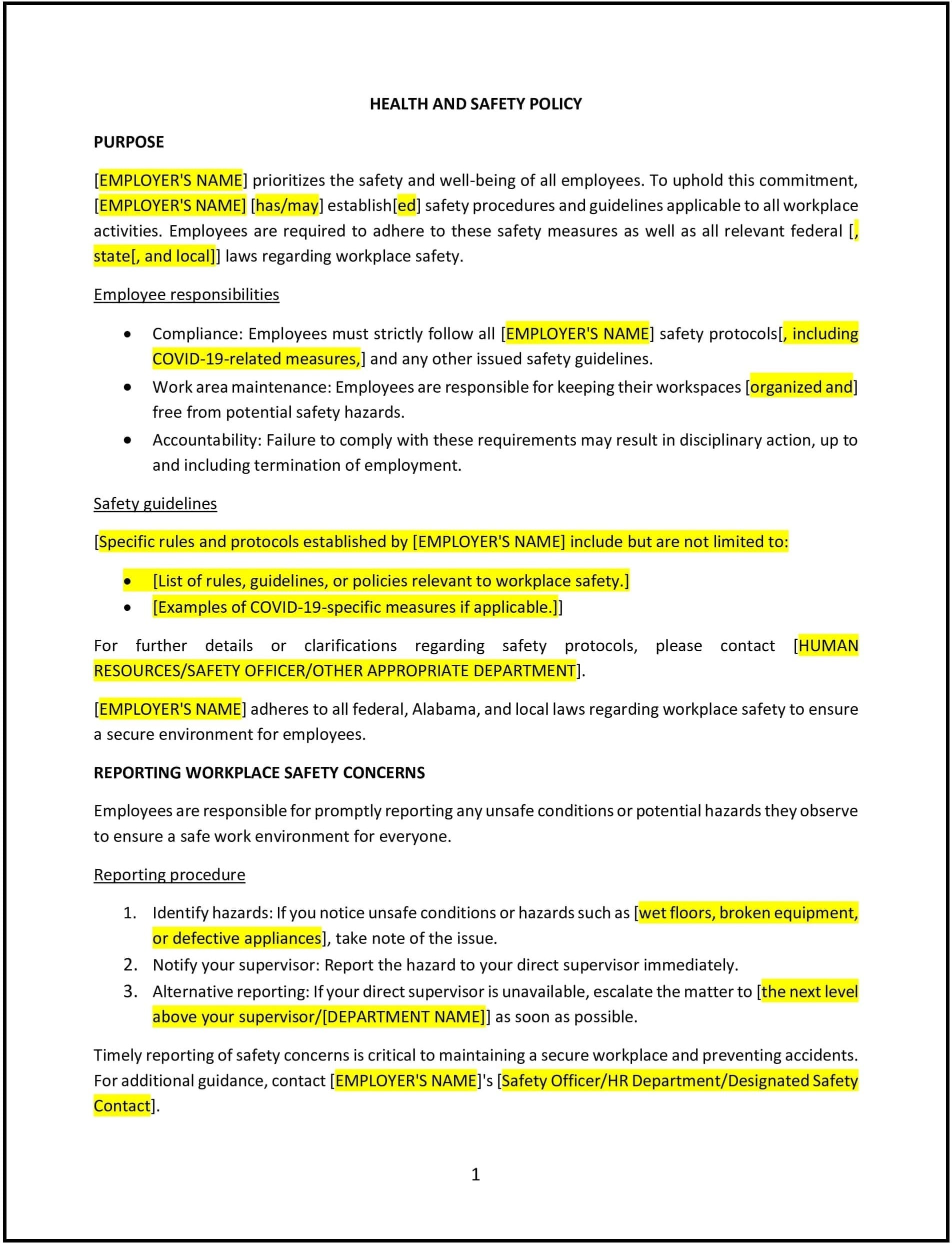
Health and safety policy (Alabama)
A health and safety policy outlines the commitment of your business to providing a safe and secure workplace for employees, customers, and visitors. For SMBs in Alabama, this policy establishes guidelines to prevent workplace accidents, promote well-being, and ensure compliance with safety standards. Tailoring this policy to address specific workplace hazards and industry needs supports a proactive safety culture.
This policy provides a framework for identifying risks, implementing safety measures, and addressing incidents effectively, helping to protect both employees and the business.
How to use this health and safety policy (Alabama)
- Identify workplace hazards: Conduct a thorough assessment of potential risks specific to your industry and operations in Alabama, such as machinery-related risks, ergonomic concerns, or environmental hazards.
- Develop safety protocols: Outline specific procedures for maintaining safety, such as proper equipment use, regular inspections, and emergency response plans.
- Assign responsibilities: Clearly define the roles of employees, supervisors, and management in maintaining workplace safety and implementing the policy.
- Provide training: Offer regular training on workplace safety, including hazard awareness, emergency procedures, and proper use of safety equipment.
- Establish reporting mechanisms: Include procedures for employees to report hazards, near misses, or incidents confidentially and without fear of retaliation.
Benefits of using a health and safety policy (Alabama)
A health and safety policy helps create a safer, more productive work environment while protecting your business and employees. Here’s how it helps:
- Reduces workplace accidents: Proactively addresses risks to minimize injuries and accidents, improving employee well-being and reducing downtime.
- Enhances compliance: Aligns with OSHA standards and Alabama-specific regulations to support legal and safety requirements.
- Builds employee confidence: Demonstrates a commitment to safety, fostering trust and morale among employees.
- Lowers costs: Reduces expenses related to workplace injuries, such as medical bills, workers’ compensation claims, and lost productivity.
- Improves business reputation: Establishes your company as a responsible and safe employer, attracting top talent and loyal customers.
Tips for implementing a health and safety policy (Alabama)
- Conduct regular inspections: Schedule routine workplace inspections to identify and address potential hazards before they become incidents.
- Encourage employee involvement: Involve employees in safety planning and decision-making to ensure their insights and concerns are addressed.
- Maintain up-to-date records: Keep detailed records of safety training, inspections, and incidents to track progress and support compliance efforts.
- Review and update the policy: Periodically assess the effectiveness of the policy and make updates as needed to reflect changes in regulations, operations, or workplace risks.
- Provide accessible resources: Ensure employees have easy access to safety equipment, emergency contact information, and the full health and safety policy.