Got contracts to review? While you're here for policies, let Cobrief make contract review effortless—start your free review now.
Customize this template for free
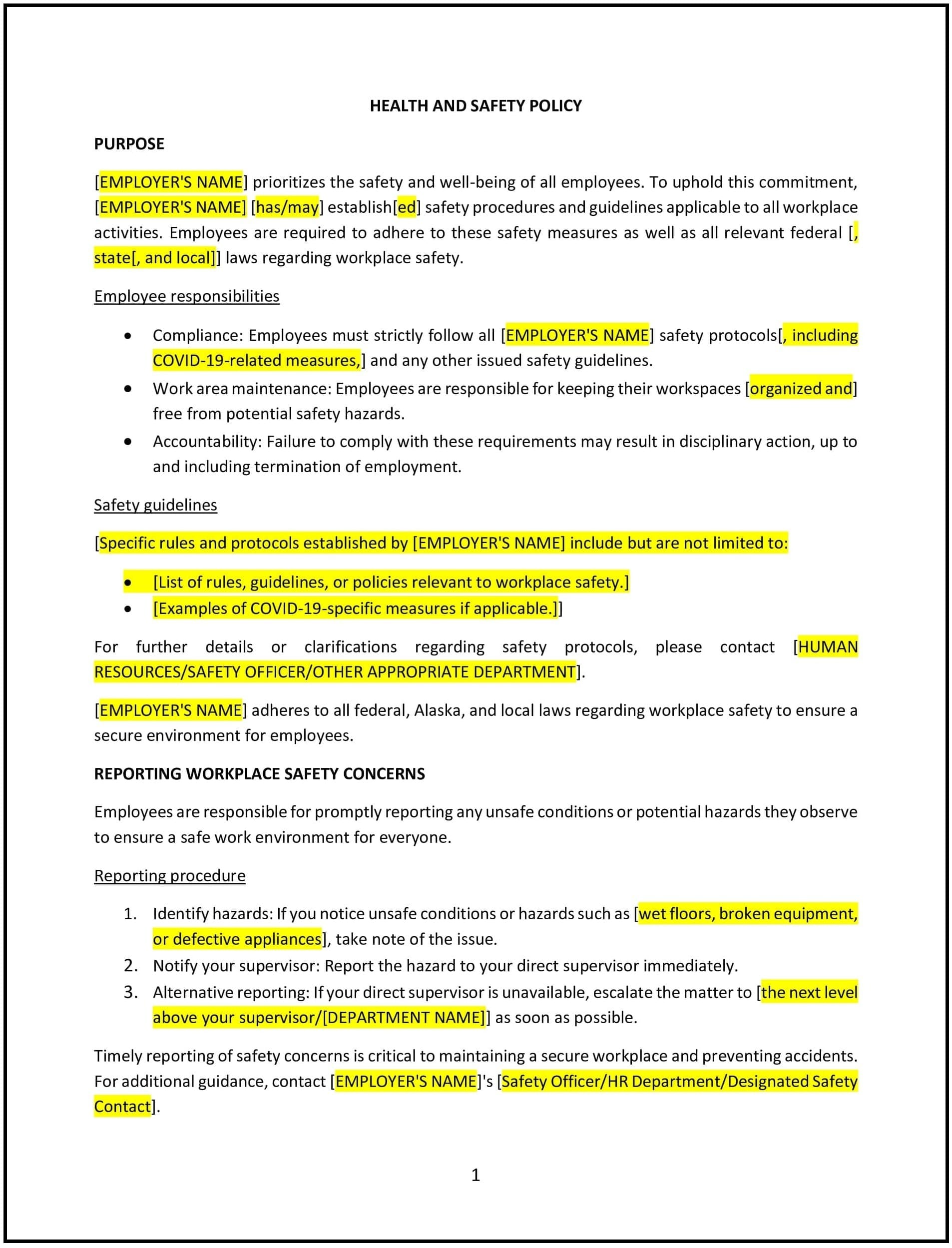
Health and safety policy (Alaska)
In Alaska, a health and safety policy provides guidelines to maintain a safe and healthy workplace for all employees. This policy outlines procedures for identifying and addressing workplace hazards, promoting employee well-being, and ensuring compliance with occupational safety laws. By implementing a comprehensive health and safety policy, businesses can minimize risks, enhance productivity, and demonstrate a commitment to employee welfare.
Given Alaska’s unique challenges, such as extreme weather conditions, remote locations, and industry-specific risks, businesses should tailor their policies to address local environmental and operational factors.
How to use this health and safety policy (Alaska)
- Identify workplace hazards: Conduct regular assessments to identify potential safety risks, such as equipment hazards, weather-related issues, or ergonomic concerns.
- Define safety responsibilities: Assign roles for maintaining safety, such as managers overseeing compliance and employees reporting hazards or incidents.
- Include emergency procedures: Provide clear steps for responding to emergencies, such as natural disasters, workplace accidents, or medical incidents.
- Provide training: Offer regular safety training tailored to specific roles and risks, such as handling hazardous materials or operating equipment.
- Monitor and review: Regularly evaluate the effectiveness of safety measures and update the policy to reflect changes in workplace conditions or regulations.
Benefits of using a health and safety policy (Alaska)
A health and safety policy provides several benefits for businesses in Alaska. Here’s how it helps:
- Protects employees: Reduces the risk of workplace injuries or illnesses, ensuring a safer environment for all staff.
- Supports compliance: Helps businesses adhere to occupational safety laws, such as OSHA standards, and reduces the risk of legal penalties.
- Improves productivity: Minimizes disruptions caused by accidents or illnesses, ensuring smooth operations and employee efficiency.
- Enhances morale: Demonstrates a commitment to employee welfare, fostering trust and engagement among the workforce.
- Reduces costs: Lowers expenses associated with workplace injuries, such as medical bills, workers’ compensation claims, or equipment repairs.
Tips for using a health and safety policy (Alaska)
- Adapt to local risks: Address specific safety concerns relevant to Alaska, such as extreme cold, remote site operations, or wildlife encounters.
- Equip employees: Provide necessary personal protective equipment (PPE) and ensure employees are trained on its proper use.
- Conduct regular inspections: Schedule routine checks to identify potential hazards and implement corrective measures promptly.
- Encourage reporting: Create a culture where employees feel comfortable reporting safety concerns or incidents without fear of reprisal.
- Plan for emergencies: Include detailed emergency response plans and ensure all employees are familiar with evacuation routes, communication protocols, and first aid procedures.