Got contracts to review? While you're here for policies, let Cobrief make contract review effortless—start your free review now.
Customize this template for free
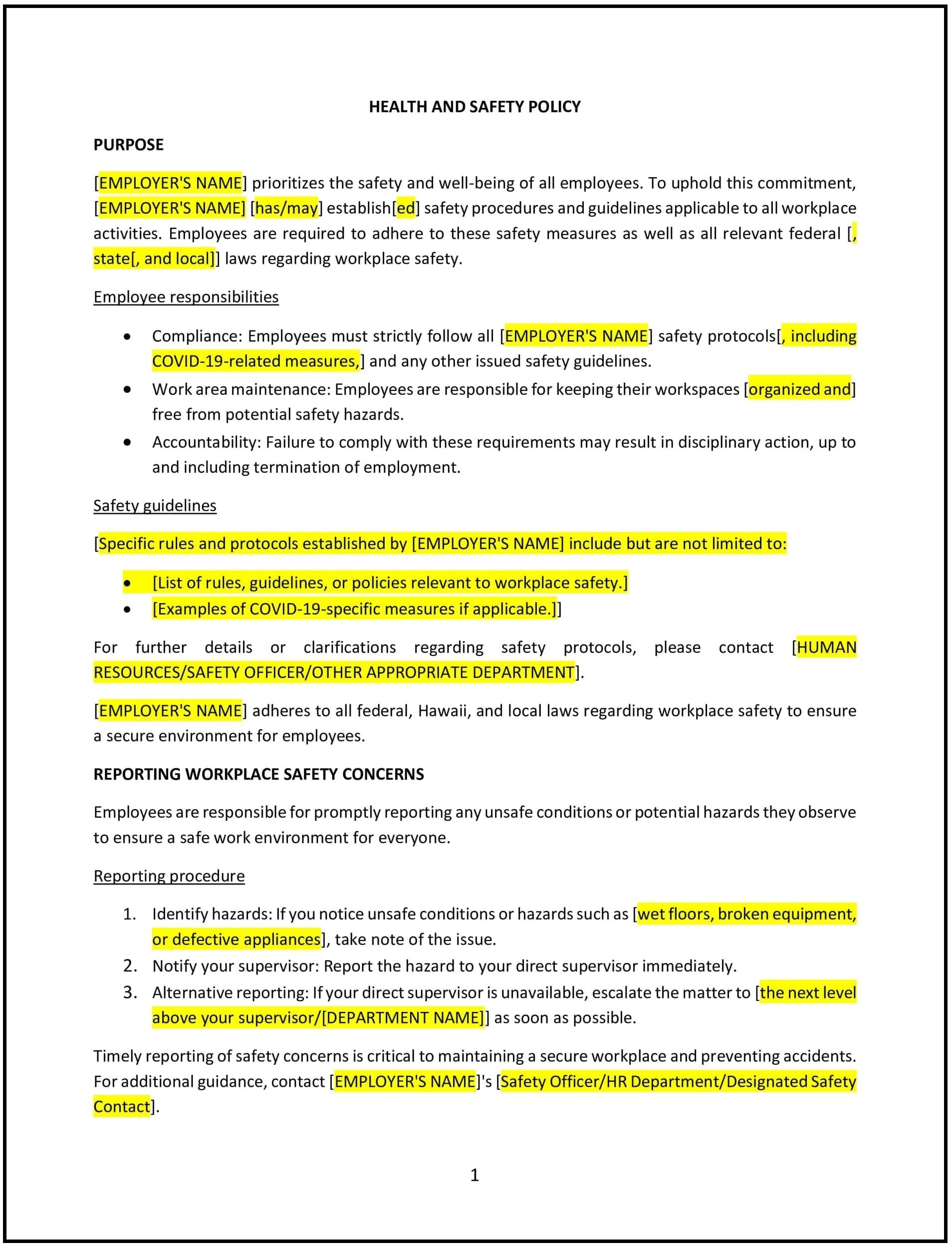
Health and safety policy (Hawaiʻi)
A health and safety policy helps Hawaiʻi businesses establish guidelines for maintaining a safe and healthy workplace for employees, customers, and visitors. This policy outlines procedures for identifying hazards, preventing accidents, and responding to emergencies, while addressing Hawaiʻi’s unique environmental and cultural considerations. It is designed to promote a culture of safety, reduce workplace risks, and ensure the well-being of everyone in the workplace.
By implementing this policy, businesses in Hawaiʻi can protect their workforce, minimize liability, and demonstrate a commitment to creating a safe and supportive environment.
How to use this health and safety policy (Hawaiʻi)
- Define safety responsibilities: Specify the roles and responsibilities of employees, managers, and safety officers in maintaining a safe workplace.
- Identify hazards: Outline procedures for identifying and assessing workplace hazards, such as regular inspections and risk assessments.
- Implement safety measures: Provide guidelines for preventing accidents, such as proper equipment use, ergonomic practices, and hazard controls.
- Address emergency preparedness: Establish procedures for responding to emergencies, such as fires, natural disasters, or medical incidents, including evacuation plans and first aid protocols.
- Provide training: Educate employees on safety procedures, emergency protocols, and the proper use of safety equipment.
- Communicate the policy: Share the policy with employees during onboarding and through internal communications to ensure awareness and understanding.
- Monitor compliance: Regularly review workplace safety practices to ensure adherence to the policy and address any issues promptly.
- Review and update the policy: Regularly assess the policy’s effectiveness and make adjustments as needed to reflect changes in laws, workplace dynamics, or business needs.
Benefits of using this health and safety policy (Hawaiʻi)
This policy offers several advantages for Hawaiʻi businesses:
- Protects employees: Clear safety guidelines help prevent accidents and injuries, ensuring the well-being of the workforce.
- Reduces liability: A structured policy minimizes the risk of legal issues or fines related to workplace safety violations.
- Enhances productivity: A safe work environment fosters employee focus and efficiency, reducing downtime caused by accidents.
- Supports emergency preparedness: Established procedures ensure employees know how to respond to emergencies, reducing potential harm.
- Aligns with legal requirements: The policy helps businesses comply with Hawaiʻi state laws and federal regulations, such as OSHA standards.
- Builds trust: Demonstrating a commitment to safety fosters trust and loyalty among employees and stakeholders.
- Promotes a positive workplace culture: A focus on health and safety creates a supportive and caring work environment.
Tips for using this health and safety policy (Hawaiʻi)
- Communicate the policy effectively: Share the policy with employees during onboarding and through regular reminders, such as emails or training sessions.
- Provide training: Educate employees on safety procedures, emergency protocols, and the proper use of safety equipment.
- Be proactive: Regularly inspect the workplace for hazards and address potential risks before they lead to accidents.
- Encourage reporting: Create a culture where employees feel comfortable reporting safety concerns without fear of retaliation.
- Monitor compliance: Regularly review workplace safety practices to ensure adherence to the policy and address any issues promptly.
- Be transparent: Clearly explain the policy’s purpose, benefits, and expectations to employees to build trust and cooperation.
- Review the policy periodically: Update the policy as needed to reflect changes in laws, workplace dynamics, or business needs.