Got contracts to review? While you're here for policies, let Cobrief make contract review effortless—start your free review now.
Customize this template for free
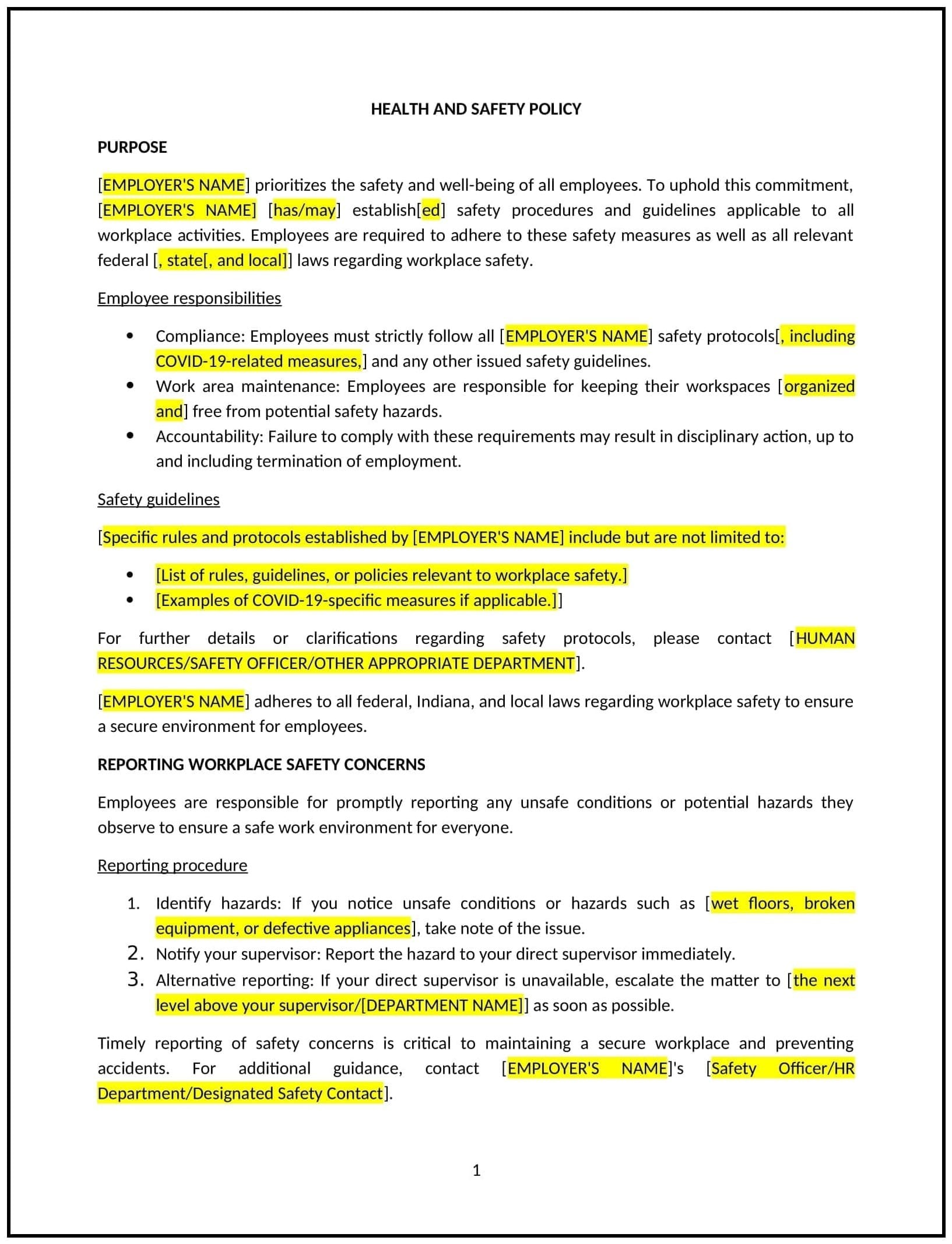
Health and safety policy (Indiana): Free template
The health and safety policy helps Indiana businesses create and maintain a safe work environment for all employees, contractors, and visitors. This policy outlines the responsibilities of the employer and employees in preventing accidents, minimizing health risks, and ensuring that the workplace complies with health and safety regulations. It includes guidelines for identifying potential hazards, reporting accidents, and ensuring workplace safety through regular assessments and employee training. By using this template, businesses can establish a proactive approach to health and safety that protects both employees and the company’s reputation.
By implementing this policy, Indiana businesses can reduce workplace injuries, promote a culture of safety, and comply with state and federal health and safety regulations, ensuring a healthier and safer work environment.
How to use this health and safety policy (Indiana)
- Define health and safety responsibilities: Clearly outline the health and safety responsibilities of both the employer and employees. Employers should ensure a safe working environment, provide necessary training, and implement safety measures. Employees should follow safety protocols, report hazards, and participate in training.
- Identify workplace hazards: Specify how workplace hazards will be identified and assessed, including physical, chemical, biological, and ergonomic hazards. The policy should include a process for conducting regular risk assessments to identify potential dangers and implement appropriate control measures.
- Establish reporting procedures: Define the procedure for reporting health and safety concerns, accidents, and incidents. Employees should be encouraged to report hazards immediately to prevent accidents, and the policy should specify the channels through which these reports should be made (e.g., supervisors, HR, safety officers).
- Set accident and injury procedures: Outline the steps that need to be followed in case of an accident or injury, including first aid procedures, emergency contacts, and how to report incidents. The policy should also specify the process for documenting and investigating accidents to prevent future occurrences.
- Provide training and resources: Ensure that employees receive proper health and safety training, including safe work practices, emergency procedures, and how to use safety equipment. The policy should outline when training will be provided, who is responsible for training, and how often training should be refreshed.
- Address specific workplace risks: Include any additional health and safety considerations based on the nature of the business, such as the use of machinery, handling hazardous substances, or working in remote locations. The policy should ensure that appropriate safety measures and equipment are in place to mitigate risks specific to the industry.
- Maintain health and safety equipment: Specify the required safety equipment for employees, including personal protective equipment (PPE), fire extinguishers, first aid kits, and emergency exits. The policy should ensure that all equipment is regularly checked and maintained to ensure it is in proper working order.
- Ensure compliance with legal requirements: Outline the legal obligations that the business must meet under Indiana state law and federal health and safety regulations, including OSHA guidelines. The policy should specify how the business will stay up to date with changing regulations and maintain compliance.
- Encourage a culture of safety: Promote a culture where health and safety are prioritized by involving employees in safety discussions, providing incentives for safety compliance, and recognizing employees who contribute to maintaining a safe work environment.
Benefits of using this health and safety policy (Indiana)
Implementing this policy provides several key benefits for Indiana businesses:
- Reduces workplace accidents and injuries: The policy helps minimize the risk of accidents by proactively addressing hazards and promoting safe practices.
- Ensures legal compliance: By following health and safety regulations, businesses can avoid legal penalties and ensure they meet state and federal requirements, including OSHA regulations.
- Improves employee well-being: A safe work environment enhances employee health, reducing absenteeism due to injuries or illness and improving overall employee morale.
- Enhances productivity: A focus on health and safety can increase productivity by preventing accidents that cause downtime and maintaining a healthy workforce.
- Strengthens company reputation: A commitment to health and safety demonstrates the business’s dedication to employee welfare and can improve its reputation with clients, customers, and regulators.
- Reduces insurance costs: By maintaining a safe work environment and reducing accidents, businesses may lower their workers' compensation and liability insurance premiums.
Tips for using this health and safety policy (Indiana)
- Communicate the policy clearly: Ensure that all employees are aware of the health and safety policy and understand their roles and responsibilities. This can be done through employee handbooks, training, and regular safety meetings.
- Conduct regular safety audits: Periodically review the workplace for potential hazards and ensure that health and safety protocols are being followed. Conduct safety audits and inspections to identify any areas of concern.
- Provide continuous training: Offer regular safety training for employees, including new hires and refresher courses, to keep everyone up to date on safety procedures and equipment use.
- Involve employees in safety initiatives: Encourage employees to participate in safety programs and initiatives. Regularly solicit feedback on safety practices and encourage employees to suggest improvements or report potential hazards.
- Review and update the policy regularly: The policy should be reviewed and updated regularly to account for changes in regulations, business operations, or emerging health and safety risks. Regular updates help ensure that the policy remains effective and compliant.