Got contracts to review? While you're here for policies, let Cobrief make contract review effortless—start your free review now.
Customize this template for free
Health and safety policy (Iowa)
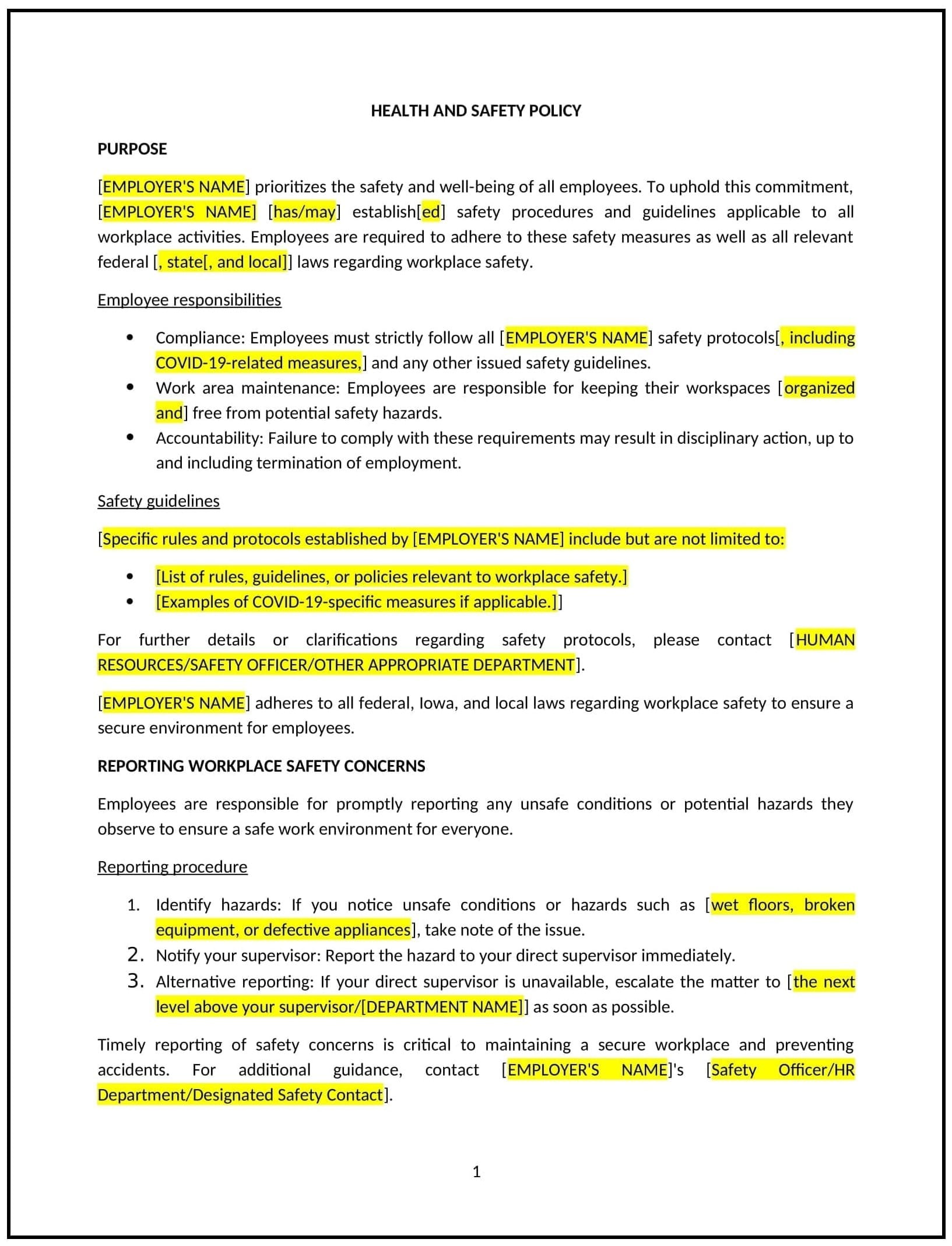
A health and safety policy is essential for Iowa businesses to establish clear procedures for maintaining a safe and healthy workplace. This policy outlines the responsibilities of both employers and employees in identifying, addressing, and preventing workplace hazards. By promoting workplace safety, businesses can reduce the risk of injuries, enhance employee well-being, and comply with state-specific safety standards.
By implementing this policy, businesses in Iowa can foster a culture of safety, minimize risks, and protect both employees and the organization from costly accidents and legal issues.
How to use this health and safety policy (Iowa)
- Identify potential hazards: Businesses should conduct regular safety audits and identify any physical, chemical, biological, or ergonomic hazards in the workplace.
- Establish preventive measures: Develop procedures to address identified hazards, such as safety protocols, equipment maintenance, and proper training for employees.
- Assign safety roles and responsibilities: Designate safety officers or managers responsible for overseeing health and safety initiatives, training employees, and maintaining records.
- Provide employee safety training: Ensure that employees are trained on proper safety procedures, emergency protocols, and the correct use of safety equipment.
- Implement emergency response plans: Outline clear procedures for responding to workplace emergencies such as fires, medical incidents, or hazardous material spills.
- Monitor safety performance: Regularly review workplace safety, assess compliance with the policy, and make necessary adjustments to improve safety practices.
- Ensure reporting procedures: Set up a clear process for employees to report unsafe conditions or incidents without fear of retaliation.
- Review and update the policy: Periodically assess and update the health and safety policy to reflect any changes in Iowa state law, OSHA regulations, or the nature of the workplace.
Benefits of using this health and safety policy (Iowa)
This policy provides several key benefits for Iowa businesses:
- Promotes employee well-being: By focusing on safety, businesses create a work environment that supports the physical and mental health of their employees.
- Reduces workplace accidents: Regular safety protocols and training minimize the likelihood of accidents, injuries, or illnesses.
- Enhances productivity: A safe work environment leads to fewer disruptions, reduced absenteeism, and higher employee morale.
- Strengthens legal protection: Clear safety procedures help businesses comply with state and federal regulations, reducing the risk of legal penalties or lawsuits.
- Improves workplace culture: A commitment to health and safety demonstrates that businesses value their employees, fostering a positive, supportive work culture.
- Minimizes operational disruptions: By preventing accidents and injuries, businesses can maintain consistent operations without costly downtime or delays.
Tips for using this health and safety policy (Iowa)
- Conduct regular safety audits: Businesses should schedule routine safety inspections to identify potential hazards and address them before they cause harm.
- Foster open communication: Encourage employees to report safety concerns, and ensure that they feel supported in doing so without fear of retaliation.
- Provide up-to-date training: Businesses should offer ongoing safety training sessions to keep employees informed of new regulations, procedures, and technologies.
- Keep accurate records: Businesses should maintain detailed records of all safety inspections, incidents, training, and corrective actions taken.
- Collaborate with employees: Involve employees in safety planning by seeking their input on potential hazards and encouraging them to actively participate in safety programs.
- Prioritize high-risk areas: Pay particular attention to areas with higher risks, such as production floors, warehouses, or locations with hazardous materials.
- Review incident reports: After any safety incident, conduct a thorough review to determine causes and prevent future occurrences.