Got contracts to review? While you're here for policies, let Cobrief make contract review effortless—start your free review now.
Customize this template for free
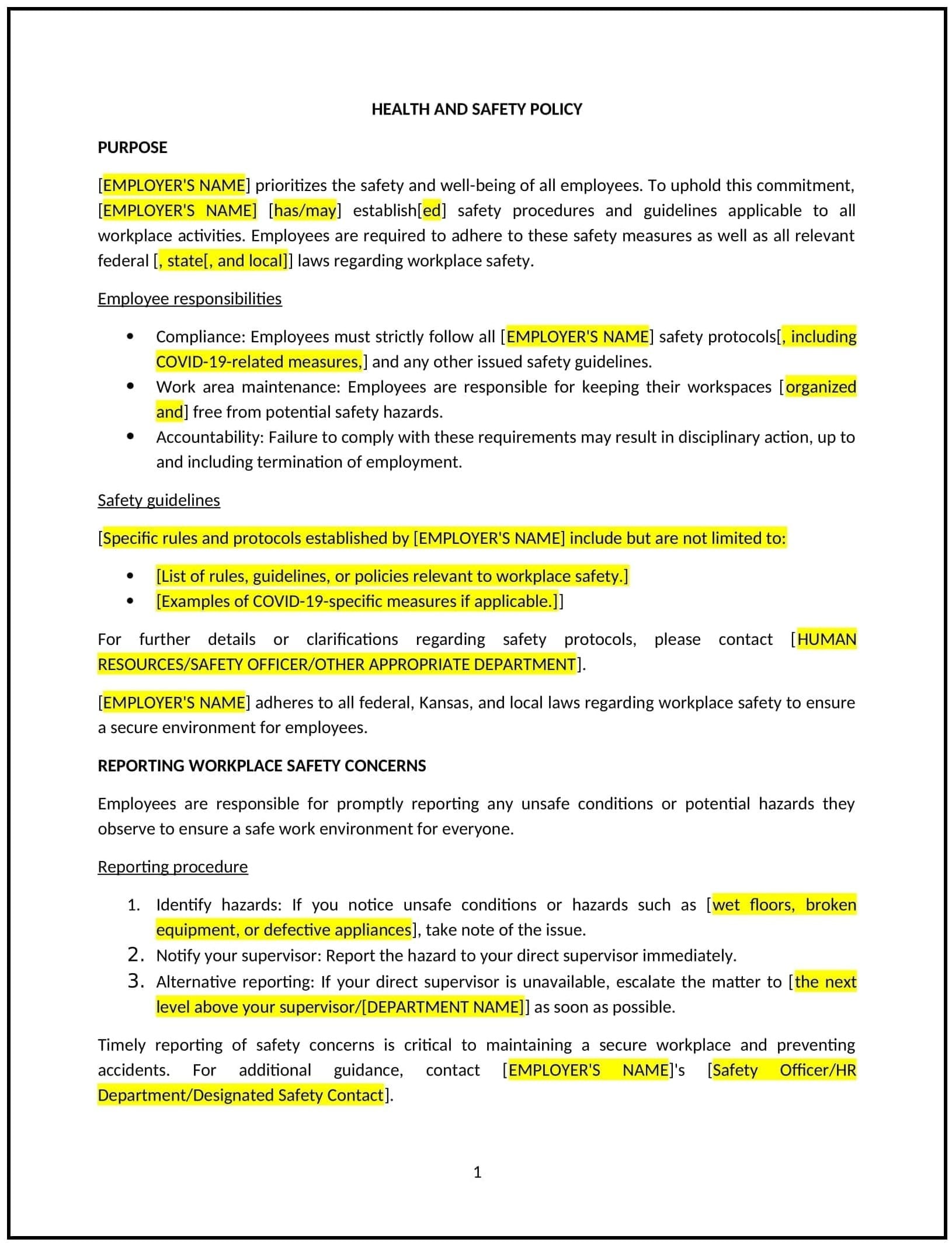
Health and safety policy (Kansas)
A health and safety policy helps Kansas businesses establish a framework for ensuring the well-being of employees and maintaining a safe work environment. This policy outlines the responsibilities of both the employer and employees in preventing workplace hazards, responding to emergencies, and promoting health and safety standards.
By implementing this policy, businesses can reduce workplace injuries, ensure a healthy environment for employees, and promote a culture of safety that protects both employees and the company.
How to use this health and safety policy (Kansas)
- Define health and safety responsibilities: Businesses should clarify the responsibilities of both employers and employees, specifying how each party contributes to maintaining a safe workplace.
- Conduct risk assessments: Businesses should regularly assess potential workplace hazards, identifying areas where safety improvements are needed and implementing preventive measures.
- Establish safety procedures: Businesses should develop clear safety procedures for common workplace risks, such as fire safety, equipment use, chemical handling, and emergency response protocols.
- Provide health and safety training: Businesses should ensure employees are trained on proper safety procedures, how to use protective equipment, and how to respond to emergencies.
- Maintain safety equipment: Businesses should provide necessary safety equipment, such as fire extinguishers, first aid kits, and protective gear, and ensure it is regularly maintained and accessible.
- Promote employee well-being: Businesses should foster a culture of well-being by promoting health initiatives, such as ergonomic workspaces, mental health support, and workplace wellness programs.
- Review and update regularly: Businesses should periodically review and update the health and safety policy to address new risks, regulatory changes, or workplace modifications.
Benefits of using a health and safety policy (Kansas)
- Reduces workplace injuries: A proactive safety policy helps prevent accidents, reducing injuries and their associated costs.
- Improves employee well-being: By prioritizing health and safety, businesses create a healthier environment, contributing to employee satisfaction and retention.
- Promotes a safety culture: A clear commitment to health and safety fosters a culture of awareness, where employees are more likely to follow safety protocols and report hazards.
- Enhances legal protection: A robust health and safety policy helps businesses comply with safety regulations and reduces the risk of legal claims or penalties.
- Increases productivity: A safe and healthy work environment reduces disruptions from accidents or illnesses, improving overall productivity and morale.
- Strengthens company reputation: Companies known for prioritizing health and safety attract more customers and employees who value a responsible and safe work environment.
Tips for using this health and safety policy (Kansas)
- Communicate the policy effectively: Businesses should ensure that all employees understand their role in maintaining workplace safety and the procedures for reporting hazards.
- Provide ongoing training: Businesses should conduct regular health and safety training sessions to keep employees up to date on new safety procedures and equipment.
- Conduct regular inspections: Businesses should regularly inspect the workplace for potential hazards and ensure that safety equipment is functioning properly.
- Encourage employee involvement: Businesses should encourage employees to actively participate in safety discussions, hazard identification, and the development of safety practices.
- Monitor and track safety performance: Businesses should track workplace incidents and safety violations to identify patterns and areas for improvement.
- Stay informed about legal changes: Businesses should stay updated on local, state, and federal safety regulations to ensure their policy remains compliant with legal requirements.