Immigration sponsorship policy (Hawaiʻi): Free template
Got contracts to review? While you're here for policies, let Cobrief make contract review effortless—start your free review now.
Customize this template for free
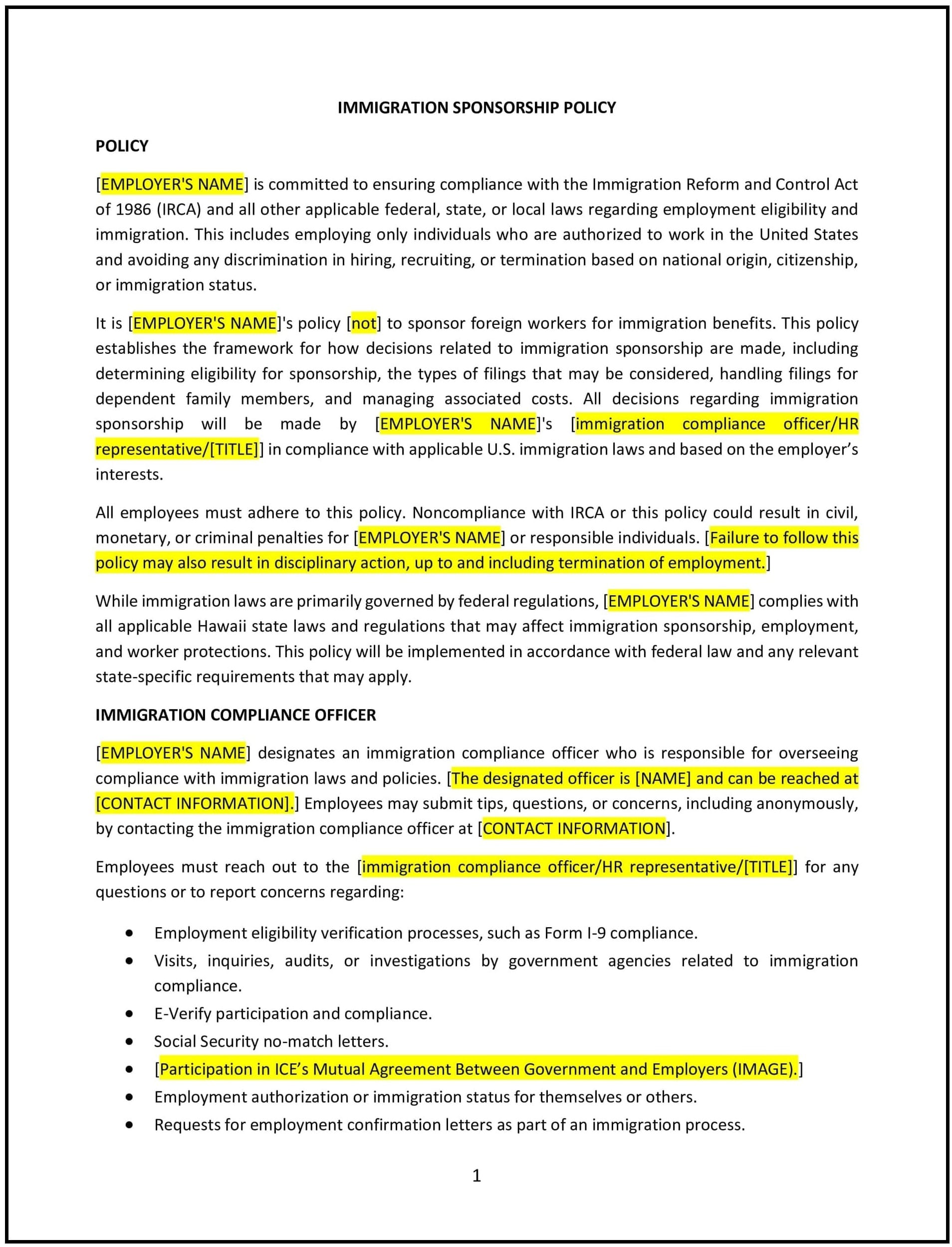
Immigration sponsorship policy (Hawaiʻi)
An immigration sponsorship policy helps Hawaiʻi businesses establish guidelines for sponsoring foreign workers for employment-based visas or permanent residency. This policy outlines the criteria for sponsorship, the types of visas supported, and the responsibilities of both the employer and the employee, while addressing Hawaiʻi’s unique labor market and cultural considerations. It is designed to attract global talent, support workforce diversity, and ensure compliance with federal immigration laws.
By implementing this policy, businesses in Hawaiʻi can access a broader talent pool, address labor shortages, and demonstrate a commitment to inclusivity and global collaboration.
How to use this immigration sponsorship policy (Hawaiʻi)
- Define sponsorship criteria: Specify the qualifications and roles eligible for sponsorship, such as specialized skills, education, or experience that align with the business’s needs.
- Outline visa types: Identify the types of visas the business is willing to sponsor, such as H-1B, L-1, or O-1 visas, and explain the requirements for each.
- Establish sponsorship process: Provide clear steps for requesting and approving sponsorship, including documentation, timelines, and involvement of legal counsel.
- Address employee responsibilities: Outline the employee’s obligations during the sponsorship process, such as providing accurate information and cooperating with legal requirements.
- Communicate the policy: Share the policy with employees during onboarding and through internal communications to ensure awareness and understanding.
- Train HR and managers: Educate HR staff and managers on the policy’s guidelines, including how to evaluate sponsorship requests and navigate the immigration process.
- Monitor compliance: Regularly review sponsorship cases to ensure adherence to the policy and address any issues promptly.
- Review and update the policy: Regularly assess the policy’s effectiveness and make adjustments as needed to reflect changes in immigration laws, labor market needs, or business priorities.
Benefits of using this immigration sponsorship policy (Hawaiʻi)
This policy offers several advantages for Hawaiʻi businesses:
- Attracts global talent: Sponsorship allows businesses to recruit skilled workers from around the world, addressing labor shortages and enhancing competitiveness.
- Supports workforce diversity: Hiring foreign workers brings diverse perspectives and experiences, fostering innovation and creativity.
- Addresses specialized needs: Sponsorship enables businesses to fill roles requiring specialized skills or expertise that may be scarce in the local labor market.
- Enhances employer reputation: Demonstrating a commitment to supporting foreign workers can improve the business’s reputation as an inclusive and forward-thinking employer.
- Aligns with legal requirements: The policy helps businesses comply with federal immigration laws and regulations, reducing the risk of legal issues.
- Encourages accountability: Clear guidelines ensure transparency and fairness in the sponsorship process for both employers and employees.
- Builds trust: Employees and candidates are more likely to trust a business with a clear and supportive immigration sponsorship policy.
Tips for using this immigration sponsorship policy (Hawaiʻi)
- Communicate the policy effectively: Share the policy with employees during onboarding and through regular reminders, such as emails or training sessions.
- Provide training: Educate HR staff and managers on the policy’s guidelines, including how to evaluate sponsorship requests and navigate the immigration process.
- Be transparent: Clearly explain the policy’s purpose, benefits, and expectations to employees and candidates to build trust and cooperation.
- Monitor compliance: Regularly review sponsorship cases to ensure adherence to the policy and address any issues promptly.
- Seek legal guidance: Work with immigration attorneys to ensure the policy aligns with federal laws and regulations.
- Review the policy periodically: Update the policy as needed to reflect changes in immigration laws, labor market needs, or business priorities.