Immigration sponsorship policy (Kansas): Free template
Got contracts to review? While you're here for policies, let Cobrief make contract review effortless—start your free review now.
Customize this template for free
Immigration sponsorship policy (Kansas)
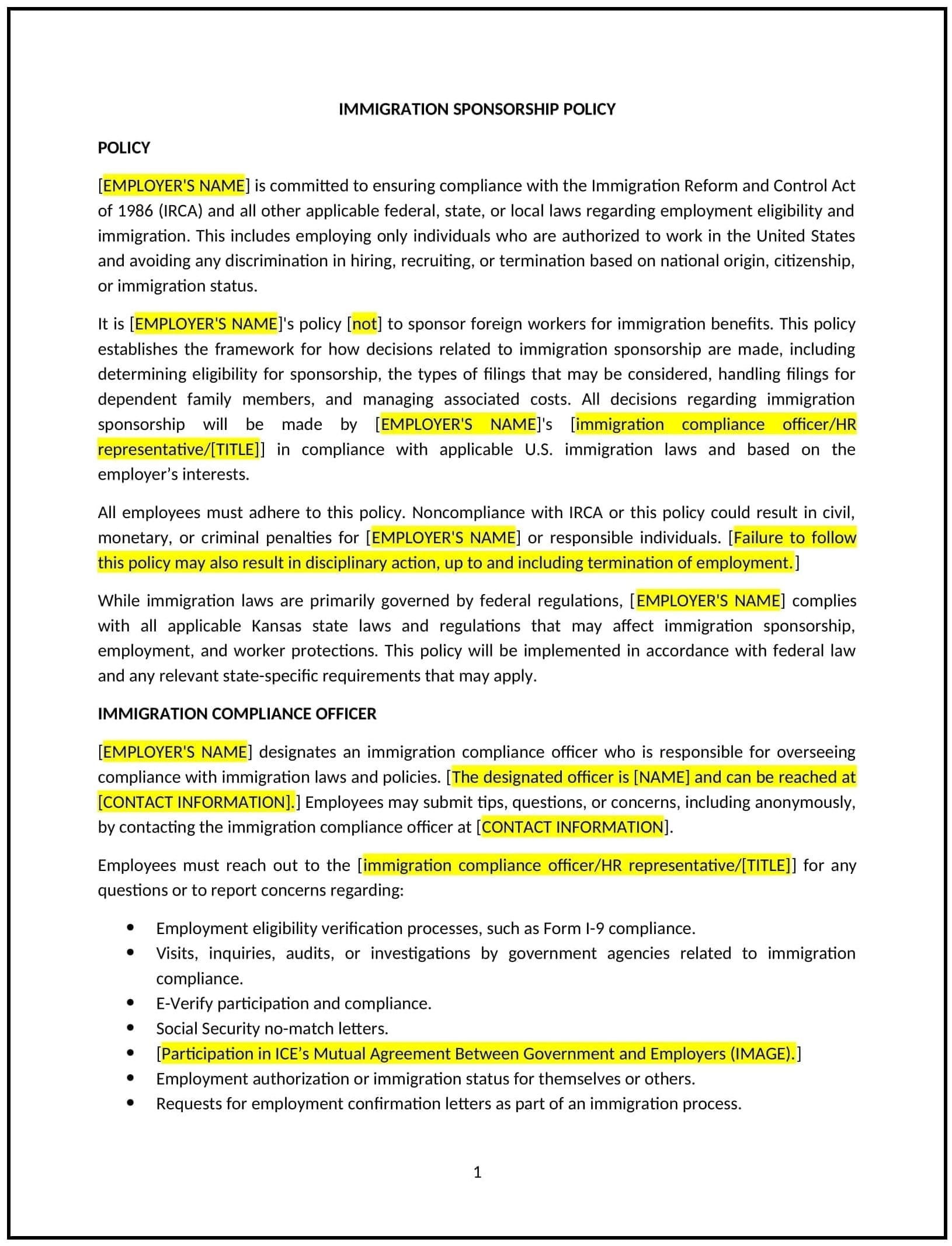
An immigration sponsorship policy helps Kansas businesses define their approach to sponsoring foreign employees for work visas and permanent residency. This policy outlines the processes and criteria for sponsoring employees, the types of visas eligible for sponsorship, and the responsibilities of both the employer and employee during the sponsorship process.
By implementing this policy, businesses can expand their talent pool, attract qualified international candidates, and ensure that sponsorship activities are managed consistently and in line with legal requirements.
How to use this immigration sponsorship policy (Kansas)
- Define eligibility criteria: Businesses should specify which positions or employees are eligible for sponsorship, based on job qualifications, skills, and business needs.
- Outline sponsorship procedures: Businesses should provide a clear step-by-step process for employees to request sponsorship, including the required documentation, deadlines, and the responsibilities of both the employer and the employee.
- Specify supported visa types: Businesses should list the types of work visas they support, such as H-1B, L-1, or O-1, and any related requirements.
- Detail employer responsibilities: Businesses should clarify their responsibilities during the sponsorship process, including providing necessary documentation, submitting applications, and supporting the employee throughout the visa process.
- Set employee responsibilities: Employees should understand their responsibilities, such as providing required information, attending interviews, and complying with visa conditions.
- Address sponsorship costs: Businesses should specify whether they will cover all, some, or none of the costs associated with the visa application process, such as filing fees or legal expenses.
- Review and update regularly: Businesses should periodically review the policy to ensure it aligns with evolving immigration laws and organizational needs.
Benefits of using an immigration sponsorship policy (Kansas)
- Expands talent pool: Allows businesses to access a broader range of candidates, including highly skilled foreign workers, who may be crucial for specific roles.
- Enhances company competitiveness: Sponsoring foreign employees can provide a competitive advantage in industries facing skill shortages.
- Strengthens diversity: Promoting an inclusive and diverse workforce can improve company culture and innovation.
- Supports international business operations: Businesses with global operations can ensure they have the right talent in place to manage cross-border teams and projects.
- Reduces immigration risks: A well-defined policy ensures the business complies with immigration laws, reducing the risk of legal challenges or penalties.
- Improves employee retention: Offering sponsorship opportunities can foster loyalty and retain international employees who might otherwise leave for better opportunities elsewhere.
Tips for using this immigration sponsorship policy (Kansas)
- Communicate the policy clearly: Businesses should ensure that all employees and potential hires understand the immigration sponsorship process, eligibility, and available support.
- Provide legal resources: Businesses should consider working with immigration attorneys to guide both the company and sponsored employees through the process and ensure compliance.
- Ensure transparency: Businesses should maintain open communication with sponsored employees regarding visa status, timelines, and any potential issues during the application process.
- Monitor visa status: Businesses should track the status of all sponsored employees’ visas to ensure compliance with immigration regulations and deadlines.
- Encourage early planning: Businesses should encourage employees to request sponsorship well in advance of any critical deadlines to allow for a smooth application process.
- Stay updated on immigration laws: Businesses should keep up with changes in immigration law and adjust their policies accordingly to remain compliant and competitive.