Immigration sponsorship policy (Minnesota): Free template
Got contracts to review? While you're here for policies, let Cobrief make contract review effortless—start your free review now.
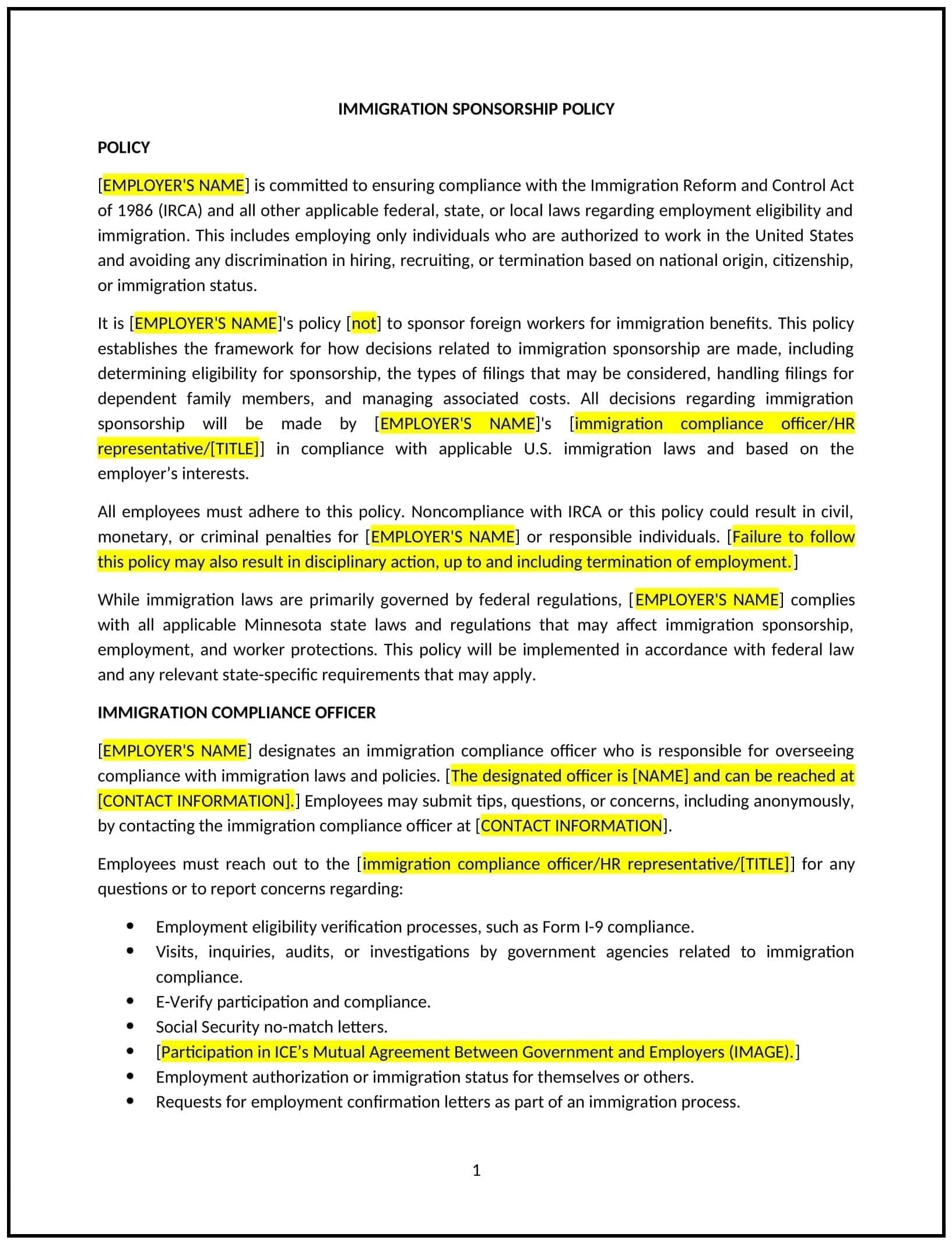
Customize this template for free
Immigration sponsorship policy (Minnesota)
This immigration sponsorship policy is designed to help Minnesota businesses understand and manage the process of sponsoring foreign workers for visas or work permits. It outlines the company’s approach to hiring foreign employees, the steps involved in sponsorship, and the responsibilities of both the employer and employee throughout the sponsorship process.
By implementing this policy, businesses can streamline the sponsorship process, attract global talent, and ensure that the company adheres to all relevant federal and state immigration regulations.
How to use this immigration sponsorship policy (Minnesota)
- Define sponsorship criteria: Clearly outline the types of positions for which the company will sponsor foreign workers and the qualifications required for eligibility, such as specialized skills, education, or experience.
- Identify eligible visa categories: Specify which visa categories (e.g., H-1B, L-1, TN, O-1) the company is willing to sponsor and the qualifications for each type.
- Set the application process: Describe the steps for applying for immigration sponsorship, including when the company will initiate the process, any required documentation, and how the process will be handled (e.g., internally or through external immigration counsel).
- Establish employee responsibilities: Explain the responsibilities of employees seeking sponsorship, such as providing necessary documents, complying with legal requirements, and maintaining valid visa status.
- Outline costs and financial responsibilities: Specify who will bear the costs associated with immigration sponsorship, including application fees, legal fees, and any other related expenses.
- Address job security during the sponsorship process: Outline the company’s policy on job security for employees who are undergoing immigration sponsorship, ensuring that employees are not penalized or terminated because of their visa status.
Benefits of using an immigration sponsorship policy (Minnesota)
Implementing this policy provides several advantages for Minnesota businesses:
- Expands talent pool: Sponsoring foreign workers allows businesses to tap into a broader, more diverse talent pool, helping them recruit employees with specialized skills that may be in short supply locally.
- Strengthens workforce diversity: By hiring individuals from different cultural and geographical backgrounds, businesses can enhance their workforce diversity, which can lead to better innovation and problem-solving.
- Reduces turnover: Offering immigration sponsorship can help businesses retain highly skilled foreign employees by providing stability and job security, improving employee loyalty and reducing turnover.
- Demonstrates global inclusivity: A commitment to sponsoring foreign workers sends a message that the company values international talent and diversity, which can enhance its reputation globally and locally.
- Reflects Minnesota-specific considerations: Tailors the policy to align with Minnesota’s labor market trends, the state’s demand for specific skilled workers, and any state-specific immigration laws or considerations.
Tips for using this immigration sponsorship policy (Minnesota)
- Communicate clearly: Ensure that all employees understand the immigration sponsorship process, eligibility requirements, and how to apply for sponsorship if needed.
- Stay informed about immigration law: Keep updated on federal and state immigration regulations to ensure that the sponsorship process complies with current laws and policies.
- Offer guidance to employees: Provide support to foreign employees by guiding them through the immigration process and connecting them with legal or immigration professionals if necessary.
- Plan ahead: Start the sponsorship process early to account for potential delays in visa approval or processing, and keep employees informed about the timeline.
- Monitor the process: Regularly check the status of employee sponsorships, ensuring that all documents are filed correctly and on time, and that employees’ visas are maintained properly throughout their employment.