Importer’s forced labor policy (Illinois): Free template
Got contracts to review? While you're here for policies, let Cobrief make contract review effortless—start your free review now.
Customize this template for free
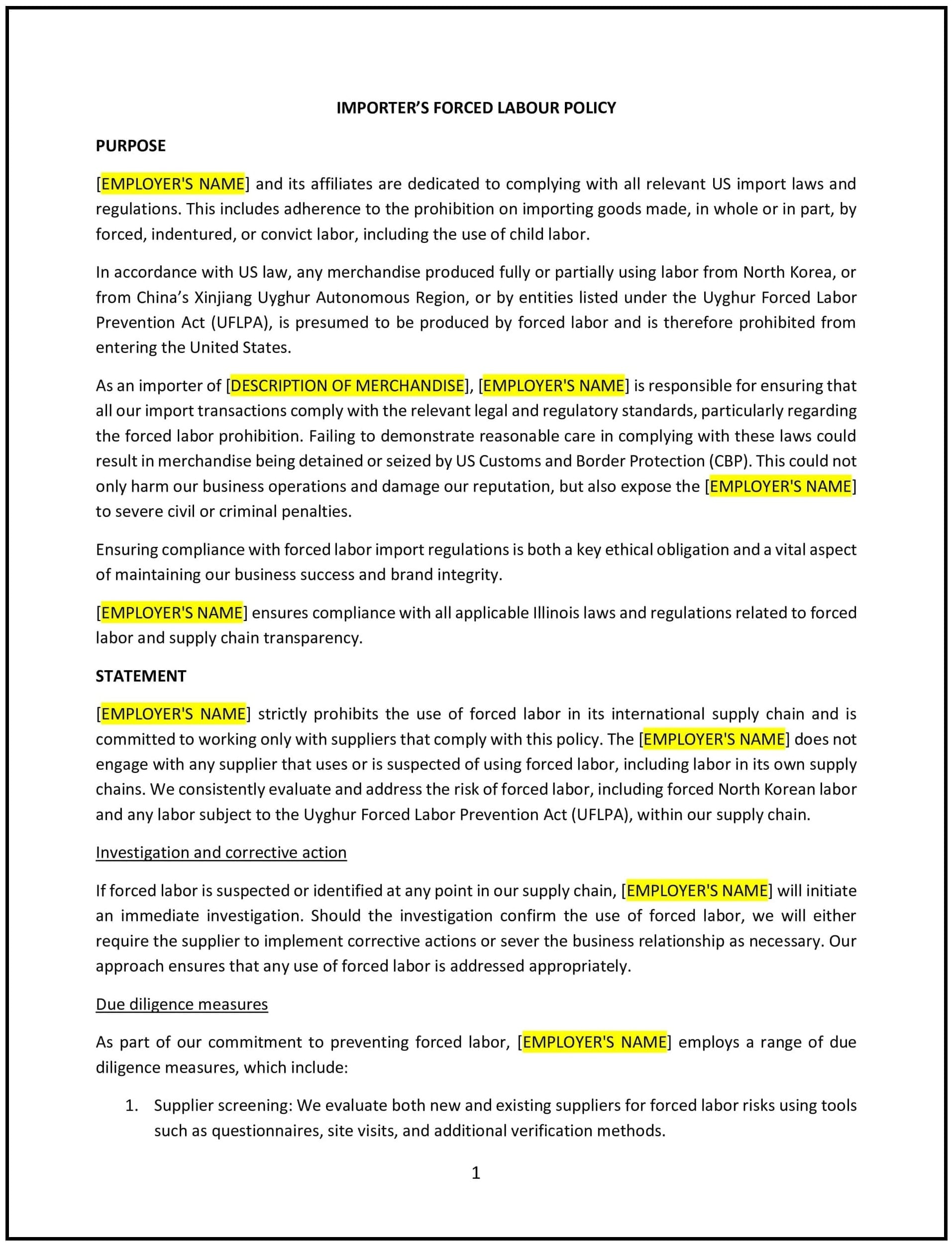
Importer’s forced labor policy (Illinois)
This importer’s forced labor policy is designed to help Illinois businesses ensure that their supply chains are free from forced labor. It outlines the company’s commitment to ethical sourcing, compliance with laws such as the U.S. Tariff Act and Illinois Human Rights Act, and procedures for monitoring and addressing forced labor risks.
By adopting this policy, businesses can promote ethical practices, enhance transparency, and avoid legal and reputational risks.
How to use this importer’s forced labor policy (Illinois)
- Define prohibited practices: Clearly state that forced labor, human trafficking, and exploitation are strictly prohibited in all sourcing and supply chain activities.
- Outline supplier expectations: Specify that suppliers and contractors must adhere to the company’s ethical standards and applicable labor laws.
- Include due diligence measures: Detail procedures for evaluating suppliers, such as conducting audits, reviewing certifications, or assessing risk factors in sourcing regions.
- Require supplier agreements: Mandate that suppliers sign agreements confirming their compliance with labor laws and ethical sourcing standards.
- Establish reporting mechanisms: Provide channels for employees, suppliers, or stakeholders to report concerns about forced labor or unethical practices.
- Monitor compliance: Regularly review supplier practices through audits, site visits, or third-party assessments to identify and address risks.
- Provide training: Offer training to employees and supply chain partners on recognizing and preventing forced labor.
- Commit to corrective actions: Specify steps the company will take if forced labor is identified, such as terminating supplier relationships or reporting violations to authorities.
Benefits of using this importer’s forced labor policy (Illinois)
This policy provides several benefits for Illinois businesses:
- Promotes ethical practices: Demonstrates a commitment to preventing forced labor and supporting fair working conditions.
- Enhances compliance: Aligns with federal and Illinois laws, reducing the risk of legal and financial penalties.
- Protects reputation: Helps build trust with customers, stakeholders, and regulatory bodies by promoting transparency.
- Reduces risks: Identifies and mitigates forced labor risks in the supply chain proactively.
- Supports accountability: Establishes clear expectations for suppliers and contractors regarding labor practices.
Tips for using this importer’s forced labor policy (Illinois)
- Communicate the policy: Share the policy with suppliers, employees, and stakeholders to ensure understanding and compliance.
- Conduct regular audits: Use internal or third-party audits to verify supplier adherence to ethical standards and labor laws.
- Collaborate with suppliers: Work with suppliers to address identified risks and improve labor practices where necessary.
- Use certifications: Require suppliers to obtain certifications from recognized organizations that verify ethical labor practices.
- Update regularly: Revise the policy to reflect changes in Illinois laws, federal regulations, or supply chain dynamics.