Importer's forced labour policy (Alabama): Free template
Got contracts to review? While you're here for policies, let Cobrief make contract review effortless—start your free review now.
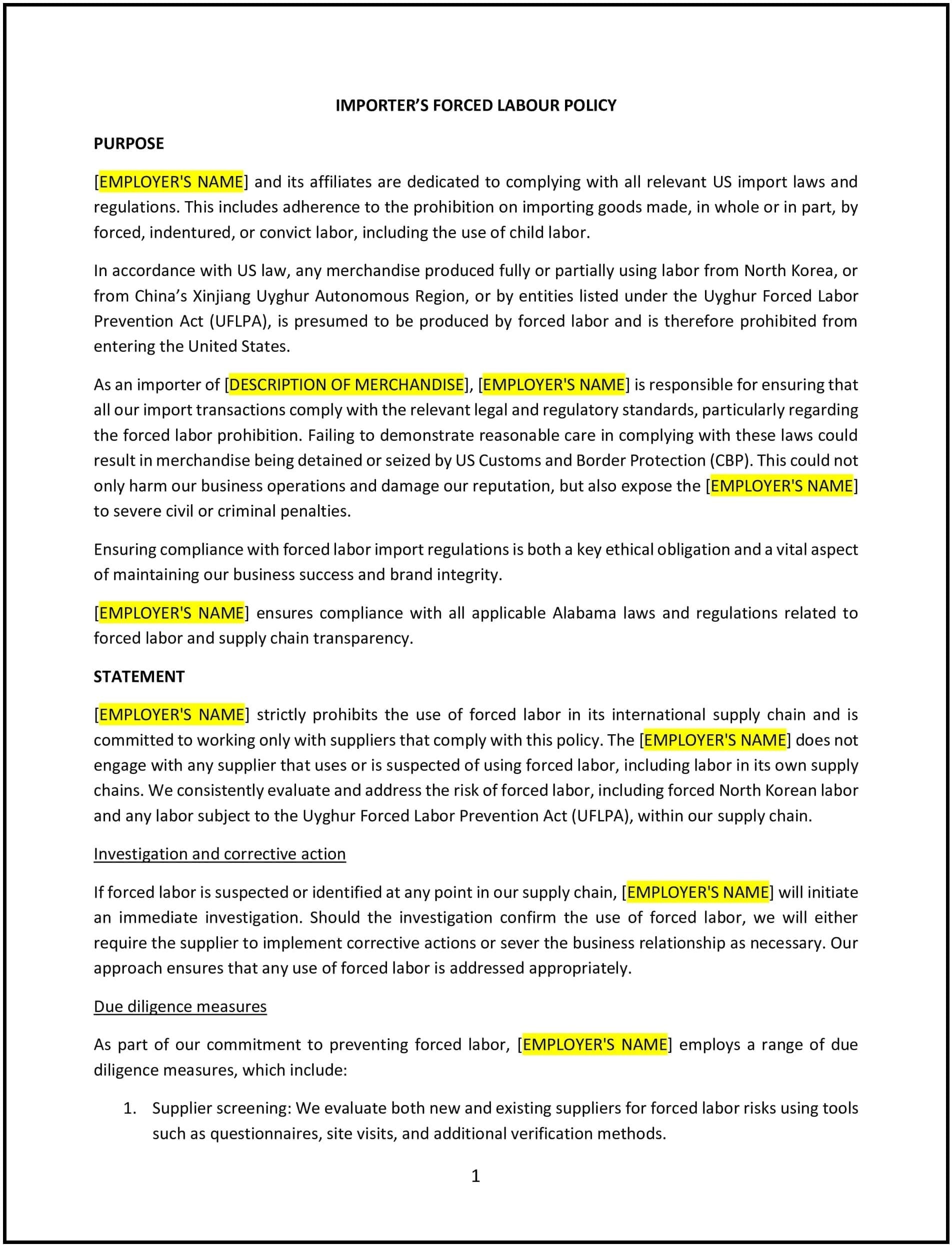
Customize this template for free
Importer's forced labor policy (Alabama)
An importer’s forced labor policy outlines the measures your business takes to ensure that imported goods are free from forced labor at any stage of the supply chain. For SMBs in Alabama, this policy demonstrates a commitment to ethical sourcing and compliance with federal regulations such as the Tariff Act of 1930, which prohibits importing goods produced through forced or indentured labor.
This policy provides a framework for conducting due diligence, engaging with suppliers, and addressing violations, fostering transparency and accountability in supply chain operations.
How to use this importer’s forced labor policy (Alabama)
- Define prohibited practices: Clearly state that the use of forced labor, child labor, or human trafficking is strictly prohibited in any part of the supply chain.
- Conduct due diligence: Outline procedures for evaluating suppliers, such as reviewing certifications, conducting audits, or requiring adherence to ethical sourcing standards.
- Set supplier expectations: Include requirements for suppliers to comply with all applicable labor laws, ethical standards, and the company’s policy against forced labor.
- Establish reporting mechanisms: Provide clear channels for employees, suppliers, or third parties to report suspected forced labor practices confidentially and without retaliation.
- Detail remediation steps: Specify how the company will address violations, such as terminating supplier contracts or collaborating to rectify issues within the supply chain.
Benefits of using an importer’s forced labor policy (Alabama)
A forced labor policy ensures ethical practices and protects your business. Here’s how it helps:
- Ensures compliance: Aligns with U.S. laws and international standards to avoid legal and reputational risks.
- Mitigates supply chain risks: Reduces exposure to unethical practices that could disrupt operations or damage brand reputation.
- Builds customer trust: Demonstrates your commitment to ethical sourcing, appealing to socially conscious consumers.
- Strengthens supplier relationships: Encourages transparency and accountability among suppliers, fostering long-term partnerships.
- Promotes corporate responsibility: Positions your business as a leader in ethical sourcing, enhancing brand value and industry reputation.
Tips for implementing an importer’s forced labor policy (Alabama)
- Partner with certified suppliers: Work with suppliers who hold recognized certifications, such as Fair Trade or SA8000, to ensure ethical practices.
- Conduct regular audits: Schedule independent audits of suppliers to verify compliance with labor standards and identify potential risks.
- Include contractual obligations: Require suppliers to sign agreements committing to ethical labor practices and compliance with the policy.
- Provide training: Educate employees and suppliers on identifying and addressing forced labor risks in the supply chain.
- Monitor and improve: Regularly review supply chain practices and update the policy as needed to address emerging risks or regulatory changes.